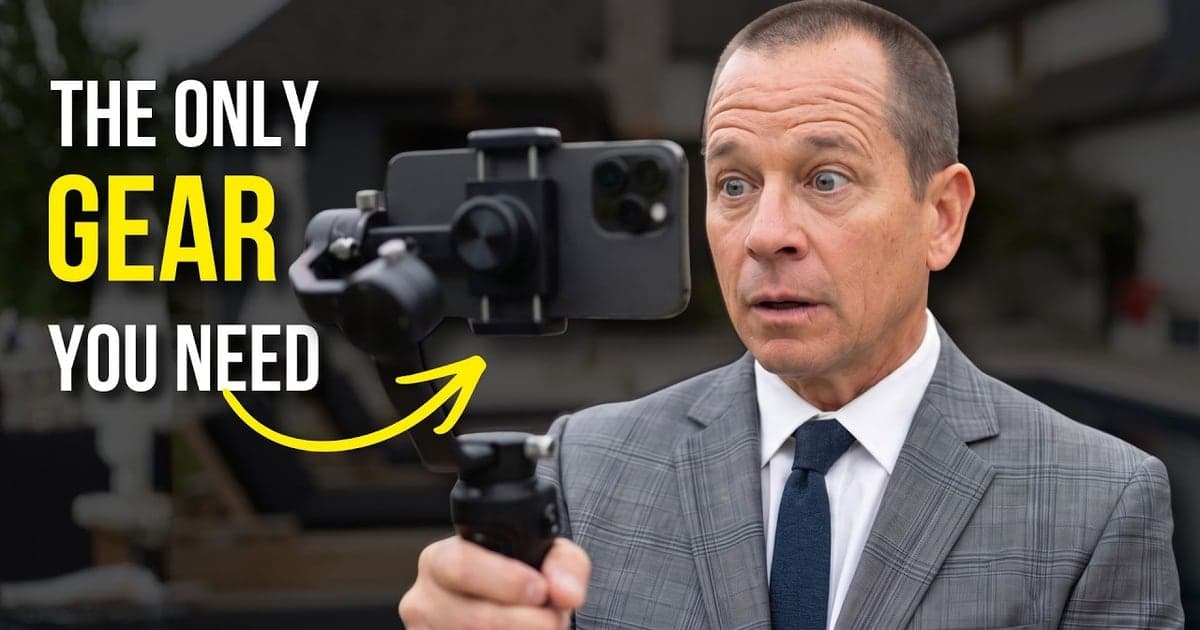
These real estate YouTube tips prove you do not need a studio to win. All you need is a phone, a plan, and the guts to press record. Here is the exact desk setup, field setup, audio fix, and five-part video formula Aaron teaches his agents.
Somebody in your market is walking into a listing right now with nothing but a phone. They hit record. Twelve minutes later they have content that ranks for years. These real estate youtube tips make sure it is you.
Key Takeaways
- You do not need a studio. A phone beats most agents in your market.
- Bad audio kills videos faster than bad video. Spend $20 to $60 on a mic.
- Walk at half the speed you think you should. Talk the entire time.
- Every video needs an 8 second hook and a clear call to action.
- The video you post always beats the video you never posted.
If you want a second set of eyes on your channel before you start filming, grab a Channel Audit and Plan and find out exactly what is holding your videos back.
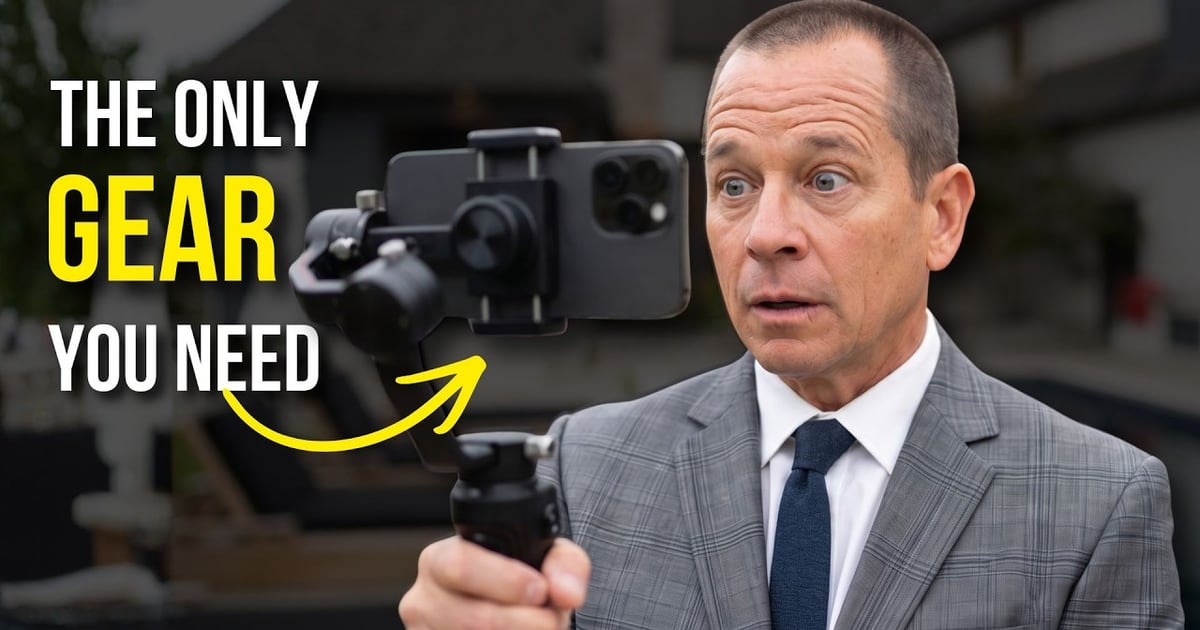
Somebody in Your Market Is Already Doing This
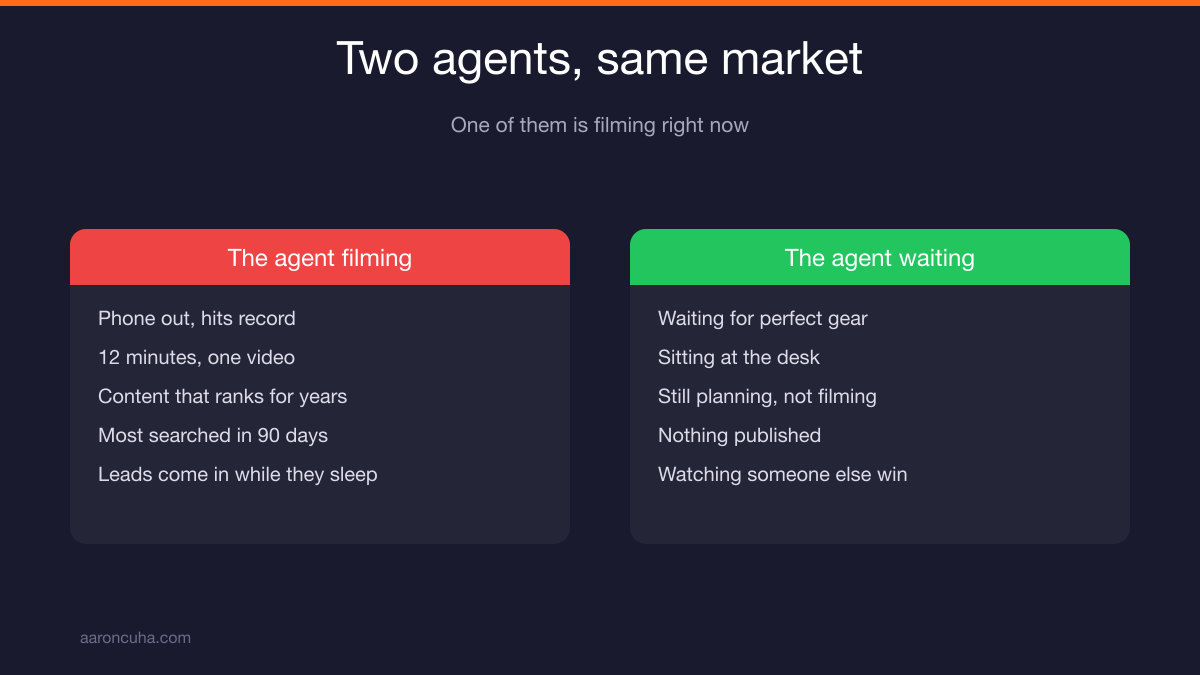
An agent in your market is pulling up to a listing with a phone in their pocket. They walk through the front door, hit record, and in 12 minutes create a piece of content that ranks on YouTube for years.
These real estate youtube tips are not a secret. They are just not being taught in your office.
While that agent is filming, you are sitting at your desk waiting for everything to be perfect. That agent does not care about perfect. That is the whole difference.
In 90 days, that agent becomes the most searched agent in your market. Buyers find them. Sellers find them. The leads come in while they sleep.
This is not a question of whether it happens. It is already happening. The only open question is whether the person making it happen is you or another agent down the street.
And here is the part that matters most. When you do this right, the business does not stop. A video you film this month keeps working next year and the year after. That is the compounding nature of search. I break that down further in this complete guide to YouTube for real estate agents.
Today is about filming. Not planning. Not researching. Filming.
Why Most Agents Fail (It Is Not Content Ideas)
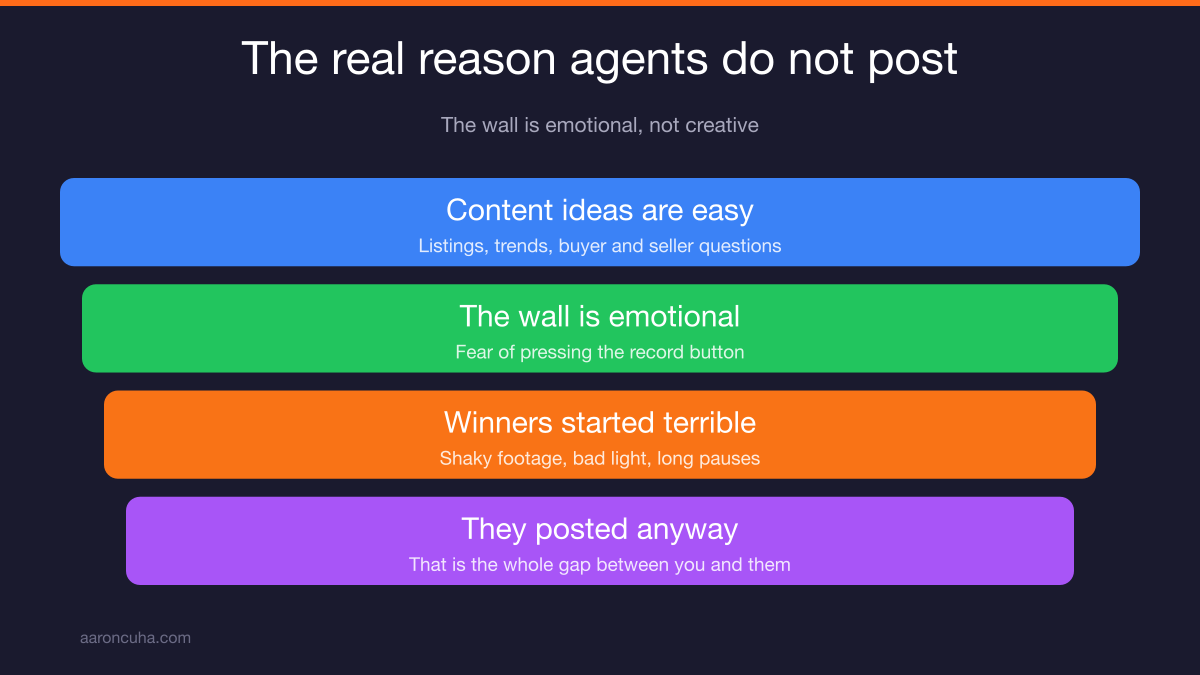
Most agents do not fail because they do not know what to film. They fail because they are too scared to press the record button.
Content ideas are the easy part. Every market has listings, neighborhoods, price trends, buyer mistakes, and seller questions. You could film for a year without repeating yourself.
The wall is not creative. It is emotional.
Here is the truth nobody in this industry says out loud. The agents winning on YouTube right now started with terrible videos. Shaky footage. Bad lighting. Awkward delivery. Long pauses where they lost their train of thought.
They posted anyway.
That is the entire gap between them and you. Not gear. Not talent. Not a marketing budget. They pressed record and you did not.
All you need is a phone, a plan, and the guts to hit record. Everything else is negotiable.
If your channel already exists but nothing is happening, the problem is usually structural, not technical. I cover the common failure points in why most YouTube channels fail.
Real Estate YouTube Tips: Kill the Gear Myth First
You do not need a studio. I can show you four or five channels earning one, two, three, even five million dollars a year where everything is shot on a phone.
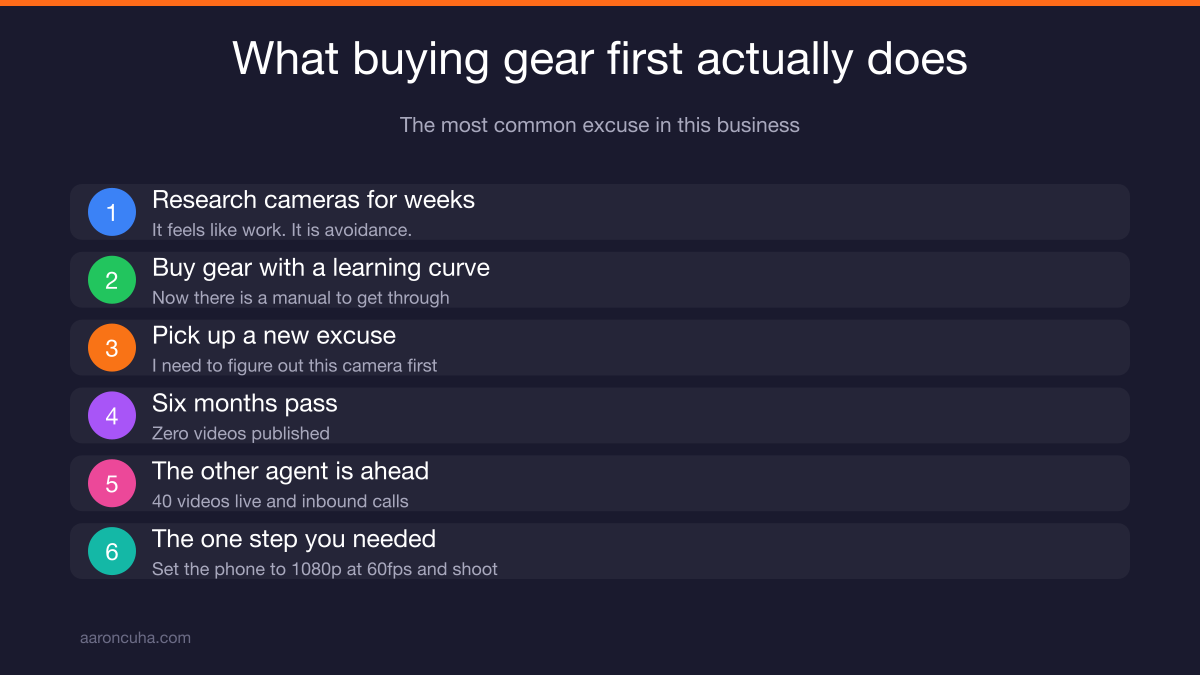
Gear is the most common excuse in this business and the easiest one to drop. It feels productive to research cameras. It feels like work. It is not work. It is avoidance with a shopping cart attached.
Use your phone. Take away your ego.
Your phone already shoots better video than the professional cameras that made careers ten years ago. It has stabilization, autofocus, and a sensor that handles low light. The limitation is not the device.
Here is what actually happens when agents buy gear first:
- They spend three weeks researching cameras instead of filming.
- They buy something with a learning curve and never learn it.
- They now have a new excuse: "I need to figure out this camera."
- Six months pass. Zero videos published.
Meanwhile the agent down the street has 40 videos live and a pipeline of inbound calls.
Set your phone to 1080p at 60 frames per second and shoot. You probably cannot even edit 8K footage on your laptop, so stop worrying about resolution.
The Desk Setup You Can Build for Almost Nothing
Lean your phone against a stack of books, add cheap light, plug in a mic, and shoot 1080p at 60fps. That setup beats 90 percent of the agents in your market.
You are going to film in two places: at your desk and in the field. The desk setup handles market updates, buyer advice, seller advice, and anything where you are talking directly to camera.
Here is how the tiers break down.
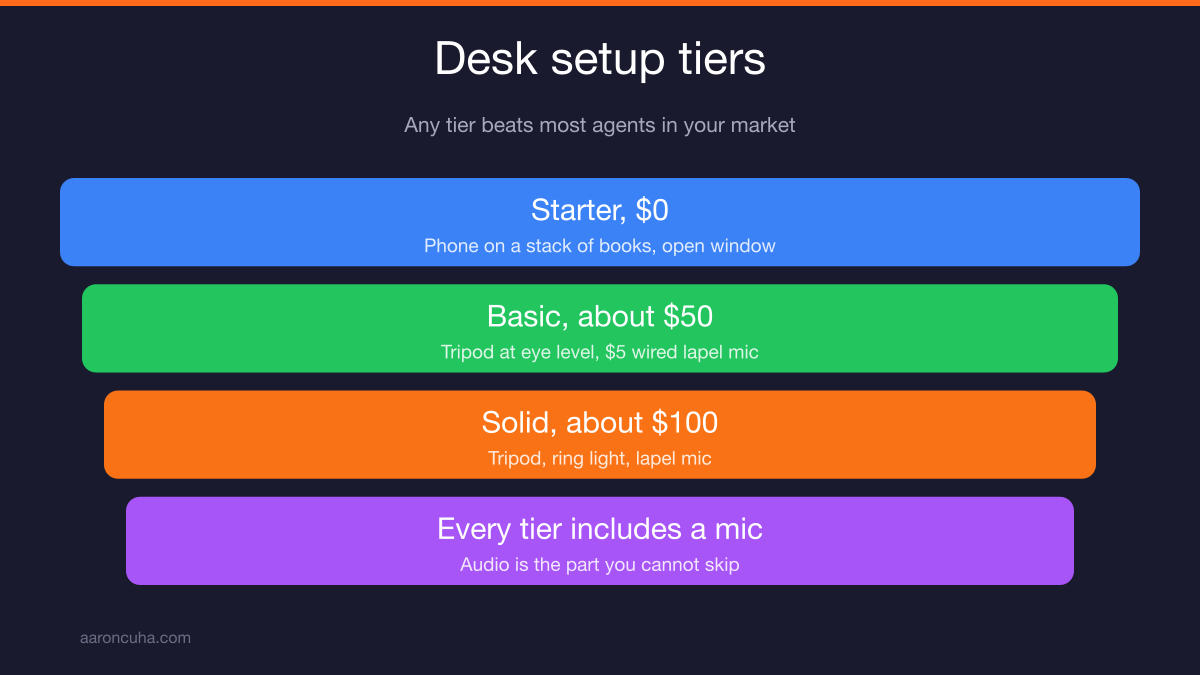
Tier one costs nothing. Lean your phone on a stack of books on your desk. Open a window and stand or sit facing it. That is natural light, and it is free. If there is a blank white wall behind you, hang a picture on it.
Tier two costs about $50. Buy a tripod. Set it at eye level and leave it there so you never have to rebuild your setup.
Tier three costs about $100. Add a ring light. Now you are not dependent on the weather or the time of day.
The microphone belongs in every tier. A $5 wired lapel mic on Amazon clips under your shirt and plugs into your phone. The quality is high enough that most viewers will never think about your audio, which is exactly the goal.
| Tier | Cost | Gear |
|---|---|---|
| Starter | $0 | Phone, stack of books, open window for light |
| Basic | ~$50 | Tripod at eye level, $5 wired lapel mic |
| Solid | ~$100 | Tripod, ring light, lapel mic |
There are so many ways to do this that the excuses get silly fast. Lean the phone against the desk and shoot.
Four Rules for Filming at Your Desk
Put the camera at eye level, use the rule of thirds, keep the background tidy, and never face a blinding window. Four rules. That is the whole list.
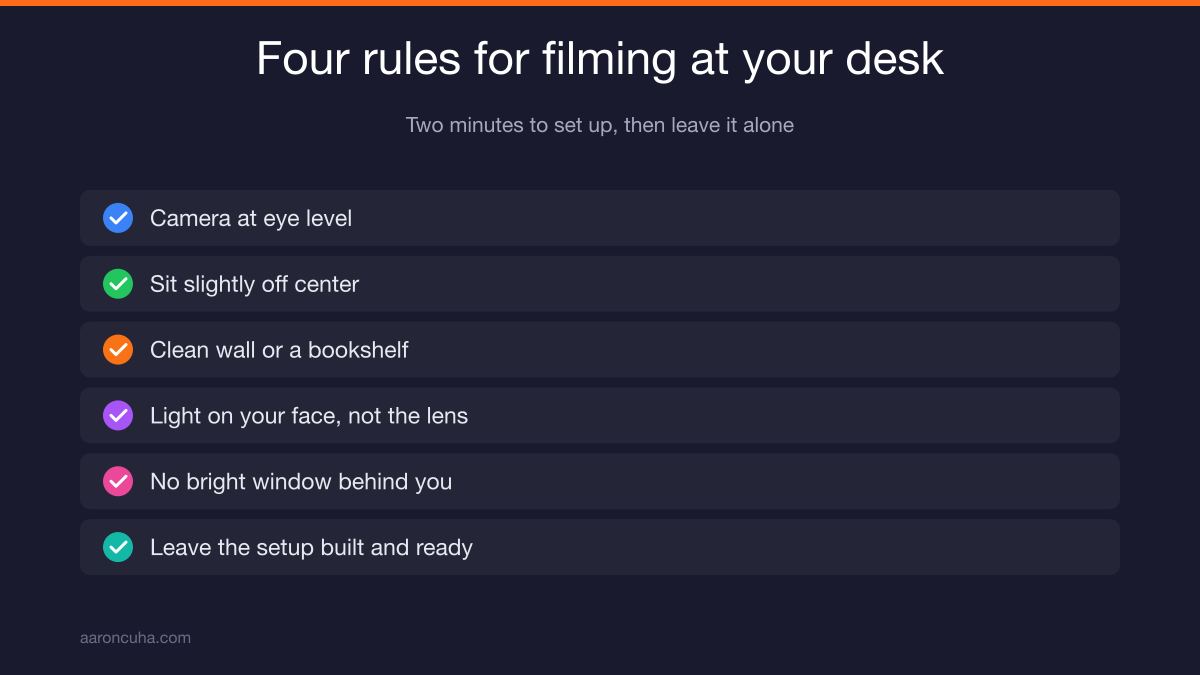
- Eye level. Your camera should sit level with your eyes. A phone on the desk pointing up at your chin makes you look small and unprofessional. Stack more books if you need to.
- Rule of thirds. Do not center yourself dead in the middle of the frame. Position yourself slightly off center. It looks intentional instead of accidental.
- A decent background. Nobody wants to see a messy office. A clean wall works. A bookshelf works better. A window behind you can work if the light is controlled. Just make sure the space is tidy.
- Watch the light direction. Do not sit facing a window with the light blasting into the lens, and do not sit with a bright window directly behind you turning you into a silhouette. Light on your face, not into the camera.
These four rules take about two minutes to set up once. Then you leave the setup alone and film whenever you have five minutes between appointments.
That is the point of a system. You remove the decisions so the filming becomes automatic. I go deeper on that idea in content systems for entrepreneurs.
The Field Setup for Property and Neighborhood Tours
Hold a modern phone with two hands and walk. An iPhone 15 or later has stabilization built in, which is enough for a smooth property tour.
This is my favorite kind of filming because it is the closest thing to what you already do every day. You walk buyers through houses. Now you are doing it on camera.
The field tiers work like this:
- Tier one, $0. Your phone in your hands. Hold it with two hands and walk. This is already better than 70 to 80 percent of the agents out there.
- Tier two, about $100. A DJI Osmo Mobile gimbal. Smoother movement, especially on stairs and turns.
- Tier three. The Osmo Pocket Creator Edition. Great if you are filming constantly and want the smallest possible rig.
Whether you are on tier one, two, or three does not matter nearly as much as shooting. The video you post always outperforms the video you never posted.
Before you press record, do the prep:
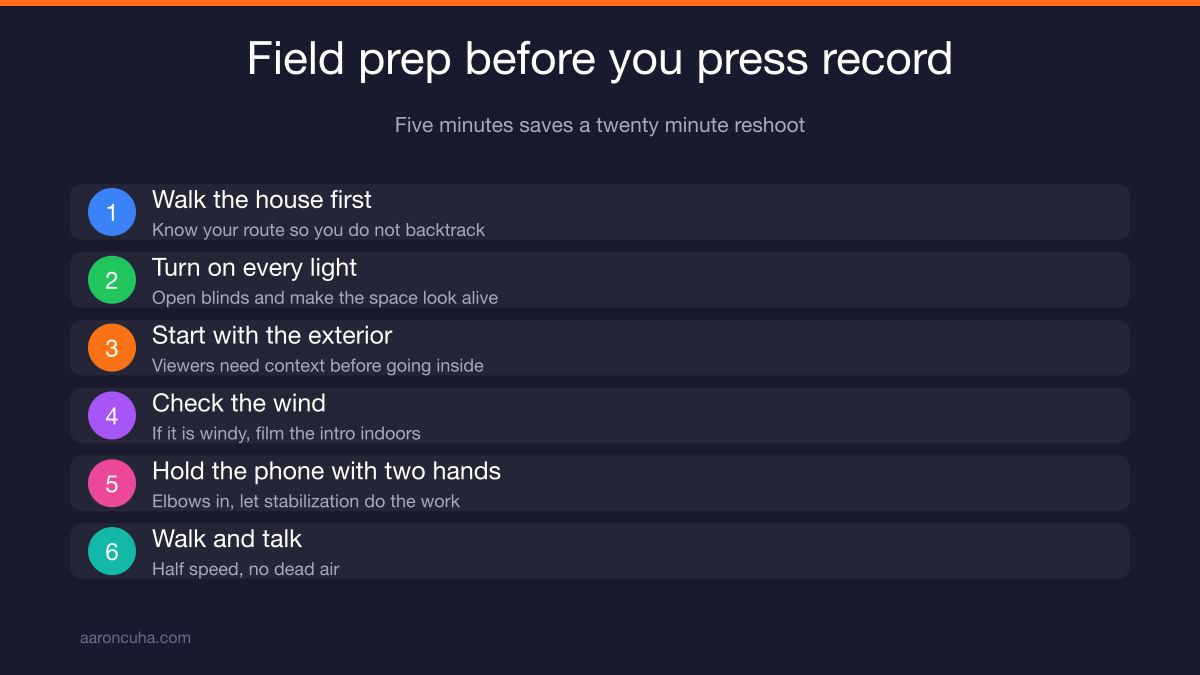
- Walk the house first. Know your route so you are not backtracking on camera.
- Turn on every light. Open blinds. Make the space look alive.
- Start with the exterior. Viewers want context before they walk inside.
- If it is not windy, film the outside intro first. If wind is a problem, move indoors.
Five minutes of prep saves you from a twenty minute reshoot. Then walk and talk.
Audio Is the One Thing You Cannot Cheap Out On
Bad audio is the biggest mistake I see in property tours. Viewers do not tolerate it. They leave immediately and your video is over.
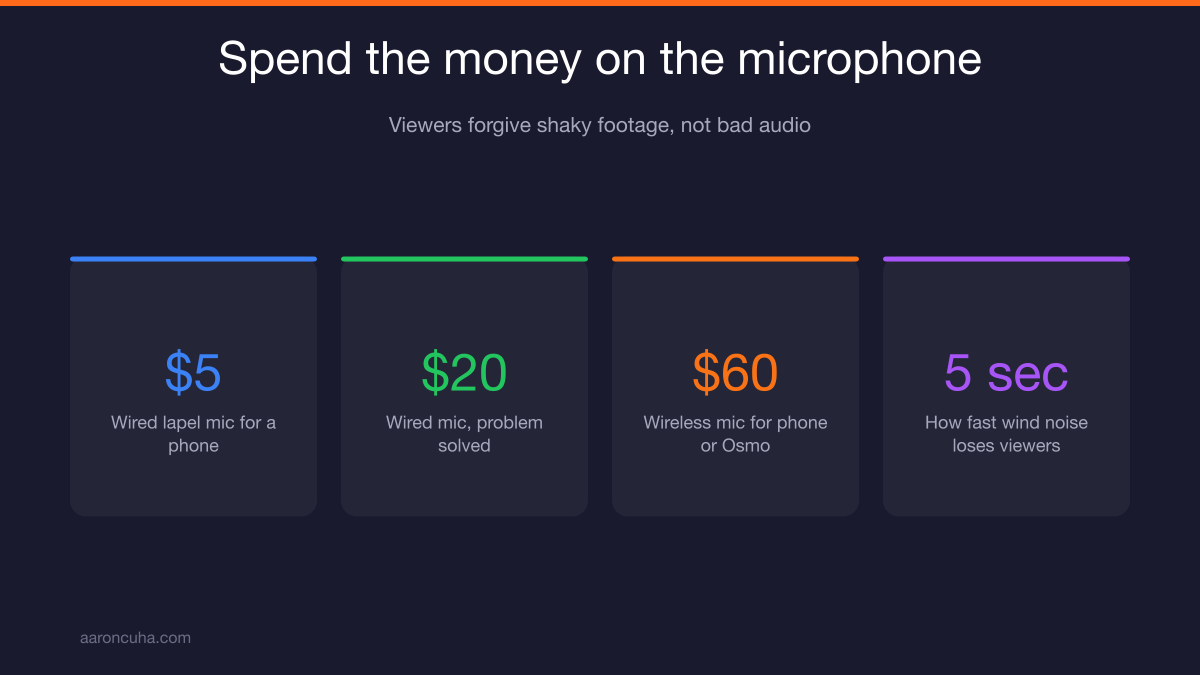
People will forgive shaky footage. They will forgive imperfect lighting. They will not forgive echo, wind roar, or a voice that sounds like it was recorded in a parking garage.
Spend $20 to $60 here. A wired lapel mic that plugs into your phone runs about $20. A wireless mic that connects to your phone or your Osmo runs about $60. Either one solves the problem permanently.
If it is windy outside and your mic has the little foam or fur wind muff on it, you are fine. Without the muff, the audio is unusable and you lose viewers in the first five seconds.
If you spend money on exactly one thing in this entire process, spend it on the microphone. Not the camera. Not the lights. The mic.
This one purchase does more for your watch time than anything else you can buy, and watch time is what the algorithm actually measures. I explain how that scoring works in how the YouTube algorithm really works in 2026.
You can also check YouTube Help for current specs on upload quality and audio formats.
Want a personal plan for your market instead of general advice? Book a YouTube strategy session and we will map your first ten videos together.
The Six Filming Mistakes That Kill Property Tours
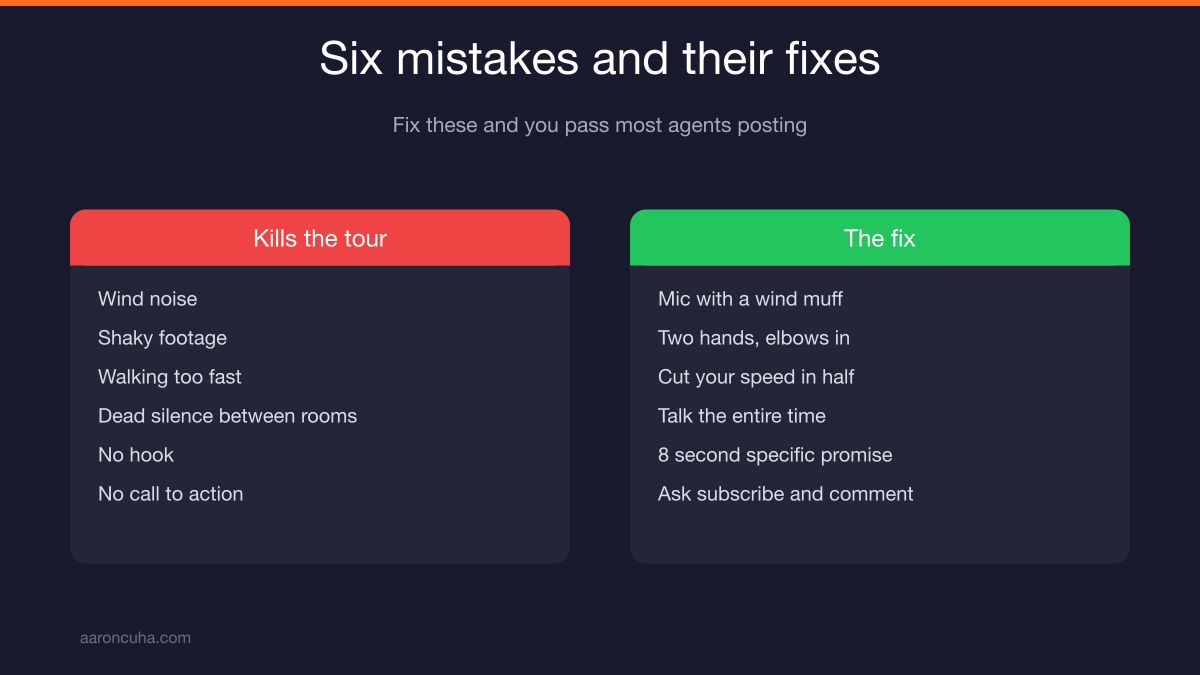
Wind noise, shaky footage, walking too fast, dead silence, no hook, and no call to action. Fix those six and you are ahead of nearly every agent posting video today.
- Wind noise. Fix: use a mic with a wind muff, or film your intro indoors and save the exterior shots for narration later.
- Shaky footage. Fix: hold the phone with two hands, keep your elbows against your body, and let the phone's stabilization do the rest. A gimbal helps but is not required.
- Walking too fast through rooms. This is the one I see constantly. Fix: take however fast you think you are walking and cut it in half. Walk at half your normal speed and let the viewer absorb each room.
- Dead silence between rooms. Fix: talk the entire time. When you show a house to a buyer, you are communicating nonstop. Do the same on camera. Silence is when people click away.
- No hook. Fix: open with a specific promise in the first 8 seconds. More on that below.
- No call to action. Fix: ask for the subscribe, ask for the comment, and offer something in the description.
Two of these deserve extra attention because they are the ones that quietly destroy watch time.
The half speed rule. You know the house. The viewer does not. What feels painfully slow to you feels normal to someone seeing that kitchen for the first time. Slow down.
Talk the whole time. Narrate like the buyer is standing next to you. Point out the ceiling height. Mention what the previous owner did to the backyard. Tell them what you would change. When there is silence, they are gone.
Also, always show the exterior first. Viewers need to place the home before they walk into it.
The Five-Part Video Formula for Every Real Estate Video
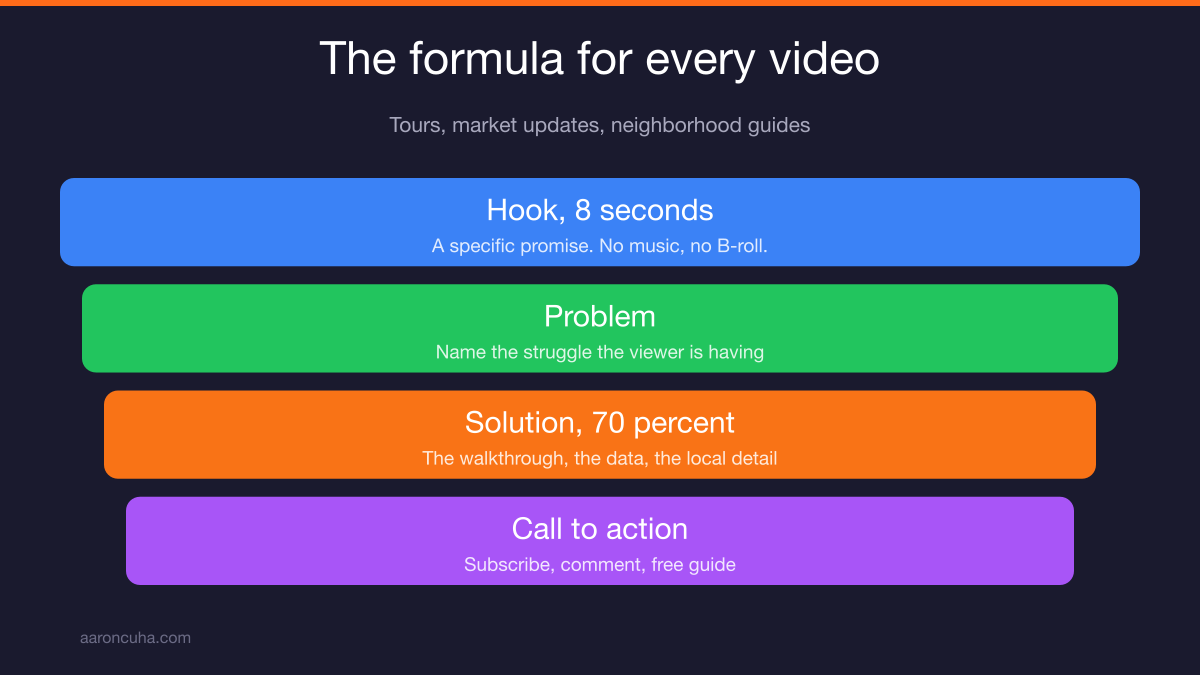
Hook, problem, solution, call to action. That structure works for property tours, market updates, and neighborhood guides. Use it every time.
The hook is 8 seconds. It is specific and it is a promise. Here is what you never start with: music, B-roll, or a 20 second intro about you and your brokerage. That is how you start with nobody watching.
The problem comes right after. You name the struggle. "Most buyers in this price range think they have to sacrifice outdoor space. They are wrong." Or, "First time buyers make the same three mistakes and it costs them thousands." Now the viewer is leaning in.
The solution is 70 percent of the video. This is the meat. For a property tour it is the actual walkthrough, room by room. For a market update it is the data and your analysis. For a neighborhood guide it is the walkability, the stats, the local detail.
The call to action closes it. Covered in the next section, because this is where most agents blow it.
| Part | Property Tour | Market Update | Neighborhood Guide |
|---|---|---|---|
| Hook (8 sec) | Specific promise about this home | The number that changed this month | What surprises people about this area |
| Problem | Buyers think they must sacrifice something | Buyers and sellers are misreading the market | People move here blind and regret it |
| Solution (70%) | Room by room walkthrough | The data plus your analysis | Walkability, schools, stats, local spots |
| Call to action | Subscribe, comment, free guide | Subscribe, comment, market report | Subscribe, comment, relocation guide |
The formula does not change. Only the middle does. For more on structuring a full library instead of one video at a time, see the four content pillars that turn a channel into a lead machine.
Where Most Agents Blow the Call to Action
They skip it entirely, or they save it for the very end where almost nobody is still watching. Both mistakes cost you the same thing: leads.
Most viewers do not reach the final 30 seconds of your video. If your only ask lives there, you are asking a mostly empty room.
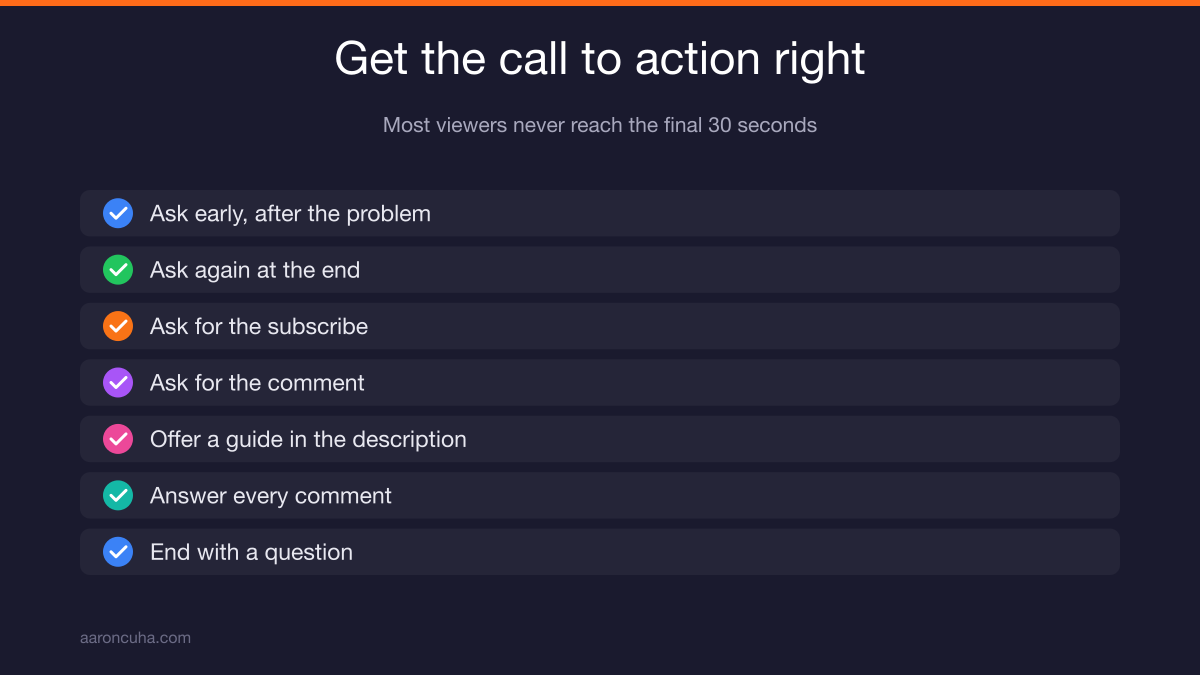
Ask twice. Once early, right after the hook and problem, and once at the end.
Ask for two things:
- The subscribe. Straightforward. "Do me a favor and hit subscribe."
- The comment. The algorithm rewards engagement, and I answer every comment on my videos. That reply loop keeps people coming back and it signals to YouTube that the video is worth pushing.
Then give them something real. Here is the offer I use as an example with agents: "If you are thinking about selling your house, there is a link in the description to our ultimate sellers guide. Forty pages covering the best paint colors, what to fix before listing, how staging works, and how to pick the right agent."
That guide does two jobs. It gives value to the viewer and it captures the lead. That is how a property tour turns into a listing appointment.
End with a question too. "What is your biggest fear about being on camera?" or "Which room would you change first?" A question invites the comment you just asked for.
If you want the full path from view to signed client, read how to get clients from YouTube.
For context on how buyers actually search for homes and agents, the National Association of Realtors publishes ongoing research worth reviewing.
Point, Shoot, Go: How to Film Your First Video Today
A phone, a plan, and the guts to press record. That is the entire requirement. Everything else in this article is optimization you can add later.
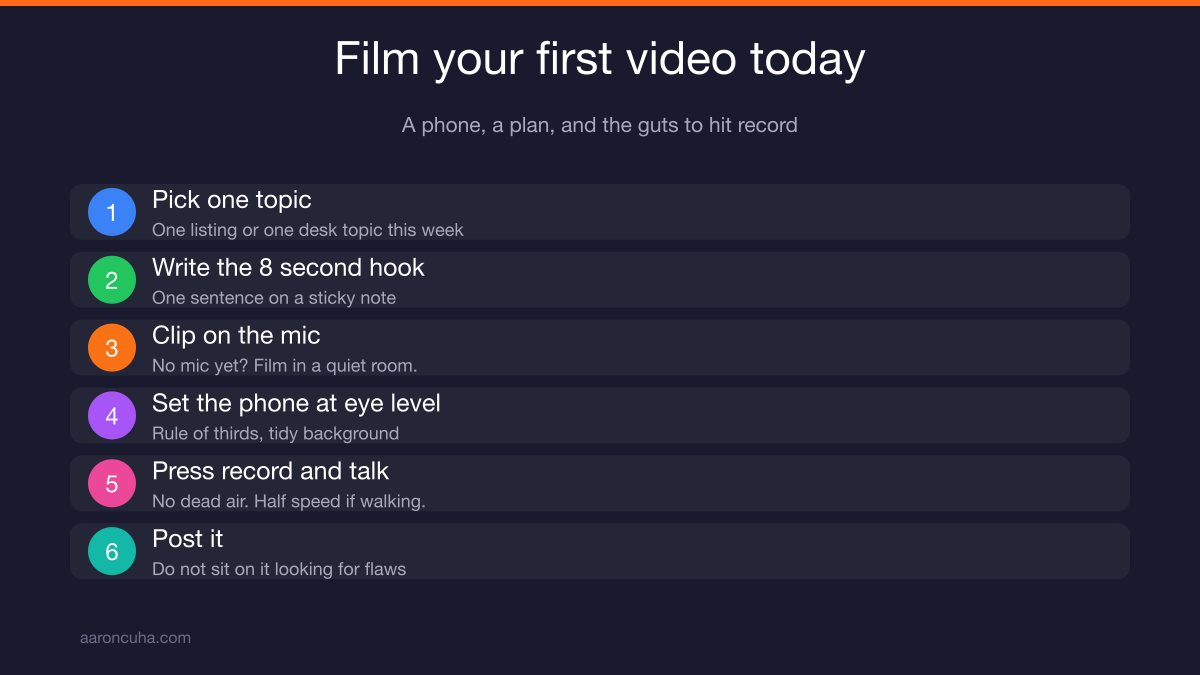
Here is your same day action plan.
- Pick one thing. One listing you are showing this week, or one desk topic like the three mistakes first time buyers make in your market.
- Write the 8 second hook. One sentence. Specific. A promise. Write it on a sticky note and put it near the camera.
- Clip on the mic. If you do not own one yet, order it today and film your first video anyway using the phone mic in a quiet room.
- Set the phone at eye level. Books, tripod, whatever you have. Rule of thirds. Tidy background.
- Press record and talk. No dead air. Half speed if you are walking.
- Post it. Do not sit on it for a week looking for flaws.
Point and shoot. Shoot and go.
No bad lighting. No phone too low. No messy background. No wind noise. No shaky footage. No dead silence. A hook at the front and a call to action at the back. That is the checklist.
Consistency beats production quality every single time. The agent posting a decent video every week will pass the agent producing one perfect video a quarter, and it will not be close.
And this compounds. A video you film this week is still generating calls next year. That is what makes YouTube different from every ad you have ever run. For a broader look at the compounding effect, read the authority flywheel and systems over hustle.
You can also check the official YouTube Blog for platform updates that affect how your videos get distributed.
You now have the setup, the rules, and the formula. The last piece is accountability. Join the Systems Over Hustle community and post your first video where other agents will actually hold you to it.
Frequently Asked Questions

Written by
Aaron CuhaAuthor of Crazy Simple YouTube, keynote speaker, and executive coach with 20,000+ hours logged. ICF PCC, NLP Master Practitioner, and DISC Certified. Aaron helps entrepreneurs replace hustle with AI-powered systems that generate leads, content, and revenue on autopilot.