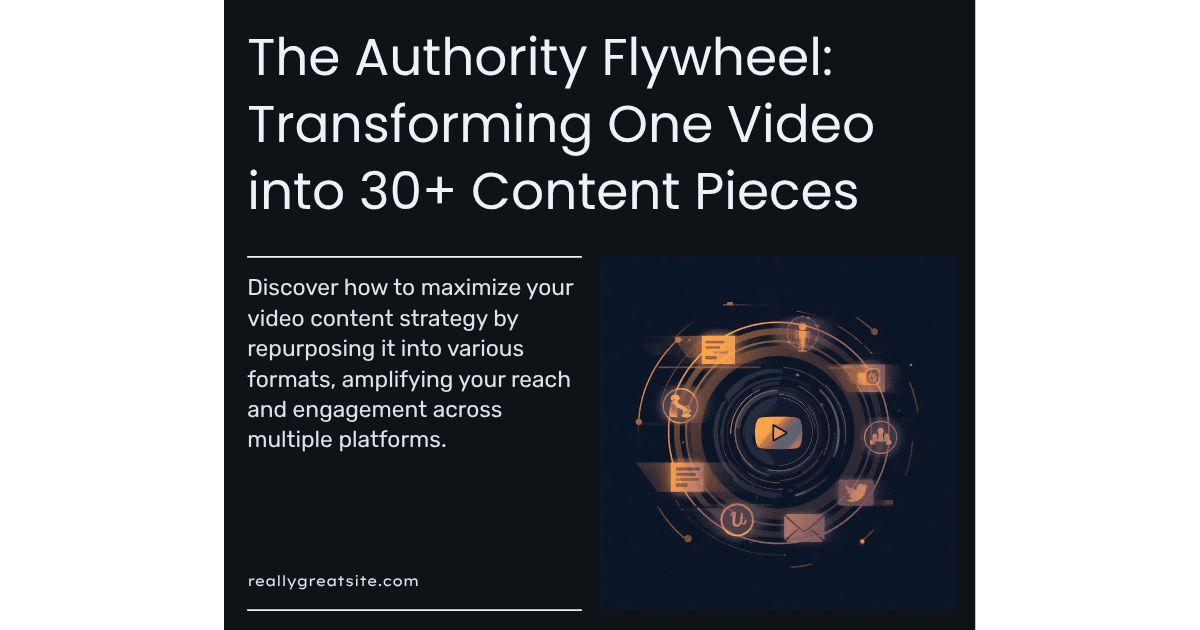
Authority is a flywheel, not a campaign. One searched video a week feeds the list. The list feeds clients. Clients feed proof with permission. Proof feeds podcasts and stages. Stages feed the channel. Here is each turn, with the numbers from my own wheel, and the one place most people let it stop.
The Authority Flywheel is five turns that feed each other: a searched video a week brings strangers; a single lead magnet turns them into a list; the list turns into clients; clients, with permission, turn into proof; proof turns into podcasts, stages and a book; and every podcast and stage sends people back to the channel. It turns slowly for a year and then it is hard to stop. The wheel is why one plain video a week eventually put me on the Tom Ferry Success Summit main stage in front of 5,000 agents.
Key Takeaways
- Turn one: the weekly searched video. Nothing else turns without it.
- Turn two: one lead magnet, every video, so the list grows every week.
- Turn three: clients, from the list, through a follow-up that answers in minutes.
- Turn four: proof with permission, kept in one file with names and numbers.
- Turn five: podcasts, stages, the book, each sending people back to turn one.
- The wheel stops at turn four for most people, because they never ask for permission to use the result.
If you want this built with someone who has run it at scale, coaching is where we do it, and the free AI scorecard is the four minute place to start.
Turn one: why does it start with a searched video and not a brand?
Because strangers find you by typing a question, not by discovering a brand. A weekly video that answers "how many videos before YouTube sends a lead" is found every week for years; a brand launch is found for a week. I built three channels to a combined 282,000 subscribers one answer at a time, and the ones that mattered were never the polished ones. The video on this page is one of the most watched on my channel and it is me explaining one thing clearly in an office. The system for turn one is in how a business turns views into leads.
Turn two: how does the video become a list?
One lead magnet, named out loud twice in every video and linked first in every description. Mine is the AI scorecard. The point of one instead of five is that the list grows every week from every video, and the follow-up only has to be built once. A channel with five lead magnets has five small lists and no flywheel.
Turn three: how does the list become clients?
Through a reply that lands in minutes and a conversation that was mostly had before it was booked. People who watched three videos arrive knowing your method and your price. The calls are short and they close, which is why half a dozen of my real estate clients make over a million dollars a year in commissions directly from YouTube and about a dozen more are near half a million. The follow-up build is in where AI belongs; the offer has to be one thing, priced for the outcome, which the one person business covers.
Turn four: how do clients become proof, and why does the wheel stop here?
By asking, in the moment the result happens, for permission to use it with their name. Scott: 200 subscribers after 12 years, then $87,000 in commissions 90 days after rebuilding the channel, over $300,000 for the year. Rachael: 1,000 to 160,000 subscribers in 18 months. Chris: a company that grew from four people to 35 during coaching. Those sit on my site, verbatim, with names, because I asked. Most people let the wheel stop here out of politeness. The results file with permissions is the asset that makes turn five possible, and it is the one most owners never start.
Turn five: how does proof become podcasts, stages and a book?
Hosts and planners book people they can look up and claims they can check. With a library of videos and a file of named results, a podcast pitch writes itself: the claim as the episode title, two numbers as the reason. Two episodes of The Tom Ferry Podcast Experience in 2026 and REVB's Episode 121 came that way. Stages come after podcasts; the Summit main stage came after years of smaller rooms and a decade of coaching inside the same organization. The book, Crazy Simple YouTube, came after the system had been coached for years and did not change; it reached number one in Amazon's web marketing category in April 2026 because the proof existed before the pages did. Each of these sends people back to turn one, which is the point of calling it a wheel.
How fast does the flywheel turn?
Slowly, then all at once. Year one is the channel: 12 to 15 weekly videos before YouTube tests it, 50 videos before the library carries the pipeline. Year two is clients and the first proof. Year three is podcasts and small stages. The large rooms come when the proof is undeniable, which for me took the better part of a decade. Anyone promising the wheel in 90 days is selling turn one and calling it the wheel.
What did my own wheel look like, with dates?
I started coaching inside Tom Ferry's organization in 2016 after losing a 280-office company in 2008 and spending a decade in Nepal running medical camps with my wife Debbie. The channels came first, one plain video at a time, while I coached agents on what was working. Clients produced results and I asked for permission to use them. The results became the material for Tom Ferry's Listing Velocity YouTube Edition sessions, then two episodes of The Tom Ferry Podcast Experience in May and July 2026, then REVB in October. Crazy Simple YouTube published in April 2026 from years of coaching transcripts. The Summit main stage in front of 5,000 agents came the same year. Every turn fed the next, and none of them were fast. That is the honest timeline, and it is the one I would plan around.
What does the wheel look like for a local business that will never want a stage?
Smaller and just as real. The contractor's turn five is not a keynote; it is the local association asking her to speak at a builders' breakfast, the lender who starts referring because he watched her videos, and the review page that fills itself. The dentist's is the study club presentation and the specialist who sends patients. Proof with permission still drives it: before and after photos with names, a case study on the website, a video of the client saying what happened. The wheel does not require fame. It requires that each turn feeds the next, which is a matter of asking and of keeping the weekly appointment.
Where does the wheel break, and how do you check?
- No strangers: turn one is topics instead of questions. Retitle.
- Strangers, no list: turn two is five lead magnets or none. Pick one.
- List, no clients: turn three is slow follow-up or an unclear offer. Fix the reply time, record an Anchor video.
- Clients, no proof: turn four is never asking. Ask this week.
- Proof, no stages: turn five is no speaker page and no pitches. Build the page with real stages and real room sizes, pitch two podcasts.
Check the wheel quarterly against those five lines. The operating idea behind all of it is Systems Over Hustle: build each turn once, then keep the appointment. If you want help diagnosing where yours has stopped, that is what coaching is for.
Frequently Asked Questions

Written by
Aaron CuhaAuthor of Crazy Simple YouTube, keynote speaker, and executive coach with 20,000+ hours logged. NLP Master Practitioner and DISC Certified. Aaron helps entrepreneurs replace hustle with AI-powered systems that generate leads, content, and revenue on autopilot.