A real estate channel produces listings and buyers when it is named after the search, built on neighborhood and buyer-question videos, published weekly for a year, and tied to one lead magnet with same-day follow-up. This is the full system I coach inside Tom Ferry, with the numbers, the formats, the mistakes, and the first 90 days.
YouTube produces listings and buyers for a real estate agent when four things are true: the channel is named after what buyers search, not the agent; the videos answer the questions people type before they move, led by the 12 minute neighborhood video; one video goes out every week for a year; and every video points to one lead magnet with a follow-up that answers the same day. Plan on one to three transactions a year for every thousand subscribers.
Key Takeaways
- Nobody is searching your name. Name the channel after the place and the decision: "Living in Draper Utah."
- The neighborhood video outperforms the market update in every market I coach. It is the Engine of the channel.
- One video a week. Twelve to fifteen consistent uploads before YouTube tests the channel with new viewers.
- One lead magnet, named out loud, linked first. Follow-up in minutes, not days.
- The math: a video a week, one to three transactions a year per thousand subscribers. Half a dozen of my clients earn over $1M a year in GCI directly from YouTube.
- Agents and teams build this inside Tom Ferry coaching, where I coach. Ask for Aaron.
Every real estate agent and team who finds this page goes to Tom Ferry coaching, one hundred percent. That is where the system, the accountability and the peer group live, and it is where I coach. The rest of this page is the system itself, so you know what you are walking into.
Why is YouTube different from every other platform for an agent?
Because people type their move into it. Months before a family calls an agent they search "best neighborhoods in Salt Lake for families," "what is it like living in Draper," "should I buy in 2026 or wait." They watch the 12 minute answer. The agent who recorded it has spent 12 minutes with them, in their living room, before the first call. Instagram shows a reel to someone who was not looking and forgets it by tomorrow. YouTube is the number one search engine for home buyers, and an answer recorded this year is still being found in 2029.
I coach this as a Tom Ferry Mastery Coach with more than 20,000 one-on-one hours, I built three channels of my own to a combined 282,000 subscribers, and I taught it on the Success Summit 2026 main stage to 5,000 agents. Half a dozen of my clients make over a million dollars a year in commissions directly from YouTube and about a dozen more are near half a million. None of them are famous. They are findable in one market.
What should an agent name the channel?
After the search. "Living in Draper Utah," "Moving to Park City," "Scottsdale Real Estate with the Nguyen Team" with the place first. Your name goes in the banner and the about section. The reason is blunt: nobody is typing your name, and the channel name is the first thing a stranger reads when deciding whether to subscribe. Rename it today if it is named after you; it is the first change I make on every agent's channel and the one that costs nothing. The reasoning in full is in how to pick a real estate channel theme.
What is the neighborhood video, and why does it beat the market update?
A 12 minute tour of one neighborhood answering what a mover wants to know: what it costs, who lives there, what the streets look like, the schools and parks by name, the commute, the one thing nobody tells you. Recorded on a phone, driving and walking, talking the whole time. It beats the market update because a buyer types "living in Holladay," not "market update," and because it is still true in two years. Market updates are the format agents make because other agents make them; neighborhood videos are the format buyers watch. The data behind that claim is in property tours and neighborhood videos and in content ideas that convert.
Which videos make up a real estate channel?
The four pillars from Crazy Simple YouTube, in agent terms.
- Engine (six of every ten videos): neighborhood tours, "pros and cons of living in," "cost of living in," "best neighborhoods for," "should I buy or wait," "what do I fix before I list." Searched questions, titled as typed.
- Magnet (one of five): the video built around your one lead magnet: the neighborhood guide, the relocation checklist, the "what your home is worth" walkthrough.
- Advisor (one of five): a real deal with permission: the offer strategy that won, the inspection that saved a buyer, the pricing call that got a seller more.
- Anchor (one a quarter): what working with you looks like, step by step, and how to start. Pinned and linked from everything.
A new channel breaks the rotation and publishes Engine videos only until it clears the threshold. The four content pillars covers the rotation in detail.
How often should an agent post, and how long before it works?
One video a week, same day, for a year. In my coaching a channel needs 12 to 15 consistent uploads before YouTube starts testing it with new viewers, and most agents quit at six. Individual neighborhood videos can rank within weeks in markets with weak competition, which is most of them. The library of 50 that carries the pipeline on its own is a year away. There is no published benchmark for "how long until the first lead" and anyone quoting one is guessing; what I can tell you is that Scott sat at 200 subscribers for 12 years and had $87,000 in commissions 90 days after rebuilding the channel around search, and over $300,000 by year end.
What is the lead magnet, and what happens after someone takes it?
One thing, for the whole channel. A relocation guide to your city, a neighborhood comparison, a "what your home is worth" walkthrough that asks for an address. Named out loud twice in every video, linked first in every description. Then the follow-up has to run the same day without you: a reply in minutes, a booking link, a short sequence. Most agents lose the lead in the gap between the form and the first text; the system I coach closes that gap with AI doing the first reply and the agent doing the conversation. YouTube leads for real estate agents covers the conversion side; AI for real estate agents covers the follow-up build.
What is the honest math?
A video a week and one to three transactions a year for every thousand subscribers, provided the lead magnet and follow-up exist. A channel with 3,000 subscribers who found it by searching your city is three to nine extra transactions a year. At a typical commission that is a different business, and it was built on a phone. The number I will not give you is "how many views," because views are not the product; the video on this page covers the six differentiators between channels that produce clients and channels that produce views.
How does YouTube SEO work for an agent in 2026?
Title the video as the question people type with the place name early. Say the answer in the first 30 seconds, because YouTube's systems now read the spoken content and so does the viewer deciding whether to stay. Write a description that restates the answer in two sentences with the lead magnet first. Put the video in a playlist named for the decision: living in, buying in, selling in. The full process is in YouTube SEO for realtors and the algorithm change in how the algorithm works in 2026.
What gear and time does this take?
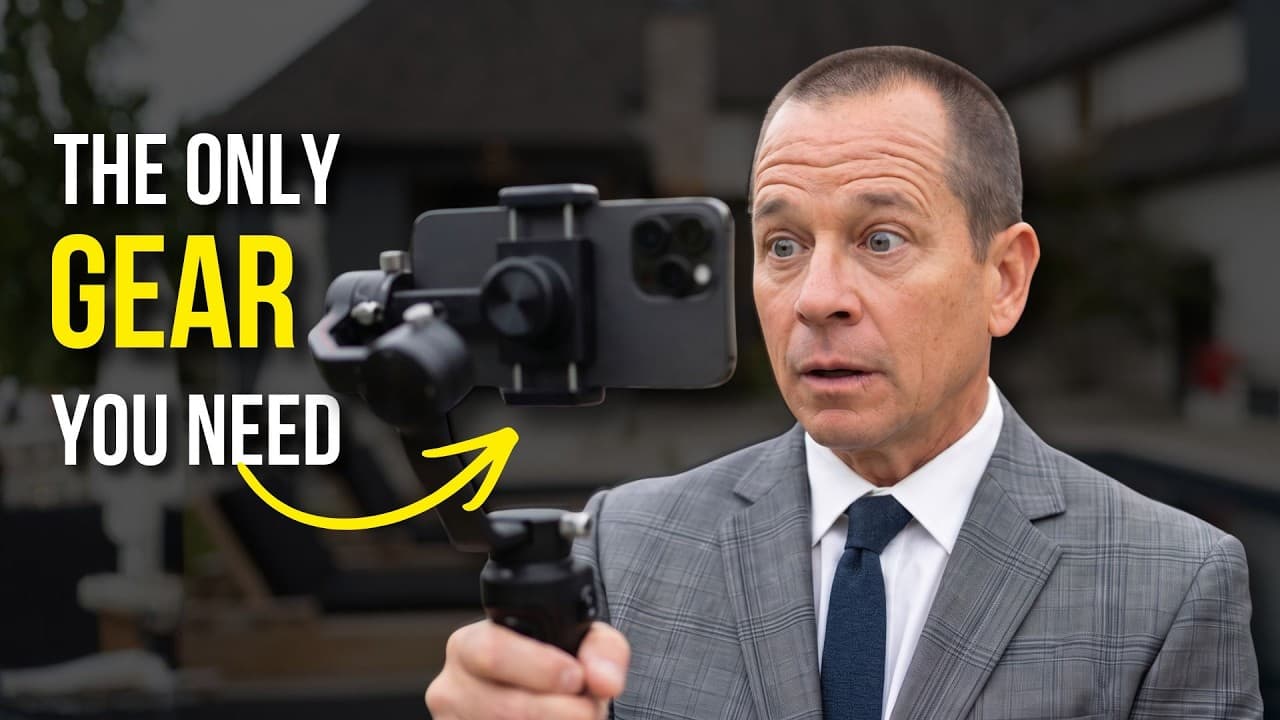
A phone, a small tripod or gimbal, a $30 lapel microphone, and the car you already drive. Ninety minutes a week once the rhythm is set: 30 to record, 30 to title, describe and schedule, 30 to cut the Short and the email. Agents who wait for a videographer post monthly and lose to the agent posting weekly from a phone. The filming routine is in real estate YouTube filming tips.
Do Shorts help an agent?
As trailers, cut from the long video. The first 30 seconds of a neighborhood video, posted as a Short with the full tour linked, sends people to the video that can turn them into a client. Trend Shorts bring subscribers from four states away and teach the algorithm your channel is entertainment. The split is in YouTube Shorts for real estate agents.
Which mistakes kill agent channels?
- Naming the channel after yourself.
- Market updates as the main format.
- Teasing the answer for a minute instead of saying it.
- Five calls to action and no lead magnet.
- Posting in bursts and quitting at video six.
- Measuring views and subscribers instead of completions and conversations.
Six is the number because they are the six I find on nearly every stalled channel; why real estate agents fail on YouTube walks through each with examples.
What do the first 90 days look like?
- Week one: rename the channel after the search. List 20 questions movers ask you. Pick one lead magnet and build it.
- Weeks two to four: record and publish the first three neighborhood videos. Connect the lead magnet form to a same-day reply.
- Weeks five to twelve: one video a week, same day. Cut the Short. Send the email. Every Friday, three numbers: videos out, guide downloads, conversations booked.
- Week twelve: you are at the threshold. The next 40 weeks are repetition, and the library starts to carry the pipeline.
What are twenty video titles an agent can record this quarter?
Swap in your city and neighborhoods. Every one is a question a mover types.
- What is it like living in [neighborhood]? The full tour.
- Pros and cons of living in [city] in 2026.
- Best neighborhoods in [city] for families.
- Best neighborhoods in [city] for first time buyers.
- Cost of living in [city]: what a family actually spends.
- Moving to [city] from California: what to know first.
- [Neighborhood] vs [neighborhood]: which one fits you?
- Is it a good time to buy a house in [city] in 2026?
- How much house does $600,000 buy in [city]?
- What do I fix before I list my house in [city]?
- How long does it take to sell a house in [city] right now?
- New construction vs resale in [city]: the honest comparison.
- The best parks, trails and weekends in [city].
- Commute from [suburb] to downtown [city]: what it is really like.
- Property taxes and HOA fees in [city] explained.
- What nobody tells you about buying in [neighborhood].
- Top mistakes buyers make in [city].
- Schools in [neighborhood]: what parents should know.
- Downsizing in [city]: where retirees are moving.
- How we got a seller more in [neighborhood]: the pricing call. (Advisor, with permission.)
What does the conversation look like when a YouTube lead calls?
Short, and already decided. They say "I have watched a bunch of your videos." They know the neighborhoods you covered, they know your voice, and they usually know which neighborhood they want. The call is logistics: when are you coming, what is the budget, what have you seen online. Agents coming from paid leads are used to convincing strangers; YouTube leads arrive convinced and want help, which is why my clients' close rates on video leads are the reason they stopped buying leads. The follow-up still has to be instant, because the same family watched three other agents' videos too.
Where does Tom Ferry coaching fit?
It is where this gets done, every week, with someone watching. I coach inside Tom Ferry International and I take no real estate clients directly; agents and teams who find this page enroll through Tom Ferry coaching and ask for Aaron. The system above is what we build in the first 90 days, and the accountability, the recaps and the nudges that make agents actually publish 52 weeks in a row are what the coaching is for. If you are not an agent, the YouTube Deep Dive is the first step, and coaching is the path after it.
Frequently Asked Questions

Written by
Aaron CuhaAuthor of Crazy Simple YouTube, keynote speaker, and executive coach with 20,000+ hours logged. NLP Master Practitioner and DISC Certified. Aaron helps entrepreneurs replace hustle with AI-powered systems that generate leads, content, and revenue on autopilot.