Systems Over Hustle is not a slogan about working less. It is a rule: anything you do more than twice gets built once, written down, and run on a schedule, so your effort goes into the decisions only you can make. I built a 3,000 person company on it, lost it, and rebuilt a coaching practice and three YouTube channels the same way. Here is the whole idea, with the systems to build first.
Systems Over Hustle means that anything you do more than twice gets built once, written down, and run on a schedule, so your working hours go to the decisions only you can make. Hustle is effort applied to the same problem every week. A system is effort applied once to make the problem stop recurring. The difference is the whole gap between an owner who cannot take a week off and one whose business runs while they coach, speak or sleep.
Key Takeaways
- The rule: twice is a pattern, three times is a system. Build it, write it down, schedule it.
- Four systems first: the lead system, the follow-up system, the delivery system and the weekly review.
- Hustle is not the enemy; hustle without a system is. The system is where the effort goes to compound.
- AI runs the parts that are the same every time. People run the parts that need judgment.
- The weekly review is the system that keeps the other systems built. Thirty minutes, three numbers, last week's commitments.
- The Systems Over Hustle platform is this idea as software, running for 83 coaching clients.
The platform my coaching clients run on is called Systems Over Hustle because it is this idea as software: commitments, briefs, recaps, nudges and pace in one place. Coaching is where we build the systems for your business; the four minute scorecard is where you see which one is missing.
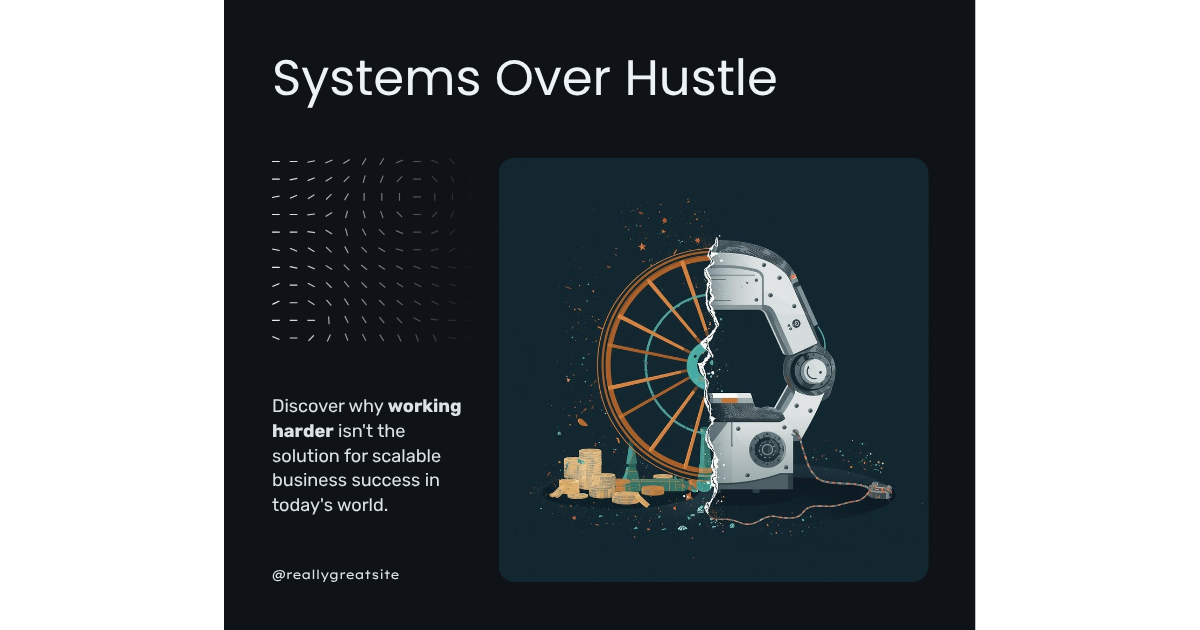
Where did Systems Over Hustle come from?
From running out of hours. In 1999 I started DirectLender.com in a spare room in Huntington Beach. It grew to 280 offices and about 3,000 people, large enough that Bear Stearns offered to buy it and we said no. A company that size cannot run on one person's hustle; it ran on written decisions, documented processes and a weekly rhythm, or it did not run. The 2008 crash took all of it. My wife Debbie and I then spent a decade in Nepal running medical camps in the Himalayas through our foundation, the Center for Global Change, serving more than 5,000 people with volunteers and no phone signal, where the same rule held: the camps that worked were the ones with a system a stranger could run. I came back and rebuilt as a coach, and the practice, the three YouTube channels at a combined 282,000 subscribers and the book came from applying the rule to myself. The long version is on the about page.
What does hustle get wrong?
Not the effort. The direction. Hustle points effort at the same recurring problem, this week's leads, this week's follow-up, this week's fire, and next week the problem is back and the effort is spent. The owner feels productive and is standing still. Systems point the same effort at making the problem stop recurring. The first week of building a system is slower than hustling through the problem. Every week after is faster, and the difference compounds for years. Hustle is how you find out which problems recur. Systems are what you do about it.
What is the rule, exactly?
If you have done something twice, you will do it again. The third time, do not do it; build it. Write the steps as a numbered list a competent stranger could follow. Decide who runs it and when. Put it on a schedule. Review it in the weekly review. That is the entire method. It applies to answering a lead, onboarding a client, publishing a video, preparing for a call, closing the month. The owners who resist it say their business is different; it is not, it is a set of recurring problems with a person standing in front of them.
System one: how do leads arrive without you chasing them?
A weekly searched video, one lead magnet, every video pointing to it. The video answers a question a buyer types; the lead magnet turns the viewer into a name; the system does this every week whether or not you feel like prospecting. Across my clients, half a dozen real estate agents make over a million dollars a year in commissions from exactly this system, built on a phone. The full build is in how a business turns YouTube views into leads, and the agent version in YouTube for real estate agents.
System two: how does follow-up happen the same day, every time?
AI answers the first inquiry in minutes in your voice, books the conversation, and reminds the prospect. You read the templates once. Then nobody waits until you are out of a meeting, and no lead dies in an inbox. This is the system most owners build second and should build first, because it pays on leads you already have. Where AI belongs in a coaching business covers the order; AI for real estate agents covers the agent version.
System three: how does the work get delivered without you being the bottleneck?
A decision ladder that says which calls your people make alone, which they make and tell you, and which still need you. A board where every commitment has an owner and a date. Documents for every recurring task that a stranger could run. With those three, delivery stops routing through your phone. How to delegate when every decision comes back to you is the full method, learned on 3,000 people and scaled down to a team of three.
System four: why is the weekly review the system that keeps the rest built?
Because systems decay when nobody looks at them. Thirty minutes, same day every week, alone or with your team. Three numbers on one page: for most owners, leads or videos out, lead magnet completions, conversations booked. Then last week's commitments: done, not done, blocked. Then this week's, written with dates. That is it. The review is where you notice a system has stopped running before it costs a month, and it is the single habit that separates the owners whose systems last from the ones who built them once and let them rot. The video on this page covers the three numbers for a YouTube channel specifically.
Where does AI fit in Systems Over Hustle?
In the parts that are the same every time. The first reply, the booking, the brief, the recap, the nudge, the weekly content cut from one video. Those are systems by definition, and a current AI model runs them faster and more reliably than a tired owner at 9 PM. What AI never runs is the decision with a name on it, the hard conversation, the price. Systems Over Hustle is not "let the machine do it"; it is "decide once what the machine does, and spend your hours where judgment lives." The content version is in the AI content engine.
What is the Systems Over Hustle platform?
The idea as software, built for my coaching practice and run by every coaching client. Each week a client logs their commitments; the system nudges them when one slips; before every call they submit a short update that becomes my brief the moment they hit submit; after every call the recap is archived and searchable; pace against their annual goal is visible all year. In a recent 30 day window: 83 active clients, 888 team members, 673 commitments, 763 nudges, 736 questionnaires, 92 briefs, and an archive past 14,700 sessions. I built it because I wanted the four systems in one place with the roster, and because telling clients to build systems while running my practice on sticky notes would have been hustle. The platform page shows what a client runs on after they say yes.
Is Systems Over Hustle a book?
It is the next one. Crazy Simple YouTube, which published in April 2026 and reached number one in Amazon's web marketing category, is system one written out in full: the lead system, for any business owner, on YouTube. Systems Over Hustle, the book, is the operating idea behind all four systems and the stories from the mortgage company, Nepal and the coaching practice; the manuscript is complete and the book page will carry the date when it is set. The framework version, with the four pillars of content, leads, delivery and automation, is in the Systems Over Hustle framework.
What do owners say when they resist it, and what is the answer?
- "My business is too custom for systems." Then start with the three things you did twice last week. There were more than three.
- "I do not have time to build systems." You do not have time because you have no systems. Build the follow-up system first; it pays back its own build time in a month.
- "Systems make the business impersonal." Systems make you present for the personal parts. A client who gets a reply in minutes and a recap the same day experiences more attention, not less.
- "I tried, and the systems fell apart." You skipped the weekly review. Systems without the review always fall apart; that is why it is system four.
What do the first 30 days look like?
- Week one: list every task you did twice last week. Pick the follow-up system. Build the first reply and the booking link.
- Week two: schedule the weekly review and hold it. Three numbers, last week's commitments, this week's with dates.
- Week three: write the decision ladder with your team, or with yourself if the team is coming. Start the board.
- Week four: record the first searched video and point it at one lead magnet. The lead system starts.
Four weeks, four systems started, and the next 48 are repetition. If you want someone who has run this at 3,000 people and at three checking your version, that is coaching. Real estate agents and teams run it inside Tom Ferry coaching, where I coach, on the same platform. The four minute scorecard tells you which system is missing first.
Frequently Asked Questions

Written by
Aaron CuhaAuthor of Crazy Simple YouTube, keynote speaker, and executive coach with 20,000+ hours logged. NLP Master Practitioner and DISC Certified. Aaron helps entrepreneurs replace hustle with AI-powered systems that generate leads, content, and revenue on autopilot.