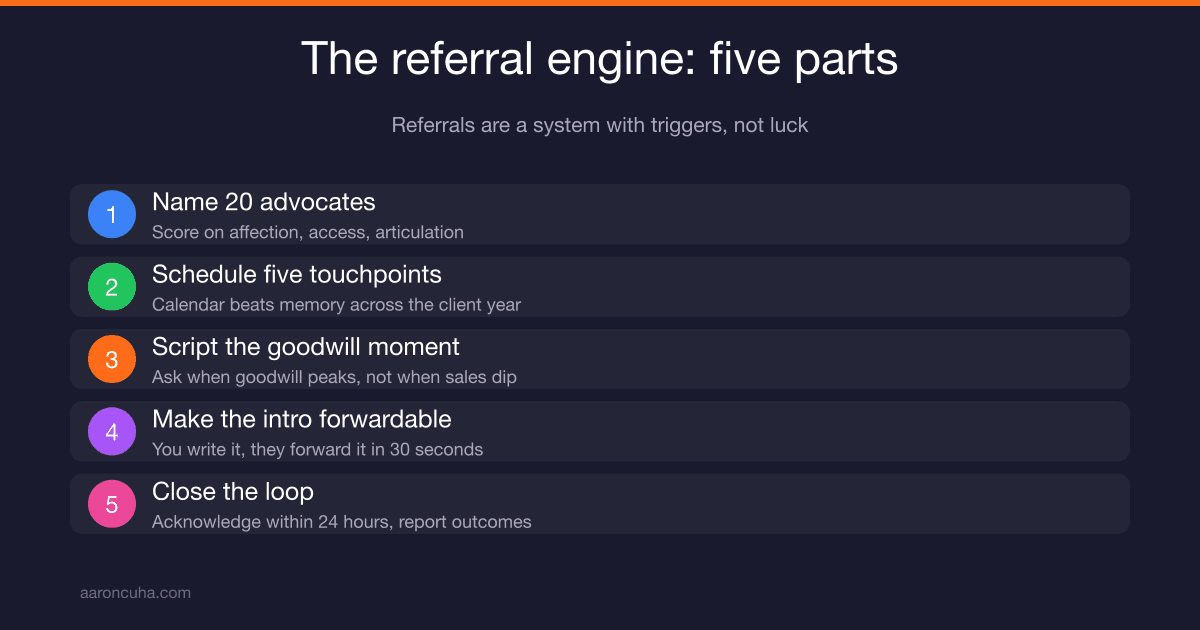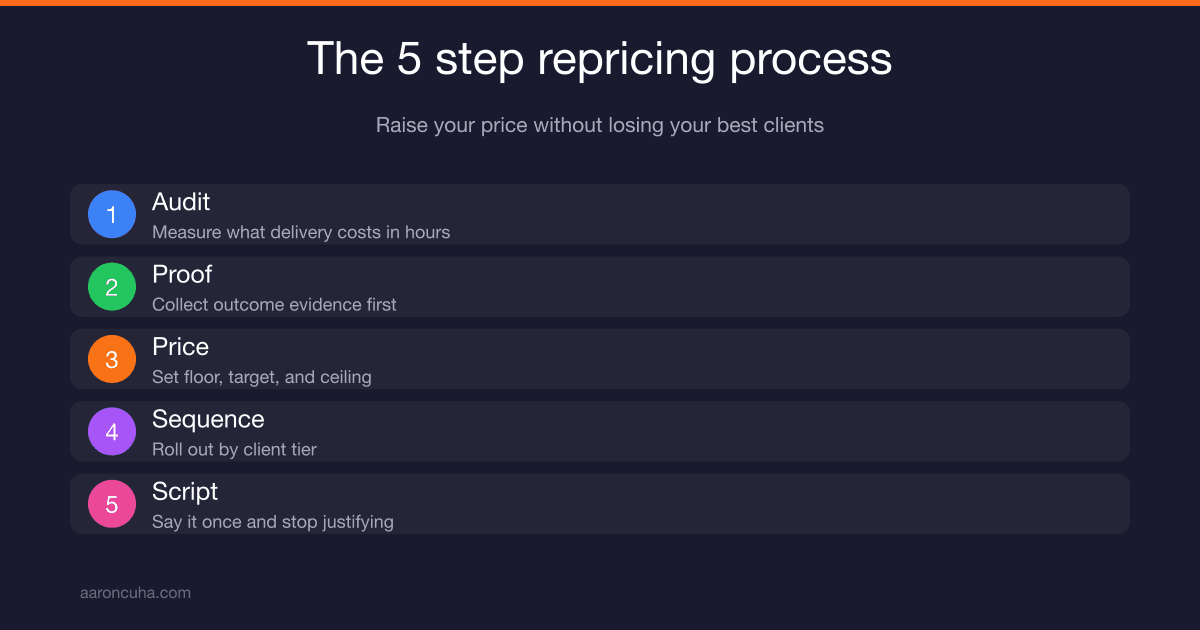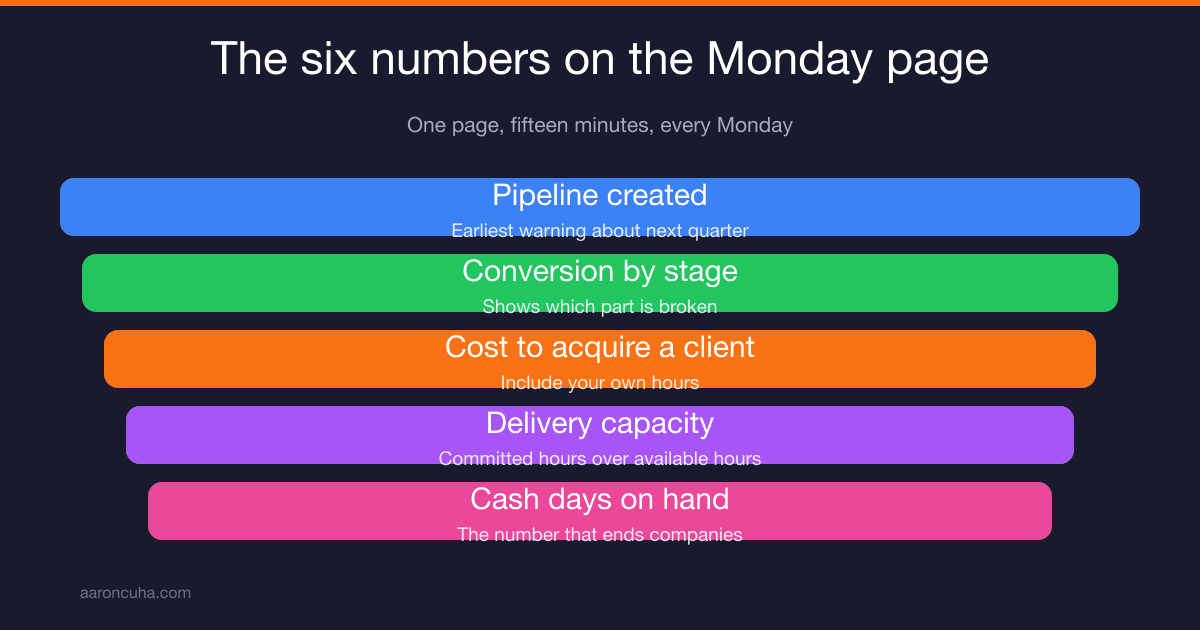
Most churn is decided in the first two weeks, not the sixth month. This client onboarding process gives you a day-by-day system for the first 14 days so new clients feel certain they made the right call. Steal the checklist and run it this week.
Your client signed. The money cleared. And then nothing happened for nine days. That silence is where most churn begins, and your client onboarding process is the only thing that closes it.
Key Takeaways
- Your client onboarding process decides retention long before your delivery does.
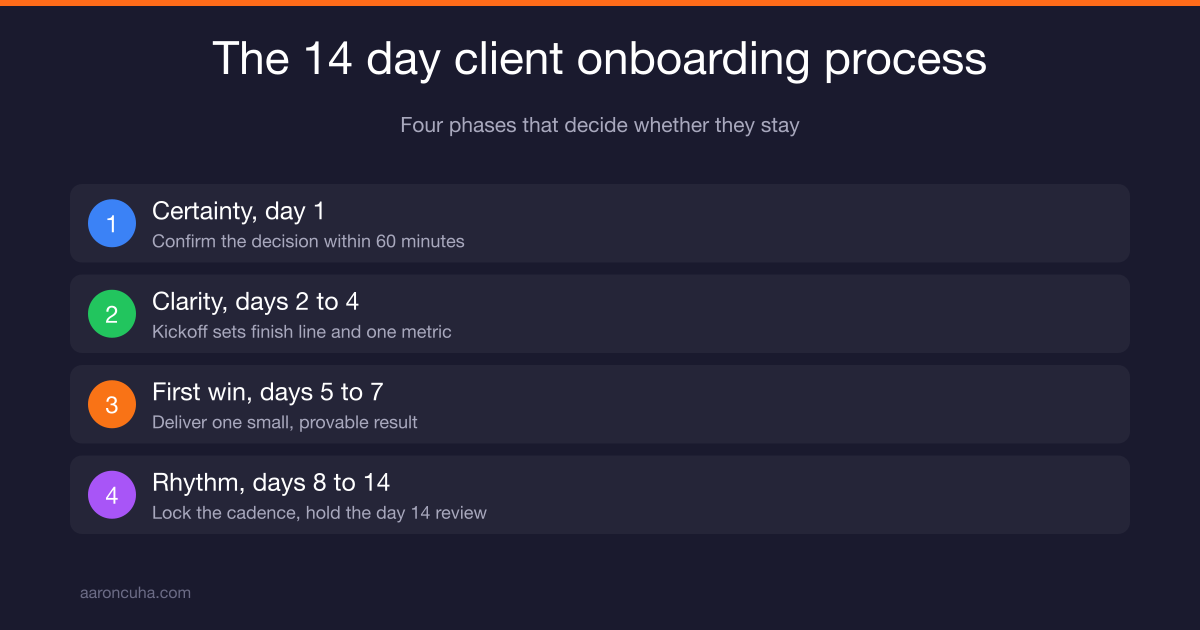
- Run four phases in 14 days: Certainty, Clarity, First Win, Rhythm.
- Contact the client within 60 minutes of payment, every single time.
- Design one small, provable win into days five through seven.
- Automate the paperwork. Keep the welcome, kickoff, and day 14 review human.
I want to give you the exact client onboarding process I use and teach. It is a one page checklist and a 14 day calendar. You can build it today and run it on your next client.
If you want help installing systems like this across your business, start with a strategy session where we map your client journey end to end and find the leaks that are costing you renewals.
Why the First 14 Days Decide Everything
Buyer's remorse peaks right after payment, not months later. The first 14 days either replace that doubt with proof or leave it to grow. Whatever fills the gap between payment and first result becomes the client's story about you.
Think about the last thing you bought that felt expensive. The moment you paid, your brain started looking for evidence you made a smart decision.
Your new client is doing the same thing. They are watching. Every hour of silence is data to them.
Silence does not read as "they are working hard on my behalf." It reads as "I am not important" or worse, "I was oversold."
Most owners I coach have this backwards. They pour energy into the sale and then relax after the close, exactly when the client needs the most reassurance.
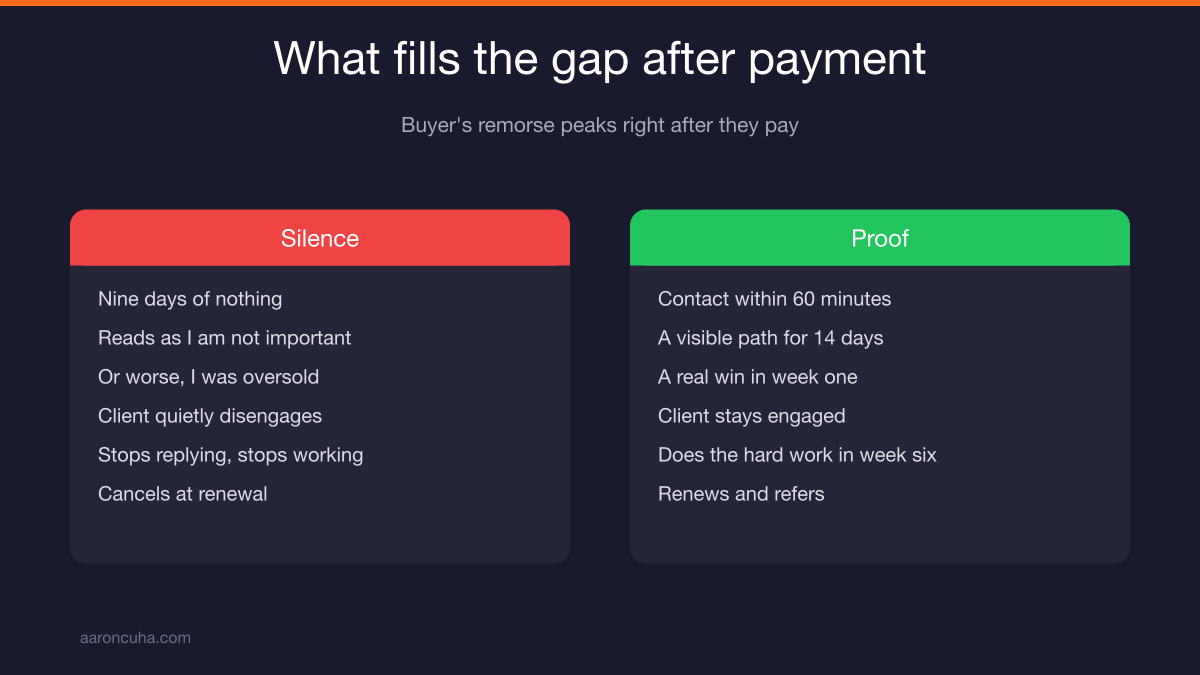
Here is the part that stings. A client who quietly disengages in week one usually does not tell you. They just stop replying, stop doing the work, and cancel at renewal.
You will call it a fit problem. It was an onboarding problem.
What a Client Onboarding Process Actually Is
A client onboarding process is a fixed sequence of steps that moves a new client from payment to first result on a set timeline, with a named owner for every step. It is not a welcome email. It is a system.
Three things get confused all the time. Let me separate them.
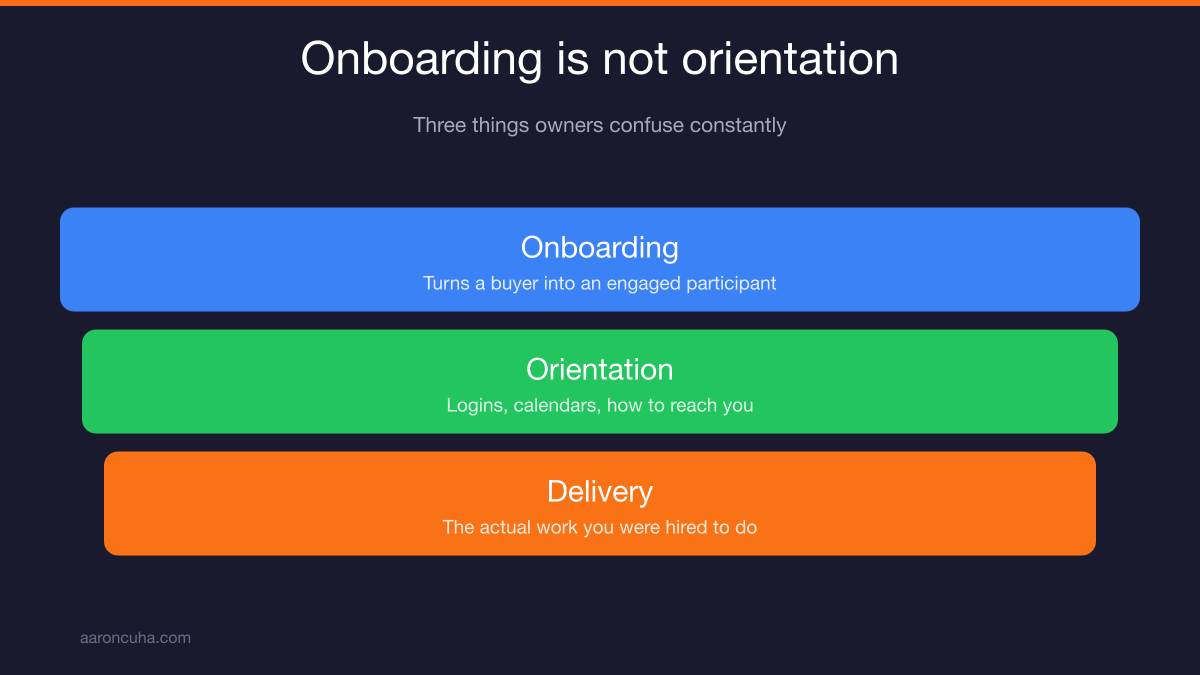
- Onboarding is the transition. It converts a buyer into an engaged participant.
- Orientation is information transfer. Logins, calendars, how to reach you.
- Delivery is the actual work you were hired to do.
Most businesses do orientation, skip onboarding, and then wonder why delivery feels like dragging someone uphill.
Orientation answers "where do I click." Onboarding answers "did I make the right decision, and what happens now."
The second question is the one that keeps clients.
A real onboarding process has four traits. It is written down. It has dates attached to each step. It has an owner for each step who is not always you. And it produces a visible result inside two weeks.
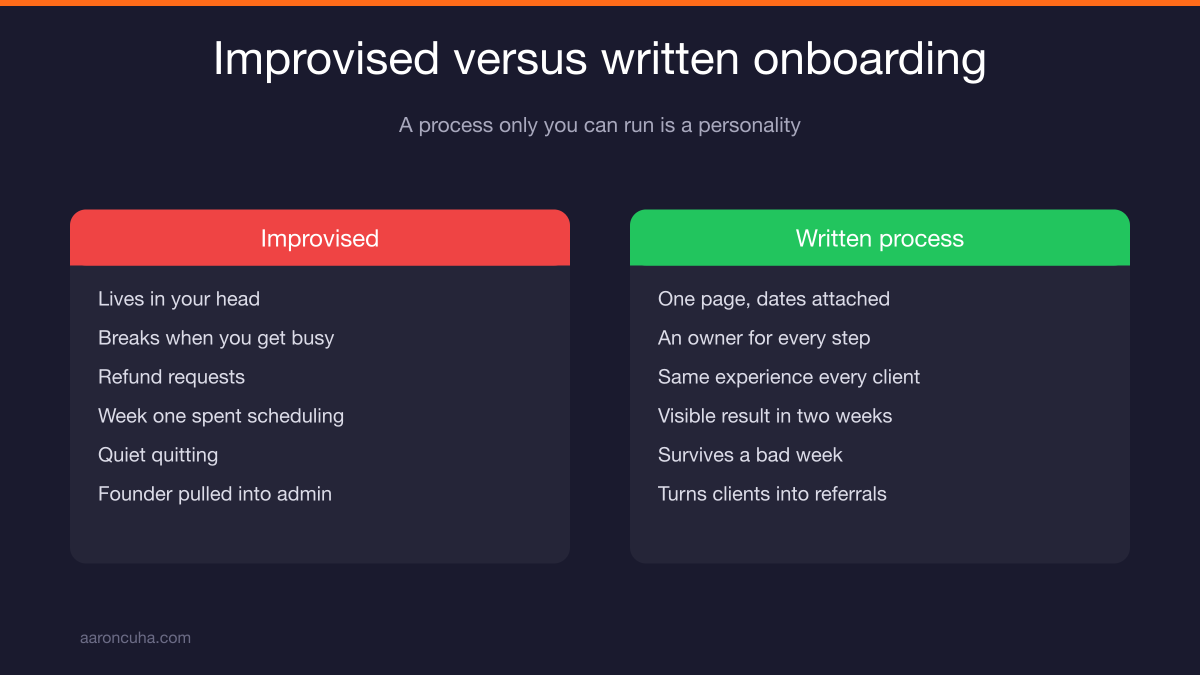
If your onboarding lives in your head, you do not have a process. You have a habit, and habits break the moment you get busy.
The Hidden Cost of Improvising Onboarding
Improvised onboarding works fine when you have three clients and unlimited energy. It collapses the moment you get busy, hire help, or have a bad week. The cost shows up as refunds, slow starts, and quiet quitting.
I learned this the expensive way. I built DirectLender.com to 280 offices and 3,000 employees.
For a long stretch, our client experience was excellent in the offices where a strong manager ran it by instinct. In the offices without that person, the same offer produced a very different experience.
That was my lesson. A process that only works when the founder runs it is not a process. It is a personality. You cannot scale a personality.
Here is what improvised onboarding actually costs you:
- Refund requests from clients who never felt momentum.
- Slow starts where week one is spent on scheduling instead of work.
- Quiet quitting where the client stays subscribed but stops showing up.
- Founder drag because every new client pulls you back into admin.
- Referral loss because a shaky start makes people hesitant to recommend you.
That last one compounds. A great start turns clients into your marketing department. A shaky start makes them silent even if the results eventually come.
This is the core of the Systems Over Hustle approach. You do not fix onboarding by caring more. You fix it by building the sequence once and running it every time.
The 14-Day Client Onboarding Framework
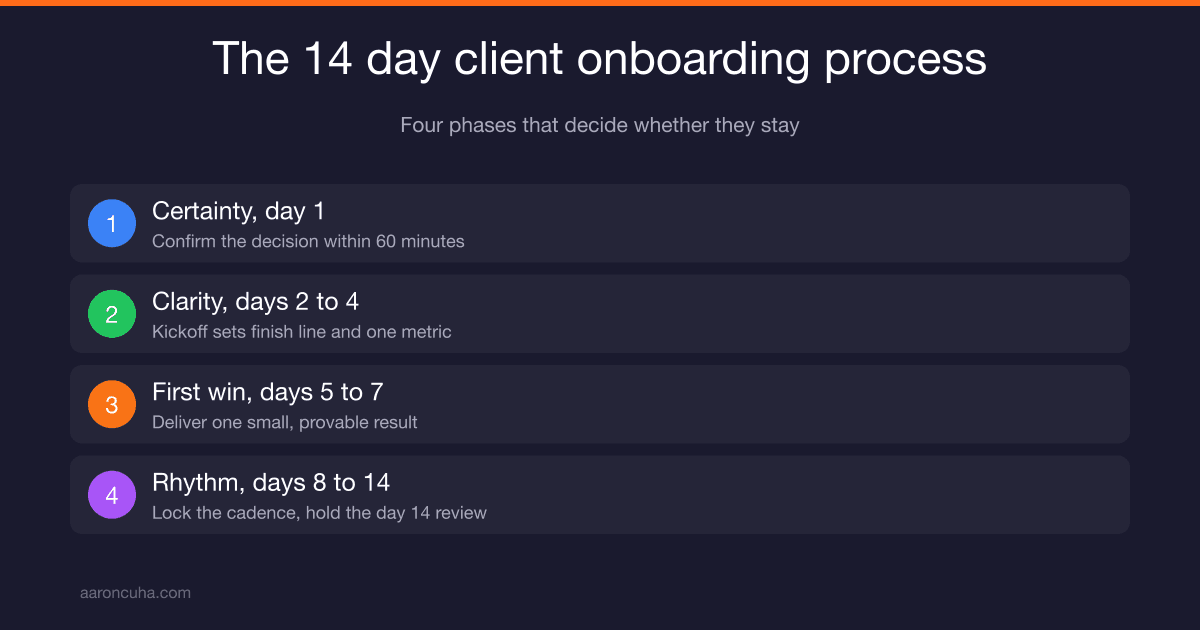
The framework has four phases across 14 days: Certainty on day one, Clarity on days two to four, First Win on days five to seven, and Rhythm on days eight to fourteen. Each phase has one job and one owner.
Do not skip phases or reorder them. The sequence matters because each phase answers the question the client is asking at that moment.
| Phase | Days | Client's Question | Goal | Owner |
|---|---|---|---|---|
| Certainty | Day 1 | Did I make the right call? | Confirm the decision, set the path | You plus automation |
| Clarity | Days 2 to 4 | What exactly are we doing? | Define the finish line and one metric | You |
| First Win | Days 5 to 7 | Does this actually work? | Deliver one small, provable result | Team or you |
| Rhythm | Days 8 to 14 | Can I keep this up? | Install the weekly cadence | Team plus automation |
Write those four phases on one page. That page becomes your onboarding system, your training document, and your quality check.
Everything below is how each phase runs.
Day 1: Kill the Doubt Before It Starts
Contact your new client within 60 minutes of payment. Send a short personal video, the receipt, the signed agreement, and one sentence on exactly what happens next. That is the entire job of day one.
The 60 minute rule is the highest leverage change most owners can make this week. It costs nothing and it changes the emotional tone of the whole relationship.
Your day one package has five parts:
- A personal video under 90 seconds. Use their name. Say why you are glad they are in. Say the one thing you want them to focus on first.
- Receipt and signed agreement. Automated. No human should touch this.
- A single next action. One link, one form, one calendar booking. Not three.
- Communication rules. Where to reach you, and the response window you actually honor.
- A one line preview of the first 14 days. People relax when they can see the path.
Notice what is not in there. No 40 page welcome PDF. No twelve login credentials. No homework marathon.
Day one is about certainty, not volume. Overloading a new client on day one produces avoidance, and avoidance produces churn.
Record the video yourself. Every time. It takes two minutes and it is the part clients mention back to me months later.
Days 2 to 4: Build Clarity With the Kickoff Call
Run the kickoff call by day four, and never before the intake form is complete. The call has one job: agree on the finish line, the one metric that proves progress, and the working rhythm.
The intake form is non negotiable. If you show up to kickoff without it, you spend the call collecting facts instead of making decisions.
Keep the form short. Current situation, the outcome they want, the deadline they care about, what they have already tried, and what would make this a failure in their eyes.
That last question is the most useful one on the form. It tells you what to protect against.
Here is the kickoff agenda I use:
- Restate why they hired you in their own words from the intake form. Two minutes.
- Define the finish line. What is true 90 days from now that is not true today.
- Name the one metric. One number, not five. Ambiguity kills accountability.
- Agree on the first win that will land inside the next three days.
- Set the rhythm. Meeting day, meeting time, what they bring, what you bring.
- Confirm the rules. How to reach you between sessions and how fast you reply.
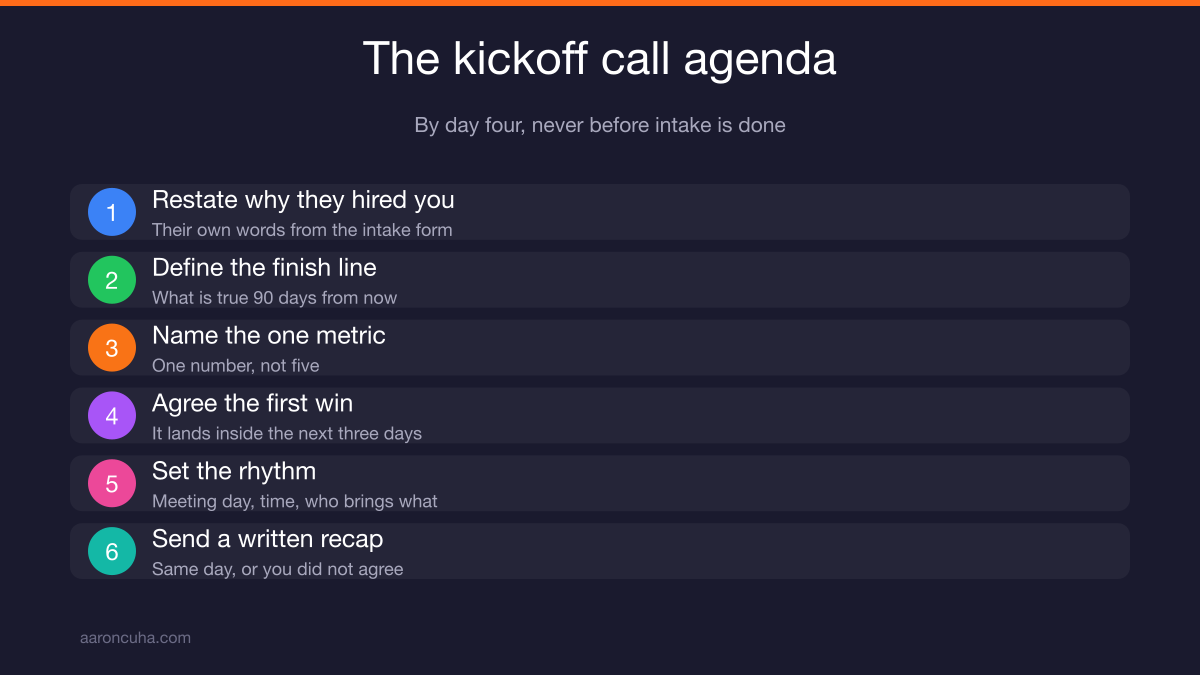
End the call by sending a written recap the same day. Finish line, metric, first win, rhythm, next date.
If it is not written down, you did not agree on it. You just had a nice conversation.
This is also where you decide who owns what. If you are the only person in the process, read how to stop being the bottleneck in your own business before you take on more clients.
Days 5 to 7: Deliver the First Visible Win
Deliver one small, fast, provable win by day seven. It does not need to be impressive. It needs to be real, visible, and clearly caused by working with you.
This is the phase most businesses skip, and it is the one that produces belief. A client who sees a result in week one will do the hard work in week six.
The first win has three rules. It must be small enough that you can guarantee it. It must be visible without explanation. And it must happen inside seven days.
Design it into your offer instead of hoping it appears. Examples by business type:
- Coaching. One decision they have been stuck on for months, made and off their plate.
- Real estate coaching. A rewritten listing presentation or a database pull that produces a real conversation.
- Marketing or video. One published asset with a stronger title and thumbnail than anything they have shipped before.
- Consulting. One process mapped on a single page so the team can finally see the bottleneck.
- Financial services. One document organized, one fee found, one clear next step.
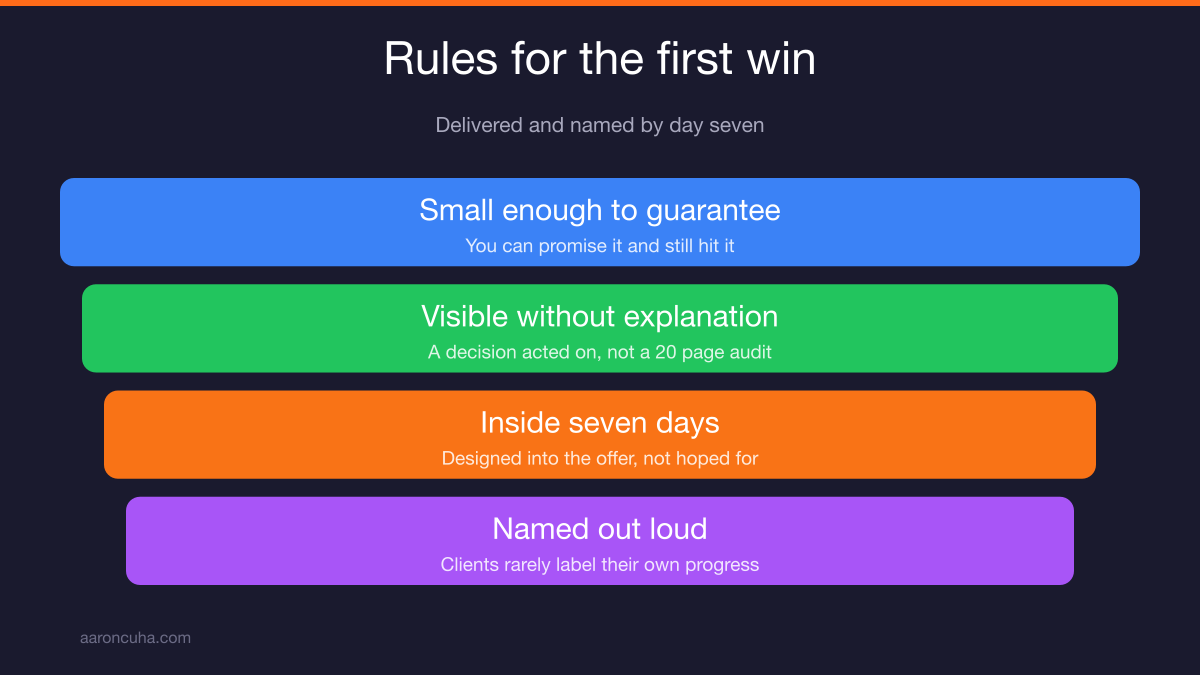
Do not confuse a first win with a deliverable. A 20 page audit is a deliverable. A decision made and acted on is a win.
Then name it out loud. Say "that is the first win, and here is what it makes possible." Clients rarely label their own progress. Label it for them.
If you are building content as part of your delivery, the four content pillars framework gives you a fast first win in week one.
Ready to build this for real? Get a Channel Audit and Plan and I will show you where new clients are losing momentum.
Days 8 to 14: Install the Rhythm That Creates Retention
Days eight through fourteen exist to turn a good start into a habit. Lock the weekly cadence, run a light check-in around day ten, and hold a formal 14 day review before the honeymoon fades.
Motivation is highest in week one and lowest in week three. If you are relying on your client's enthusiasm to carry them, you will lose them at week three.
This is the argument at the center of The Willpower Lie. Willpower is not a character trait you can install in someone. It is a byproduct of structure.
Structure holds when motivation drops. That is the whole game.
Your day eight to fourteen sequence:
- Day 8. Confirm the recurring meeting is on both calendars for the next 90 days. Not one meeting. All of them.
- Day 10. A short check-in that is not a coaching session. One question: what is in your way right now.
- Day 12. Send the metric update, even if the number barely moved. Consistency builds trust faster than good news.
- Day 14. The formal review. Compare the finish line, the metric, the first win, and what changes for the next 30 days.
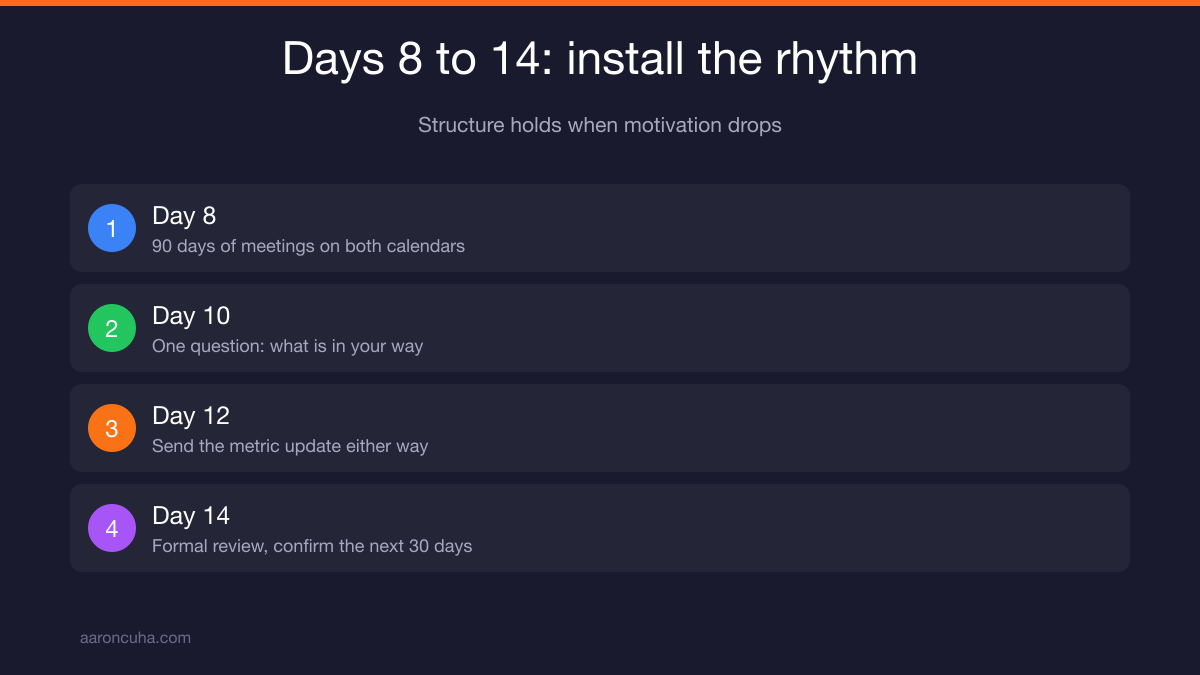
The day ten check-in catches problems while they are still small. Most clients will not raise a concern unprompted until it has already become a reason to quit.
The day 14 review is where you earn the renewal. You are not selling anything. You are showing them the pattern of progress and confirming the next 30 days.
The New Client Onboarding Checklist You Can Copy Today
Keep your new client onboarding checklist to one page with three columns: step, owner, deadline. If it does not fit on one page, your process is too complicated to run consistently.
Here is the checklist. Copy it and adjust the owners to match your team.
| Step | Owner | Deadline |
|---|---|---|
| Payment confirmed, receipt sent | Automation | Immediate |
| Signed agreement filed | Automation | Immediate |
| Personal welcome video sent | You | Within 60 minutes |
| Intake form sent and completed | Assistant | Day 2 |
| Kickoff call held | You | Day 4 |
| Written recap with finish line and metric | You | Same day as kickoff |
| First win delivered and named | Team | Day 7 |
| 90 days of meetings on the calendar | Assistant | Day 8 |
| Day 10 check-in message | Assistant or you | Day 10 |
| Metric update sent | Team | Day 12 |
| 14 day review held and logged | You | Day 14 |
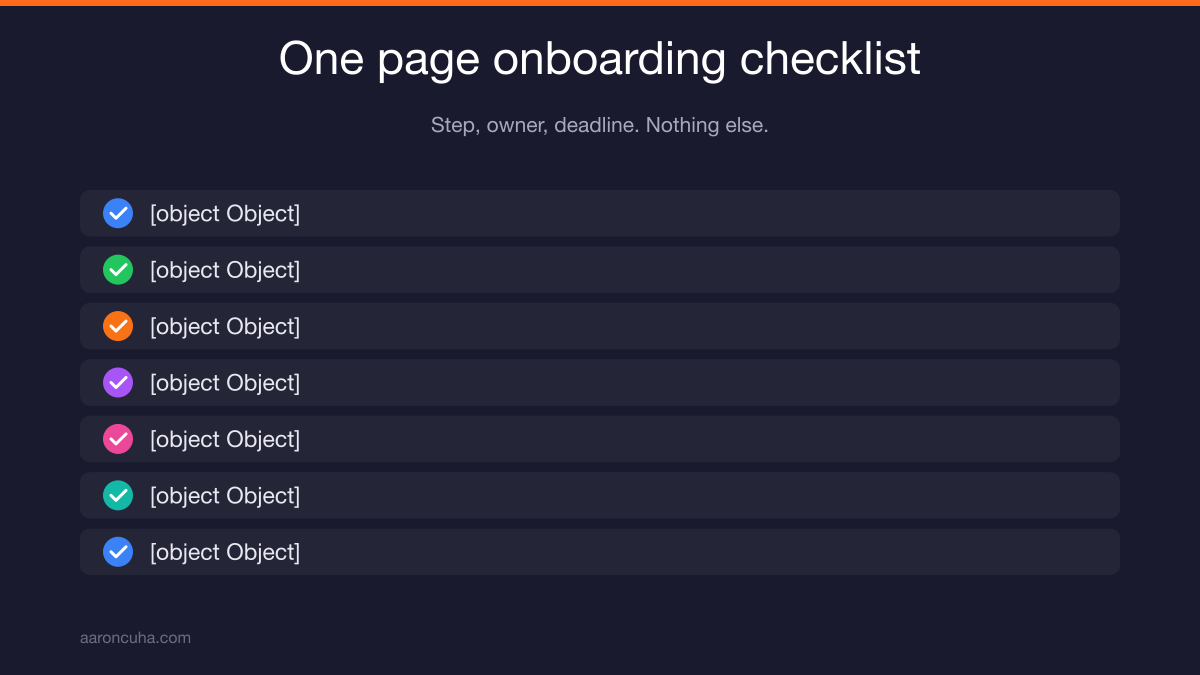
Track every client against this checklist in one place. A shared spreadsheet works. A CRM board works. What does not work is tracking it in email.
One page, one place, one owner per step. That is the standard.
Grab more templates like this on the free resources page and adapt them to your offer.
How to Automate Onboarding Without Losing the Human Touch
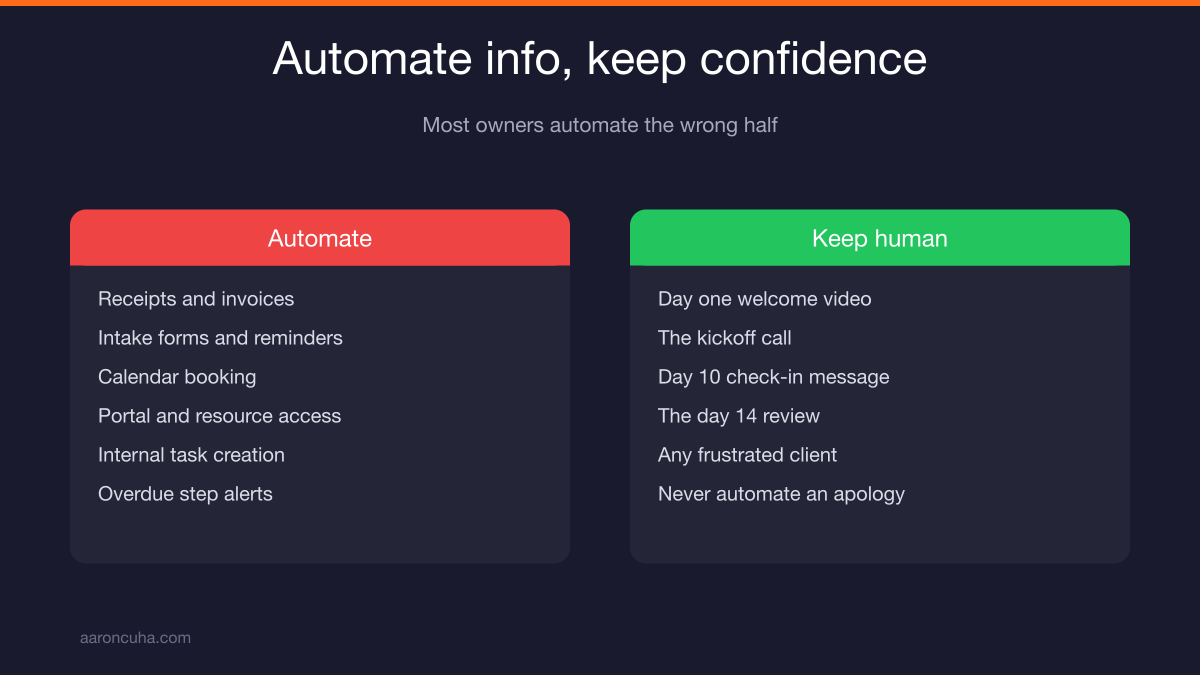
Automate anything that transfers information. Keep anything that transfers confidence. That single rule tells you exactly which onboarding steps belong to software and which belong to you.
Automation gets a bad reputation in service businesses because people automate the wrong half. They send a robotic welcome email and hand-schedule their own calendar.
Flip it.
Automate these:
- Receipts, invoices, and agreement storage
- Intake form delivery and reminders
- Calendar booking and reminder sequences
- Resource and portal access
- Internal task creation when a payment clears
- Checklist status tracking and overdue alerts
Protect these as human:
- The day one welcome video
- The kickoff call
- The day ten "what is in your way" message
- The day 14 review
- Any moment where the client sounds frustrated
Use tools you already pay for before you buy new ones. Most calendar and payment platforms can trigger the whole information layer. Zapier's blog is a reasonable starting point if you need to connect systems that do not talk to each other.
For a deeper build, see how to automate your operations without losing control and AI automation built specifically for coaches.
One warning. Never automate an apology or a check-in about a problem. The second a client feels a template in a hard moment, trust drops.
How to Measure and Improve Your Onboarding
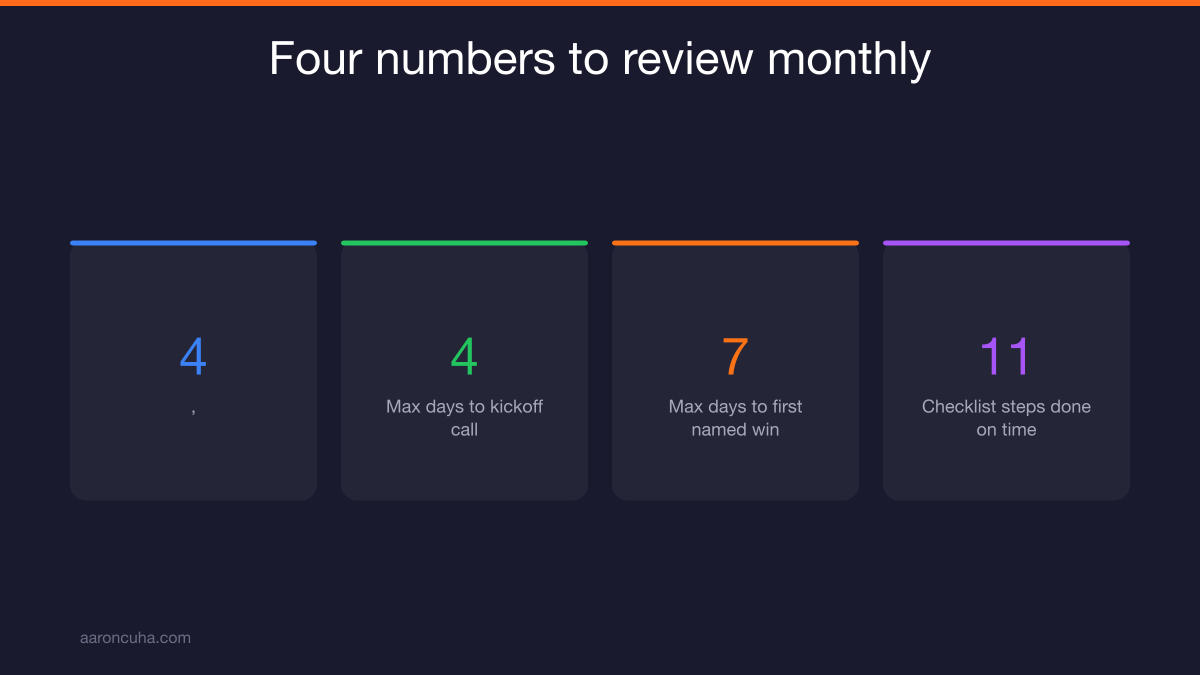
Track four numbers: time to kickoff, time to first win, checklist completion rate, and 90 day retention. Review them once a month. Change one thing at a time.
You do not need a dashboard. You need four numbers you actually look at.
- Time to kickoff. Days from payment to kickoff call. Target four or fewer.
- Time to first win. Days from payment to a named, delivered win. Target seven or fewer.
- Checklist completion. What percent of the 11 steps happened on time for each client.
- 90 day retention. How many clients are still active and engaged at day 90.
Checklist completion is the leading indicator. Retention is the lagging one. When completion slips, retention follows about a quarter later.
Run a five question exit interview with every client who leaves, including the ones who leave happy:
- What did you expect in the first two weeks that did not happen?
- When did you first feel like this was working?
- When did you first feel unsure?
- What should we have asked you at the start and did not?
- What would have made you stay?
Those answers are worth more than any survey you could buy. On measurement discipline generally, Harvard Business Review has decades of solid material on retention economics.
If you want a view of what strong systems return over time, read what return you can actually expect from coaching.
How to Hand Onboarding Off So It Runs Without You
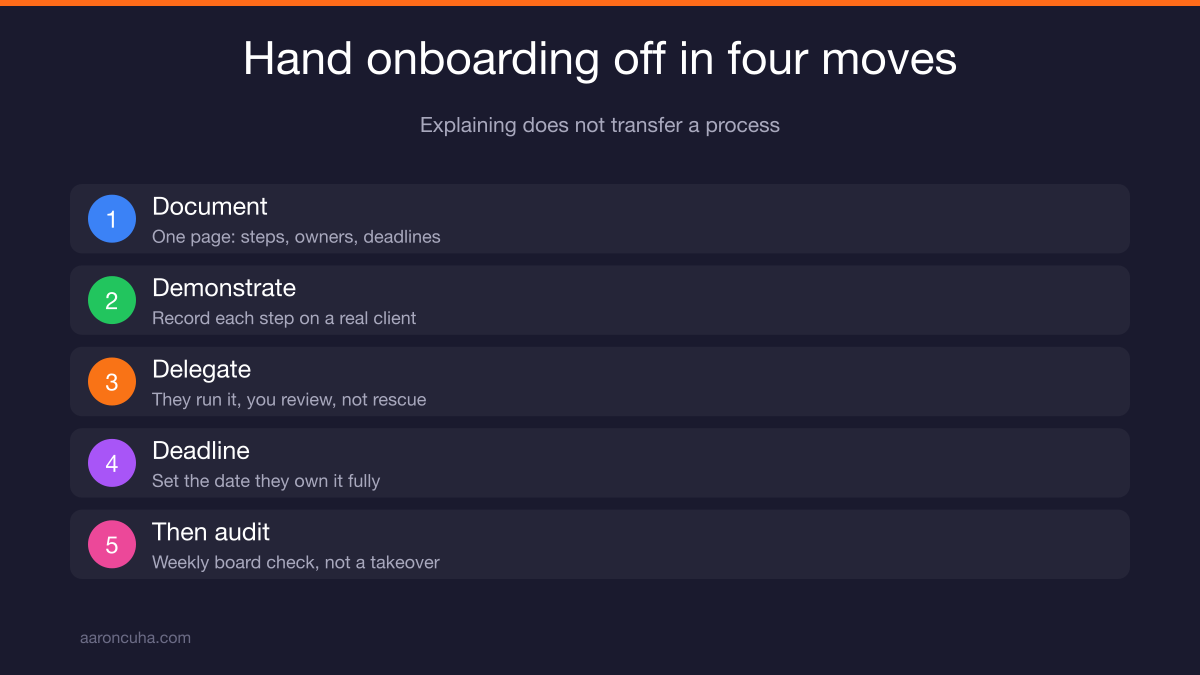
Hand off onboarding in four moves: document, demonstrate, delegate, deadline. You keep the welcome video, the kickoff call, and the day 14 review. Everything else transfers.
Most owners try to delegate by explaining. Explaining does not transfer a process. Recording does.
Here is the loom and checklist method:
- Document. Write the one page checklist first. Steps, owners, deadlines. Nothing fancy.
- Demonstrate. Record yourself doing each step on a real client. Short videos, one per step, filed next to the checklist.
- Delegate. Have your team member run the next client while you watch. You review, you do not rescue.
- Deadline. Set the date they own it fully. Without a date, you will take it back.
Screen recording tools like Loom make step two take minutes instead of hours. Record while you work, then stop.
After the handoff, your job changes. You are no longer the operator. You are the auditor.
Once a week, look at the checklist board. Any step past its deadline gets a conversation, not a takeover.
That distinction is what allowed me to rebuild after losing DirectLender in 2008. In Nepal, running humanitarian work with limited resources, I learned that a process either survives without me or it does not survive at all.
Build it that way from the start. Your onboarding system should produce the same client experience whether you are in the office, on a stage, or unreachable for a week.
If you want this built and installed with you, look at executive coaching or join the Systems Over Hustle community where owners share the checklists and automations that are working right now.
Frequently Asked Questions

Written by
Aaron CuhaAuthor of Crazy Simple YouTube, keynote speaker, and executive coach with 20,000+ hours logged. ICF PCC, NLP Master Practitioner, and DISC Certified. Aaron helps entrepreneurs replace hustle with AI-powered systems that generate leads, content, and revenue on autopilot.