The SEO strategies that actually move the needle on YouTube in 2026. No guesswork, no outdated tactics — just the system that ranks videos consistently.
YouTube SEO tips are everywhere, but most of them are outdated or flat-out wrong. In 2026, YouTube's algorithm has evolved dramatically, and the strategies that worked three years ago can actually hurt your channel today. I have used YouTube SEO to help clients rank videos on page one for competitive keywords, generating thousands of views and hundreds of leads from a single video. According to Backlinko's ranking factor study, the top-ranking YouTube videos share specific optimization patterns that most creators ignore.
This guide covers the exact YouTube SEO tips I use with every client in our YouTube strategy services. No fluff, no theory — just the tactics that rank videos.
YouTube Keyword Research: The Foundation
Everything starts with keyword research. If you are not targeting keywords people are actually searching for, your content is invisible. Here is the process:
- YouTube autocomplete: Type your topic into YouTube search and note the suggestions. These are real queries with real search volume.
- Competitor analysis: Find channels in your niche with 10K to 100K subscribers. Sort their videos by "Most Popular." These topics have proven demand.
- Google Trends: Compare keyword variations to find the highest-demand version of your topic.
- VidIQ or TubeBuddy: Use these tools to get estimated search volume and competition scores for your keywords.
The goal is to find keywords with decent search volume (500+ monthly searches) and low competition (fewer than 10 high-quality videos currently ranking). I call these "keyword gaps" — topics your audience wants that nobody is serving well.
Title Optimization for YouTube SEO
Your title is the single most important ranking factor after content relevance. Here are the YouTube SEO tips for titles that rank:
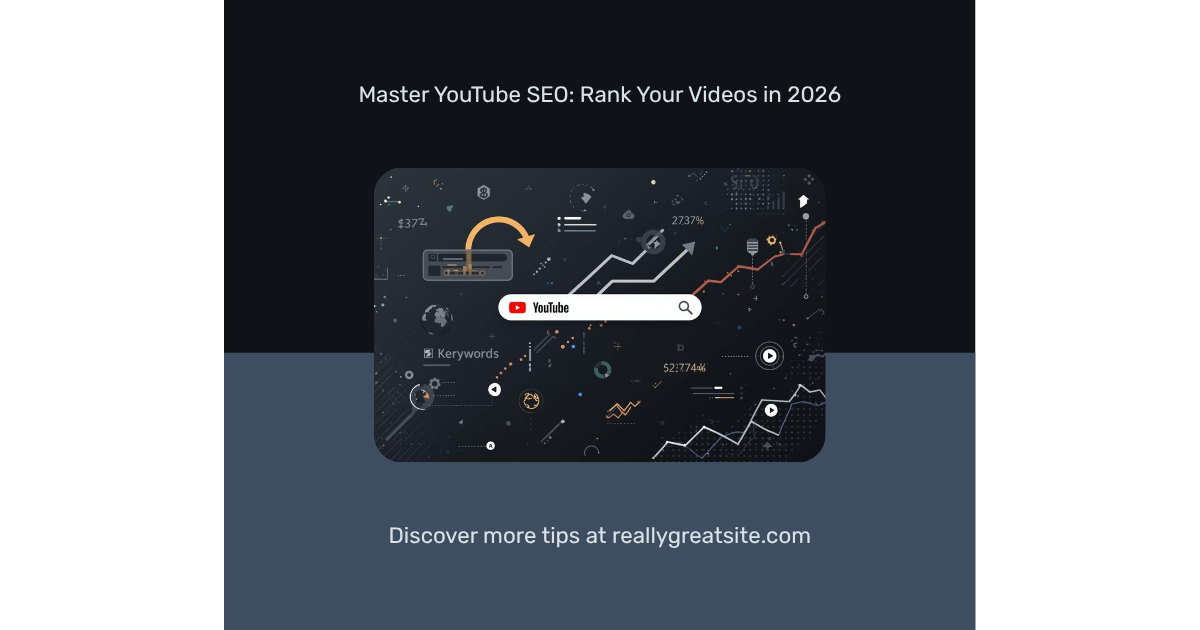
- Front-load your keyword: Place your primary keyword in the first half of the title. "YouTube SEO Tips: How to Rank Videos" is better than "How to Rank Your Videos with YouTube SEO Tips."
- Keep it under 60 characters: Longer titles get truncated on mobile, which kills your click-through rate.
- Include a benefit or number: "7 YouTube SEO Tips That Doubled My Views" outperforms "YouTube SEO Tips" because it sets a clear expectation.
- Avoid clickbait: YouTube tracks satisfaction metrics. If your title promises something your video does not deliver, viewers leave early, and the algorithm buries you.
According to Backlinko, videos with exact-match keywords in the title rank measurably higher than those without. This is still true in 2026.
Description Optimization
Your video description is underutilized real estate. Most creators write two sentences and call it done. Here is what a properly optimized description looks like:
- First 150 characters: Include your primary keyword and a compelling summary. This appears in search results before the "show more" button.
- Body (200-500 words): Write a detailed summary of what the video covers. Include your keyword 2 to 3 times naturally. Add related keywords and phrases.
- Timestamps: Add chapter markers for every major section. This helps YouTube understand your content structure and can earn you "key moments" in search results.
- Links: Include links to related content, your lead magnet, and your call to action. Place the most important link first.
- Hashtags: Add 3 to 5 relevant hashtags at the end. Do not overdo it — YouTube penalizes hashtag stuffing.
Watch Time: The Hidden SEO Factor
YouTube does not just rank based on metadata. Watch time is the most powerful ranking signal. A video that keeps viewers watching for 10 minutes will outrank a perfectly optimized video that viewers abandon after 2 minutes.
Here is how to maximize watch time:
- Hook in the first 15 seconds: State the problem and promise the solution immediately. No long intros, no "hey guys, welcome back to my channel."
- Pattern interrupts every 2-3 minutes: Change camera angles, show graphics, ask a question, change energy. Monotony kills watch time.
- Open loops: Tease what is coming later in the video. "In a minute, I will show you the technique that tripled my client's views — but first, you need to understand this."
- Deliver on your promise: If your title says "7 tips," deliver all 7. If you promise results, show results. Viewer satisfaction drives recommendations.
According to YouTube Creator Academy, videos with above-average watch time for their topic get dramatically more impressions through suggested videos and browse features.
Thumbnails and Click-Through Rate
Your thumbnail determines whether someone clicks on your video. A higher click-through rate tells YouTube that your video is relevant and interesting, which boosts your ranking. For the complete thumbnail breakdown, check my post on YouTube thumbnail tips.
Quick thumbnail SEO tips:
- Use contrasting colors (yellow and blue, red and white)
- Include a face showing emotion (curiosity, surprise, excitement)
- Add minimal text — 3 to 5 words maximum
- Make it readable at thumbnail size (test it at 100x56 pixels)
- Be consistent with your brand — viewers should recognize your thumbnails in a feed
Tags, Categories, and Closed Captions
While less important than they used to be, these elements still contribute to YouTube SEO:
- Tags: Add 10 to 15 tags per video. Start with your exact keyword, then add variations and related terms. Tags help YouTube understand context, especially for new channels.
- Category: Choose the most relevant category. For business content, "Education" or "Howto & Style" typically work best.
- Closed captions: Upload accurate captions or carefully review YouTube's auto-generated ones. Captions are indexed by YouTube's search engine, making them a direct SEO factor.
Engagement Signals That Boost Rankings
YouTube tracks engagement as a ranking signal. Videos with more likes, comments, and shares rank higher. Here is how to increase engagement organically:
- Ask specific questions: "What is your biggest YouTube struggle? Drop it in the comments" generates more responses than "like and subscribe."
- Respond to every comment in your first 24 hours. This doubles the comment count and tells YouTube the video is generating conversation.
- Create "save-worthy" content: Lists, frameworks, and templates get saved to playlists, which is a powerful engagement signal.
- End with a strong CTA: Direct viewers to a related video, your Channel Audit and Plan, or your newsletter.
Putting Your YouTube SEO Strategy Together
YouTube SEO tips work best when applied as a system, not individual tactics. Here is your checklist for every video: research the keyword, optimize the title and description, create a click-worthy thumbnail, maximize watch time with strong content structure, and drive engagement with clear calls to action.
Do this consistently for 90 days and your channel will rank for keywords that matter. For the complete YouTube SEO playbook, grab Crazy Simple YouTube. Or book a call and I will audit your channel's SEO personally. You can also learn more about growing your channel from zero to 10K subscribers.
Frequently Asked Questions
How long does it take for YouTube SEO to work?
YouTube SEO typically shows results within 2 to 4 weeks for low-competition keywords. High-competition keywords can take 2 to 3 months. Unlike Google SEO, YouTube can surface well-optimized content relatively quickly through suggested videos.
Are tags still important for YouTube SEO in 2026?
Tags are less important than they were, but they still help YouTube understand context. They are especially valuable for new channels with limited content history. Use 10 to 15 relevant tags per video.
What is a good click-through rate on YouTube?
The average CTR is 2 to 10 percent. For business channels, aim for 5 to 8 percent. If you are consistently below 4 percent, your thumbnails and titles need improvement.
Does video length affect YouTube SEO?
Longer videos tend to rank higher because they accumulate more total watch time. However, a tight 8-minute video will outrank a bloated 20-minute video. Length should match the depth of the topic — never pad your videos.
How many keywords should I target per video?
One primary keyword and two to three secondary keywords per video. Trying to rank for too many keywords dilutes your optimization and confuses the algorithm.

Written by
Aaron CuhaAuthor of Crazy Simple YouTube, keynote speaker, and executive coach with 20,000+ hours logged. ICF PCC, NLP Master Practitioner, and DISC Certified. Aaron helps entrepreneurs replace hustle with AI-powered systems that generate leads, content, and revenue on autopilot.