Most salespeople get their reps on live prospects, which means real money pays for your learning curve. AI sales roleplay fixes that. Here is the five part prompt structure for building a practice partner that pushes back, scores you, and tracks the objection you keep losing to.
You do not lose deals because you lack a script. You lose them because the words come out slow and shaky when a real person pushes back. AI sales roleplay fixes that.
Key Takeaways
- AI sales roleplay builds objection handling through repetition, not through better scripts.
- Use a five part prompt: persona, difficulty, length cap, scored debrief, objection log.
- Cap each rep at eight to twelve prospect turns so debriefs stay useful.
- Log the objection you lost to. Your pattern becomes your practice plan.
- Ten minutes nightly beats one long training session per month.
Want a system built around your actual pipeline instead of a generic drill? Start with a strategy session and we will map the objections costing you deals right now.
Why Reps Beat Scripts
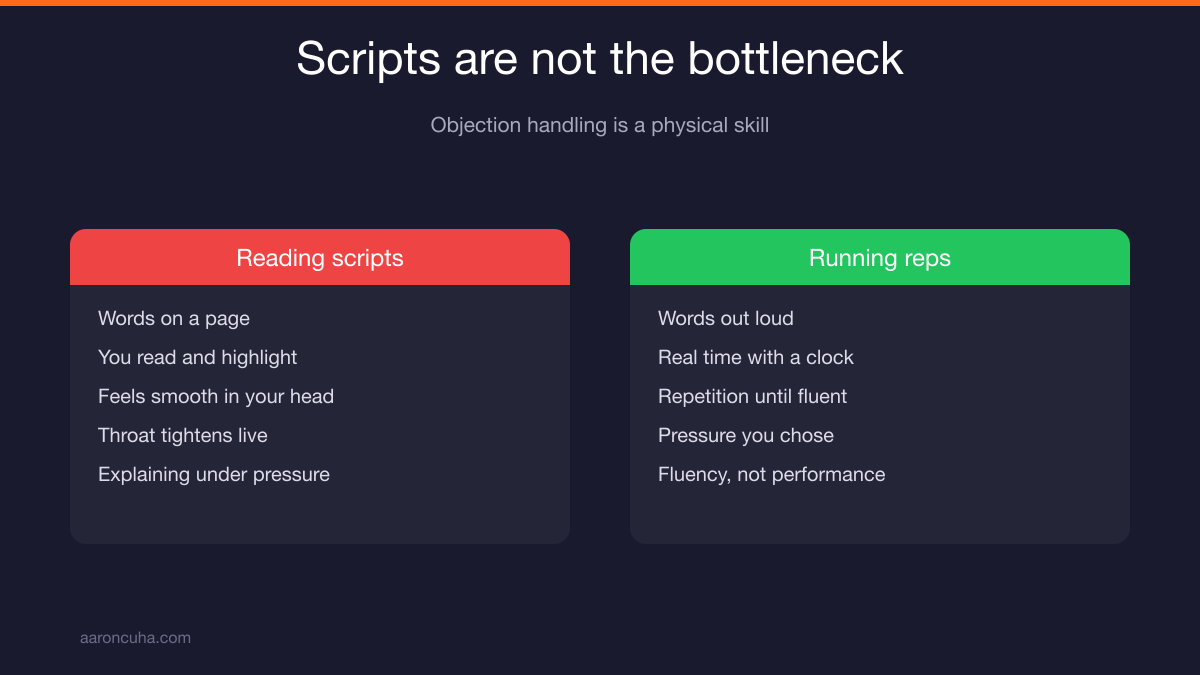
Objection handling is a physical skill. You do not get better by reading. You get better by saying the words out loud, under pressure, over and over, until they stop feeling like a performance.
Most AI sales advice points the wrong direction. It tells you to generate scripts. Write a cold call opener. Write five ways to answer a price objection.
Scripts are not the bottleneck. You already know what to say about your commission or your fee. You have read it. You have highlighted it. You have watched somebody smoother than you deliver it on a stage.
Then a prospect says "that seems high" and your throat tightens and you start explaining. Explaining is what people do when they have not rehearsed.
In 20,000 hours of one on one coaching, I have watched the same gap show up in agents, loan officers, and consultants. The knowledge is there. The reps are not.
So where do the reps happen? On live prospects. People who came to you ready to buy, who then paid for your learning curve with their business.
What AI Sales Roleplay Actually Is
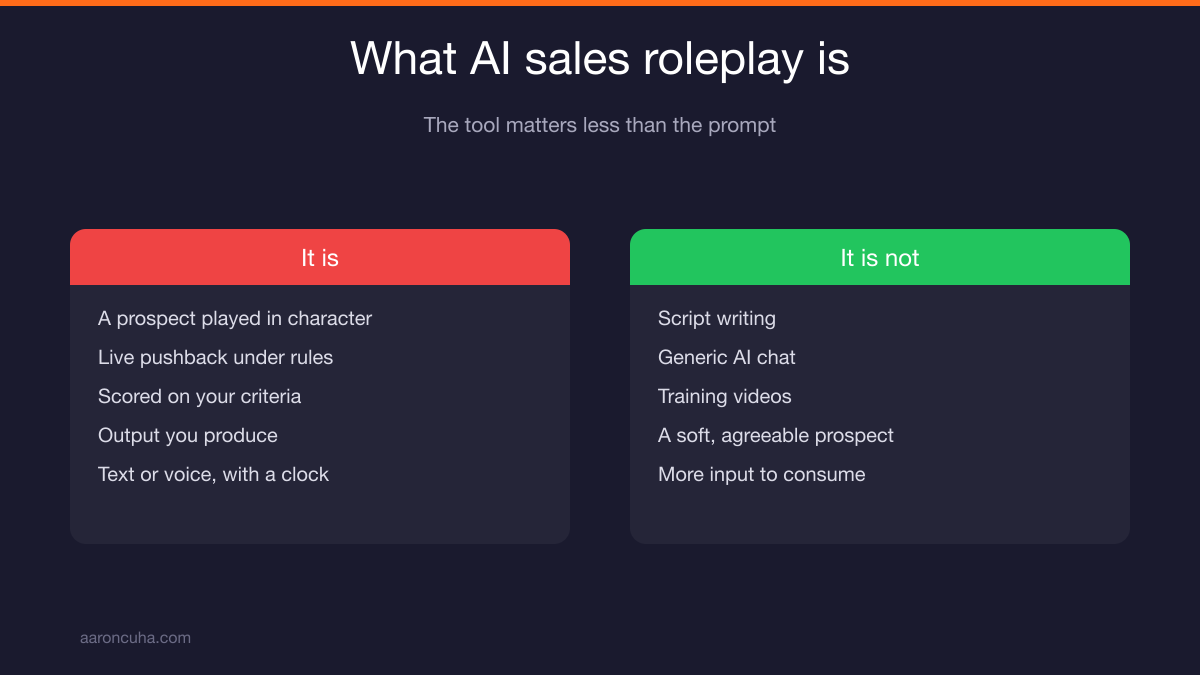
AI sales roleplay is a language model playing a specific prospect, in text or voice, under constraints you define. You run a live conversation, it pushes back in character, then it scores you against criteria you named in advance.
It is not script writing. Script writing gives you words on a page. Roleplay makes you produce those words in real time with the clock running.
It is not generic AI chat either. If you type "act like a prospect" you will get a soft, agreeable prospect who caves after one good line. That teaches you nothing.
And it is not watching training videos. Video is input. Roleplay is output. You need both, but almost everyone is drowning in input and starving for output.
The tools already do this well. ChatGPT and Claude both hold character across a long conversation if you set the rules up front. Voice mode makes it closer to real.
The tool matters less than the prompt. A weak prompt turns any model into a cheerleader.
The Cost of Practicing on Live Prospects
Unrehearsed reps cost more than a lost deal. They build avoidance. You start steering conversations away from the exact questions you have not practiced answering.
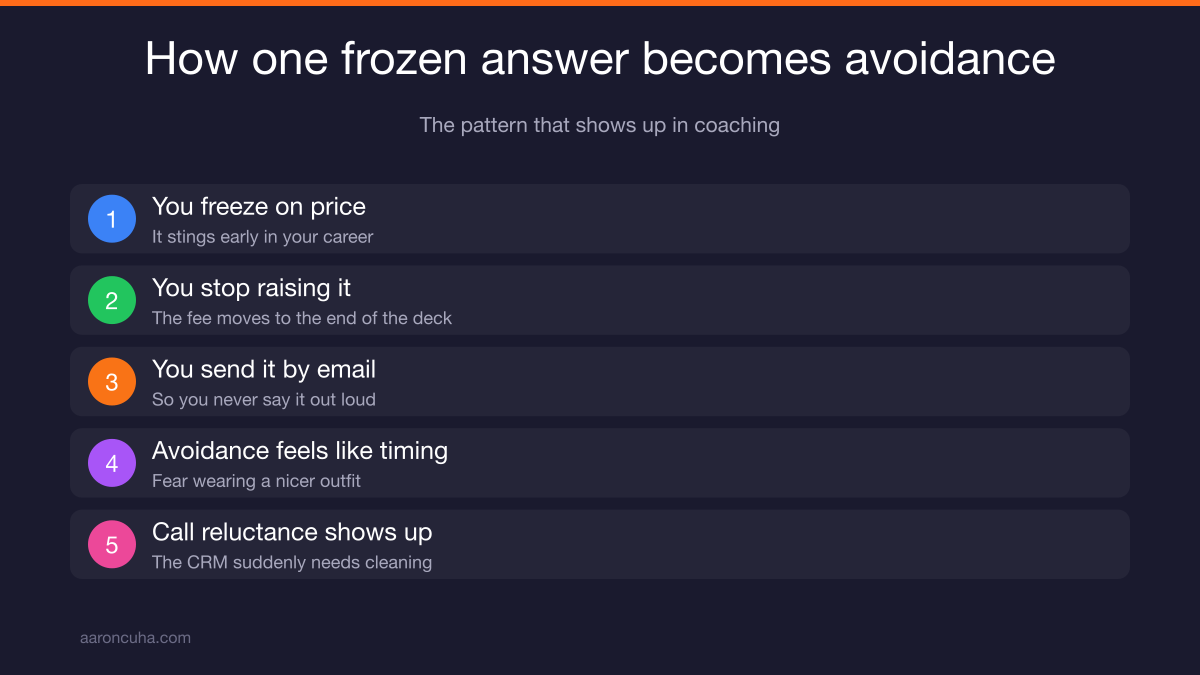
Here is the pattern I see most often in coaching. Someone freezes on a price question early in their career. It stings. They do not want it to happen again.
So they stop bringing up price. They bury the fee at the end of a long presentation. They send it by email so they do not have to say it out loud.
Avoidance looks like strategy from the inside. It feels like timing. It is actually fear wearing a nicer outfit.
Then call reluctance shows up. You have plenty to do that is not dialing. The CRM needs cleaning. The listing presentation needs one more slide.
None of that is a discipline problem. That is the argument I make in Systems Over Hustle and in The Willpower Lie. You do not need more willpower to face a hard question. You need to have already faced it fifty times somewhere safe.
The Five Part Prompt Structure for an AI Practice Partner
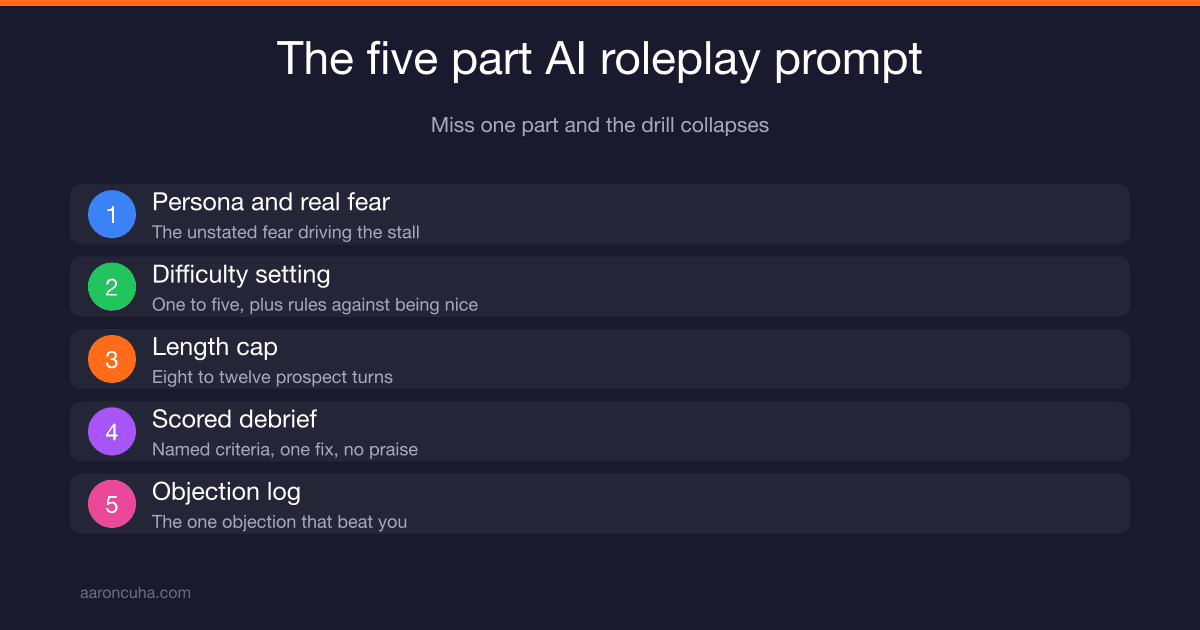
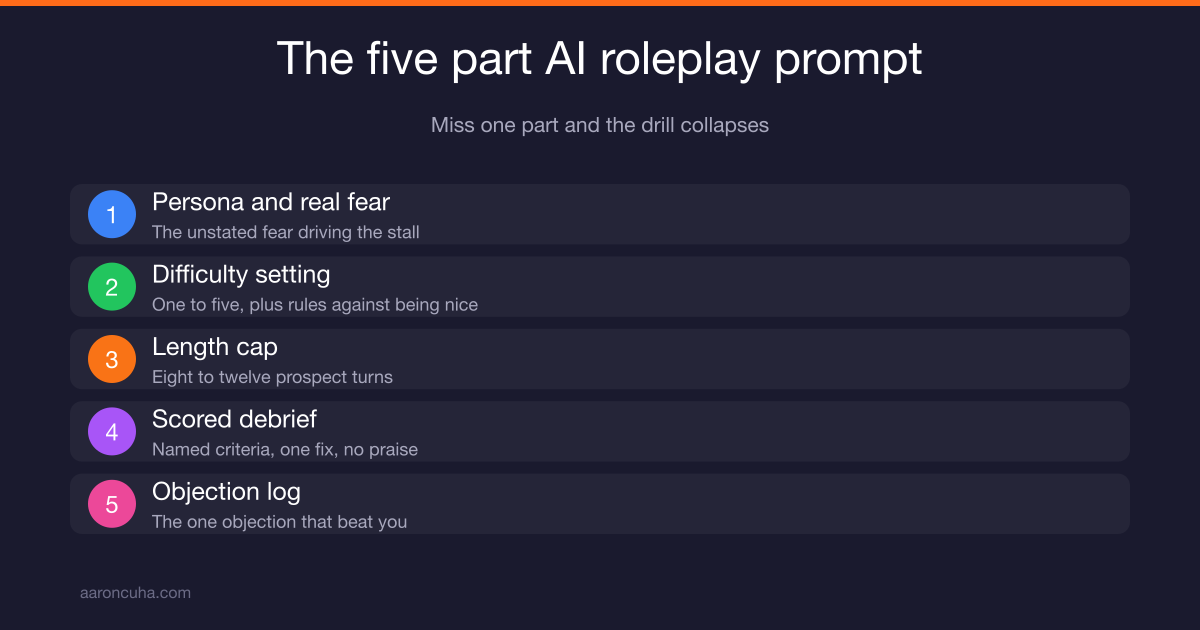
A useful practice partner needs five things in the prompt: a persona with a real fear, a difficulty setting, a length cap, a scored debrief against named criteria, and an objection log. Miss any one and the drill collapses.
Here is the structure in order:
- Persona and real fear. Who they are, their situation, and the unstated fear driving the stall.
- Difficulty. A one to five setting, plus rules that stop the model from being nice.
- Length cap. A hard limit on prospect turns so the rep ends on time.
- Scored debrief. Named criteria the AI grades you against after the scene.
- Objection log. The one objection that beat you, written down and tracked.
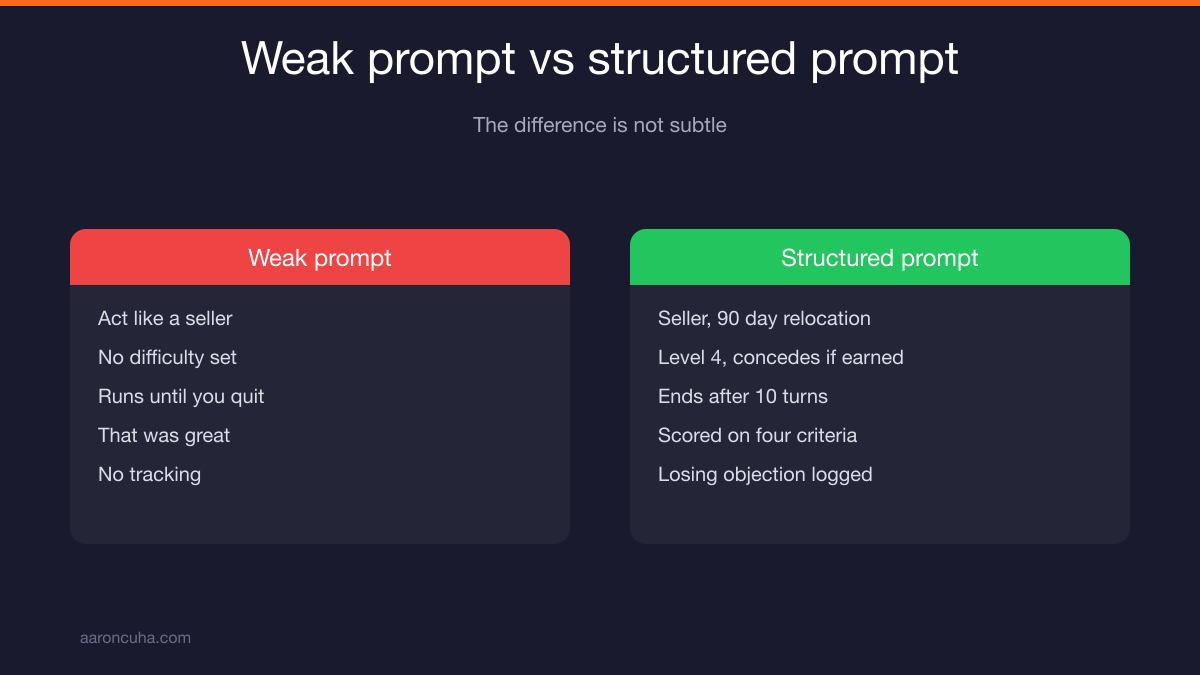
The difference between a weak prompt and a structured one is not subtle.
| Element | Weak Prompt | Structured Prompt |
|---|---|---|
| Persona | "Act like a seller." | Seller, relocating in 90 days, already interviewed two agents, afraid of underpricing. |
| Difficulty | Not mentioned | Level 4. Skeptical, short replies, concedes only if I earn it. |
| Length | Runs until you quit | Ends after 10 prospect turns. |
| Feedback | "That was great!" | Scored 1 to 5 on four named criteria with one fix. |
| Tracking | None | Losing objection logged with date and category. |
Part One: Define the Persona and the Real Fear
Every objection hides a fear. Write the persona so the AI knows the fear but never says it out loud unless you draw it out. That single instruction changes everything.
Your persona brief needs four items:
- Situation. What is happening in their life or business right now.
- Timeline. When they must decide, and what forces that date.
- Decision role. Sole decider, one of two, or influencer reporting to someone else.
- Unstated fear. The thing driving the stall that they will not volunteer.
For a real estate agent: a seller who says "let's try it at my price first" is often afraid of leaving money on the table and looking foolish to a spouse or a neighbor.
For a loan officer: a borrower who says "I want to shop a few more lenders" is often afraid of being taken advantage of on a number they cannot verify.
For a consultant: a founder who says "send me a proposal" is often afraid of committing budget to something they cannot show a result from in 60 days.
Write that fear into the prompt. Then instruct the model to stay in character and only reveal the fear if you ask a question that earns it.
Now you are practicing diagnosis, not just delivery. That is the skill that separates a closer from a talker.
Part Two: Set the Difficulty on a One to Five Scale
Models default to agreeable. Left alone they will praise your answer and fold. You have to instruct difficulty explicitly, forbid mid scene coaching, and require them to concede only when you earn it.
Add these four rules to every roleplay prompt:
- Stay in character. No coaching, no commentary, no breaking the scene until I type DEBRIEF.
- Reply like a real human on the phone. One to three sentences. No paragraphs.
- Do not agree just because my answer sounded good. Concede only if I acknowledged your concern and asked a question that moved you.
- If I ramble past four sentences, interrupt me the way a real prospect would.
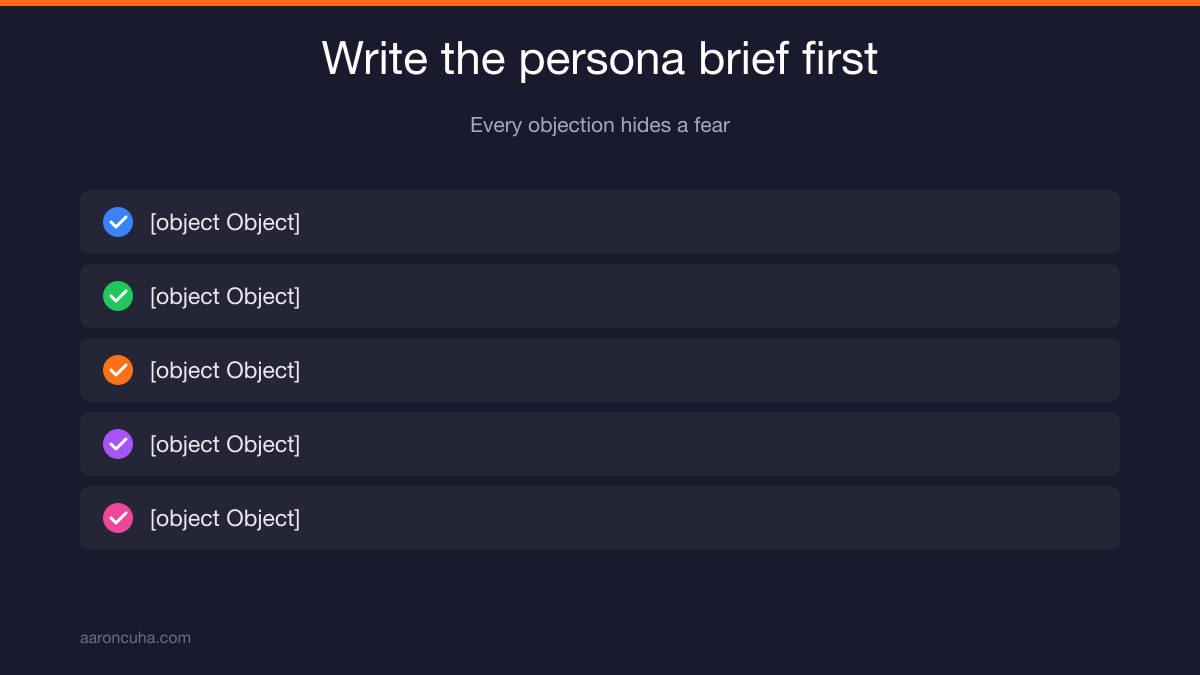
Then set the level. Here is the ladder I use:
| Level | Prospect Behavior | Use When |
|---|---|---|
| 1 | Warm, curious, one soft objection | First week with new language |
| 2 | Interested but comparing options | Building fluency |
| 3 | Skeptical, asks for proof, short replies | Standard daily rep |
| 4 | Guarded, interrupts, repeats the objection | Once you handle level 3 clean |
| 5 | Hostile, dismissive, ready to hang up | Stress rep, once a week max |
Live at level 3. Visit level 4. Do not camp at level 5, because constant hostility trains flinching, not fluency.
Part Three: Cap the Roleplay Length
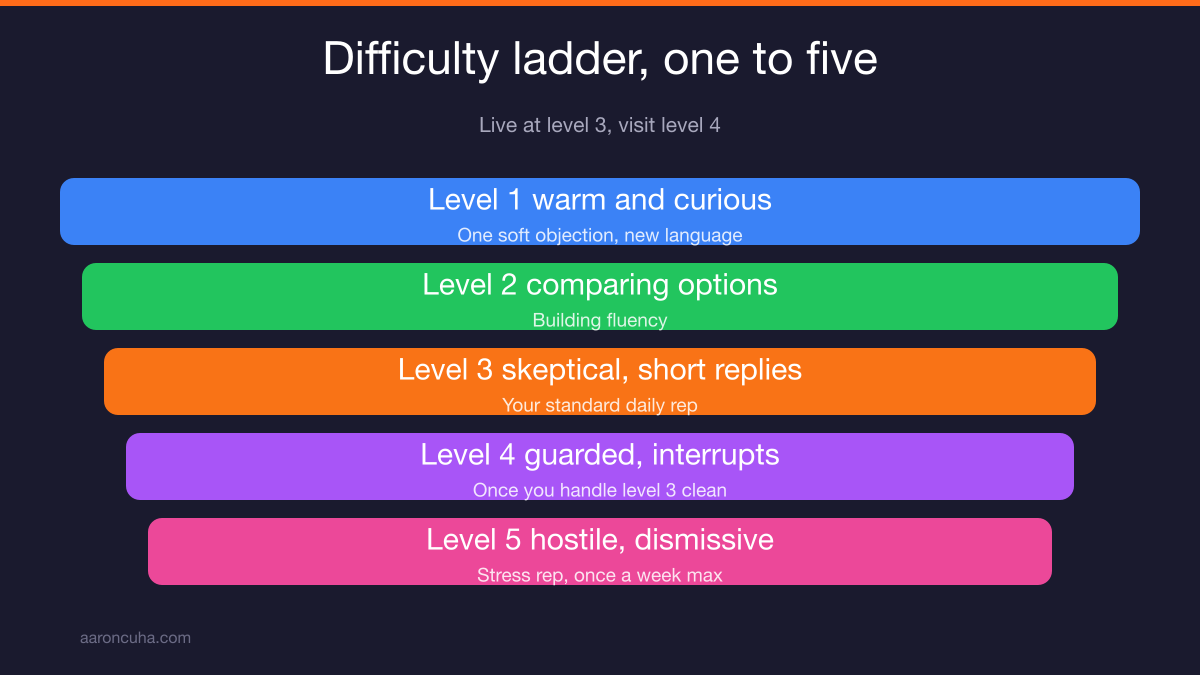
Cap the scene at eight to twelve prospect turns. A cap creates pressure, forces you to move toward a next step, and keeps the conversation short enough to debrief honestly.
Without a cap, roleplays wander. You circle. You explain more. You never have to ask for anything because there is always another turn coming.
Real conversations have a clock. A seller has a school pickup. A borrower is between meetings. The cap makes your practice match reality.
My recommended shape:
- Eight to twelve prospect turns per scene.
- Five to seven minutes of real time.
- Two reps per session, same persona, second one at higher difficulty.
Run the second rep immediately after the first debrief. That is where the improvement shows up, while the correction is still warm.
Do not run five reps in a row. Volume without debrief is just talking to yourself.
Part Four: Demand a Scored Debrief Against Named Criteria
The scoring is the training. Without it you get a conversation. With it you get a rep that tells you exactly what to change on the next one.
Name the criteria in the prompt before the scene starts. Here are the four I use, because they cover the moves people skip when they are nervous:
- Did I acknowledge before answering? Or did I jump straight to defending.
- Did I ask before telling? One question before one explanation.
- Did I name the fear? Did I get under the stated objection to the real one.
- Did I ask for a specific next step? With a day and a time, not "let me follow up."
Your debrief prompt should read something like this: "Score me 1 to 5 on each of the four criteria. Quote the exact line where I lost you. Give me one specific fix to apply in the next rep. No praise."
"No praise" matters. Models want to encourage you. Encouragement is not feedback.
Ask for the quoted line every time. Seeing your own words on the screen where the deal turned is uncomfortable and it is the fastest way to change them.
Ready to stop guessing at your weak spots? Get a Channel Audit and Plan of how your message lands before a prospect ever hears it, or browse the free downloads for the drill templates.
Part Five: Log the Objection You Lost To
After every rep, write down the one objection that beat you. Four fields, thirty seconds. This is the part that compounds, and it is the part everyone skips.
Log these four things:
- Date and difficulty level.
- Objection category. Price, timing, trust, authority, or competition.
- Your exact losing line. Copy it from the transcript.
- The better line you would use next time, written in your own words.
Keep it in a spreadsheet or a single note file. Do not build anything fancy.
After two weeks you will see a pattern. It will not be spread evenly across five categories. One category will own most of your losses.
For most agents I coach, it is price. For most consultants, it is authority, meaning they never confirmed who actually signs. For loan officers it is often competition, the rate shopper who will not commit.
That pattern is your practice plan. Instead of drilling randomly, you run seven straight days on your losing category at level 3, then a level 4 stress test.
This is the same logic behind content systems that run without motivation. A log turns effort into direction.
The Nightly Ten Minute Drill
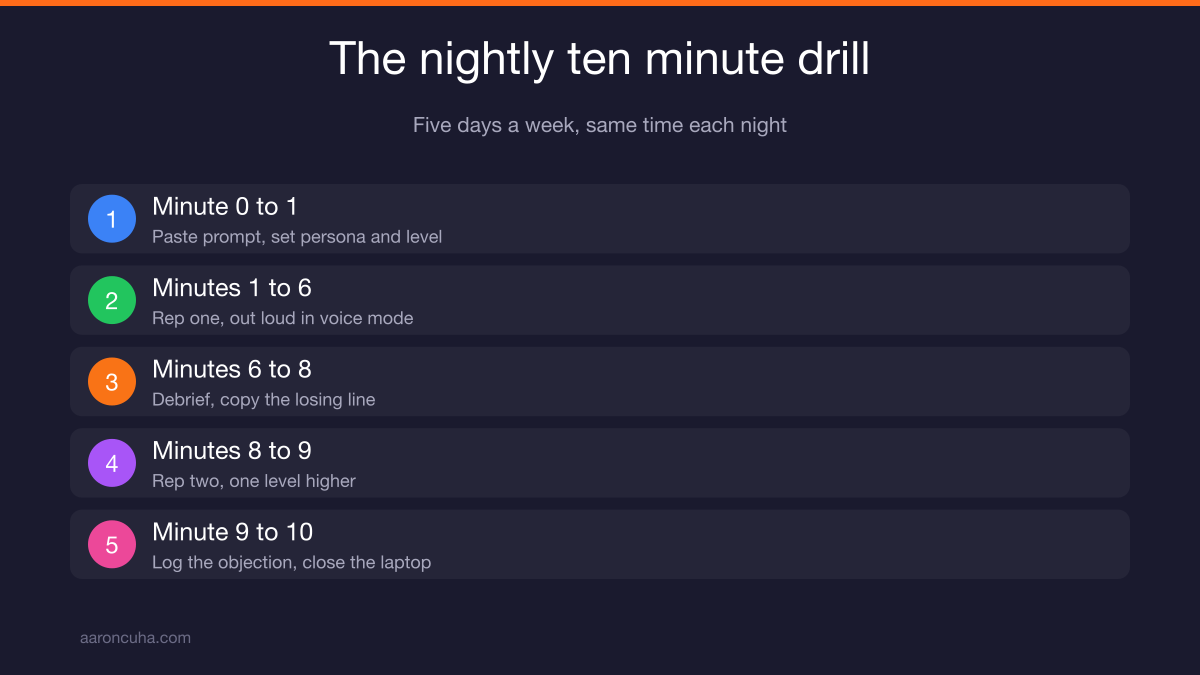
Ten minutes a night beats a three hour training day once a quarter. Here is the routine that replicates a coaching call without a coach on the line.
Run it the same time every night. I do it at the end of the workday while the day's real conversations are still fresh.
- Minute 0 to 1. Paste your saved prompt. Set difficulty and today's persona.
- Minutes 1 to 6. Rep one. Speak out loud if you are using voice mode. Type fast if you are not.
- Minutes 6 to 8. Debrief. Read the scores. Copy the quoted losing line.
- Minutes 8 to 9. Rep two on the same persona, one difficulty level higher, applying the fix.
- Minute 9 to 10. Log the objection. Close the laptop.
Use voice mode at least twice a week. Typing lets you edit before you commit. Speaking does not, and neither does a prospect.
Rotate personas weekly, not nightly. One week on price resistant sellers. Next week on rate shoppers. Repetition inside a persona is where fluency lives.
Monday through Friday only. Ten minutes, five days, and you have run roughly forty reps a month against people who never lost a dollar of your income teaching you.
Scenarios by Role: Agents, Loan Officers, Consultants
Start with the conversation you avoid most. For nearly everyone that is price or commitment. Build your first three personas around those two questions.
Real estate agents. Three starting scenarios worth building:
- Seller who wants to list above your recommended price and has a neighbor's number in their head.
- Seller asking you to cut your commission because another agent offered less.
- Buyer who wants to "just look" for six months with no representation agreement.
Pair these drills with your visibility work. See YouTube for real estate agents for how the same objections show up in your content.
Loan officers.
- Borrower comparing your rate to an online quote they cannot fully explain.
- Borrower who wants to wait for rates to drop before locking.
- Referral partner who sends you one file a quarter and will not commit to more.
Consultants and coaches.
- Founder who says "send me a proposal" without agreeing to a decision date.
- Prospect who wants a discount for paying in full and expects you to fold.
- Buyer who is not actually the decision maker but will not say so.
If consulting is your world, positioning yourself as the expert and drilling authority objections work on the same problem from two sides.
What AI Roleplay Cannot Do
AI runs the drill. It does not do the diagnosis. It cannot see your face, hear the hesitation before you answer, or tell you the real reason you keep dodging the fee conversation.
Be honest about the limits:
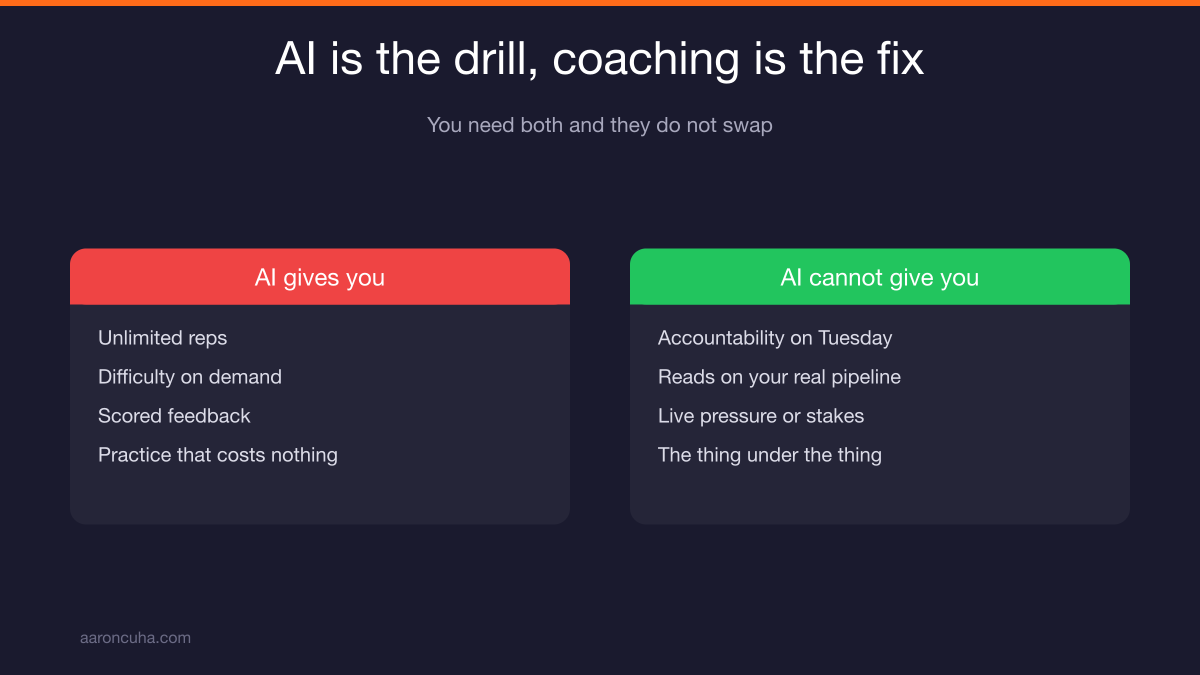
- No accountability. The AI does not care if you skip Tuesday. A coach, a group, or a partner does.
- No pattern reading across your business. It does not know your pipeline, your pricing, or your history.
- No live pressure. Nothing is at stake. Real calls carry weight AI cannot manufacture.
- No correction of the thing under the thing. If you undercharge because you doubt your value, roleplay will not find that. A human will.
I lost DirectLender in 2008 after building it to 280 offices and 3,000 employees. I did not rebuild by finding a better script. I rebuilt by getting corrected by people who could see what I could not.
AI is the drill. Coaching is the correction. You need both, and they are not interchangeable.
If you want the human layer, look at executive coaching versus group coaching and pick the format that fits how you actually work.
For a broader view of where AI belongs in a business, the Harvard Business Review archive on AI adoption is worth your time. The theme is consistent. AI amplifies a good process and exposes a bad one.
Build Your AI Sales Roleplay Partner Tonight
You can have this running in fifteen minutes. Write one persona, set difficulty to 3, cap it at ten turns, name your four scoring criteria, and open a note file for your objection log.
Here is the skeleton. Fill in the brackets and save it.
"You are playing a prospect in a sales roleplay. Persona: [situation, timeline, decision role]. Your unstated fear is [fear]. Do not reveal it unless I ask a question that earns it. Difficulty level 3 of 5: skeptical, short replies, one to three sentences, no paragraphs. Stay in character. No coaching or commentary until I type DEBRIEF. Concede only if I acknowledge your concern and ask a question that moves you. Interrupt me if I ramble past four sentences. End the scene after 10 of your turns. When I type DEBRIEF, score me 1 to 5 on: acknowledged before answering, asked before telling, named the fear, asked for a specific next step. Quote the exact line where I lost you and give one fix. No praise. Start with your opening line."
Run it twice. Log the objection that beat you. Do it again tomorrow.
Forty reps a month against a prospect who costs you nothing beats one painful lesson learned on someone who was ready to buy. That is the whole idea behind building AI systems that run your operations. Put the repetition somewhere it cannot hurt you.
Two weeks in, your log will tell you what to fix. That is when the real work starts.
If you want the drill plus the correction, join the Systems Over Hustle community where we run these reps together and pressure test the objections that are actually costing you deals.
Frequently Asked Questions

Written by
Aaron CuhaAuthor of Crazy Simple YouTube, keynote speaker, and executive coach with 20,000+ hours logged. ICF PCC, NLP Master Practitioner, and DISC Certified. Aaron helps entrepreneurs replace hustle with AI-powered systems that generate leads, content, and revenue on autopilot.