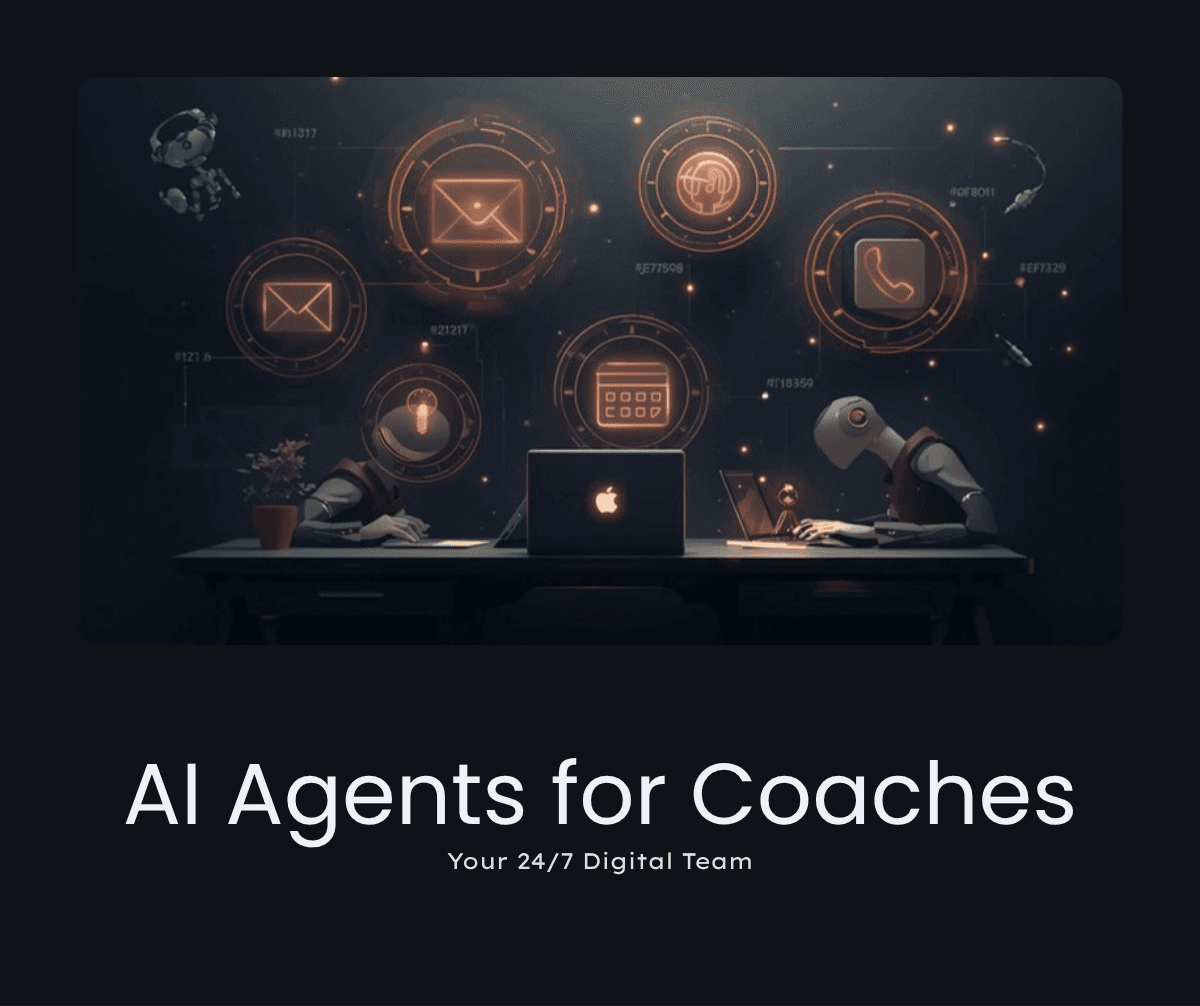
An AI agent in a coaching business today can reply to inquiries in minutes, book calls, prepare briefs, draft recaps and send nudges, with a human reading what goes out. It cannot coach, and the demos that say otherwise are selling. Here is the working version, from a practice of 83 clients.
An AI agent in a coaching business can reliably do five things today: answer a new inquiry within minutes, book the call, prepare a brief from what the client submitted, draft the recap, and send a nudge when a commitment slips. Each one runs with a human reading the template once and the recap every time. What it cannot do is coach, and any demo showing an agent running a client conversation is a demo, not a practice.
Key Takeaways
- Working today: reply, book, brief, recap, nudge. All five run in my practice of 83 clients.
- Still hype: agents that coach, agents that make decisions with money or feelings attached, agents nobody reviews.
- The rule that keeps trust: AI never states a number it was not given and never sends what a human has not read in template form.
- The order to build: reply first, recap second, brief third, nudge fourth.
- Clients should experience attention, not automation. If it would not read as attention, it does not ship.
If you want this built with someone who has run it at scale, coaching is where we do it, and the free AI scorecard is the four minute place to start.
What is an AI agent, in a coaching business, in plain terms?
A piece of software that takes an event, a form submission or a calendar time or a missed commitment, does a defined job with a current AI model, and hands the result to a person or a client. "New inquiry arrived, draft a reply in Aaron's voice answering their question, attach the booking link, send." That is an agent. It is not a chatbot you talk to and it is not a robot coach. I run several of them on the Systems Over Hustle platform my coaching clients use, and the way I know they work is that clients describe the results as me being more responsive, not as software.
Which five jobs work today?
- Reply. Inquiry at 2:15, reply at 2:18, in the coach's voice, answering the actual question, with a booking link. This is the highest return agent in any service business and the one most coaches skip.
- Book. The booking, the confirmation, the reminder, the reschedule. Boring and essential.
- Brief. The client submits a short questionnaire before the call; the agent produces a one page brief the moment they submit. In a recent count on my platform that was 736 questionnaires and 92 briefs in the window measured.
- Recap. From the call recording, a draft summary with decisions and commitments, reviewed by me, sent the same day. The archive is past 14,700 sessions and clients search it.
- Nudge. A commitment with a date; a reminder in the coach's words when it is due or slipping. One recent 30 day window: 673 commitments, 763 nudges, none written by hand.
What is still hype?
The agent that runs the coaching call. The agent that decides a refund, a price or a difficult message on its own. The agent that "learns your clients" and acts without review. The autonomous sales agent that closes high ticket coaching in a chat window. Each of these exists as a demo. None survive a month with real clients who are paying for a human's judgment, because the first time the agent is confidently wrong, the client is gone. Coaching is a trust business; the agents that work protect the trust by handling the work around it.
What rules keep clients trusting you while agents run?
- A human reads every template once and every recap before it sends.
- The agent never states a number, date or name it was not given from the record.
- The agent writes in your voice, built from your own words, and says what it is if asked.
- Anything emotional, financial or final goes to you, fast. A message that reads "I think I need to stop" triggers a person, not a sequence.
- If an agent fails silently, you know within the hour. Silence toward a client is the one failure that costs the relationship.
In what order should a coach build agents?
Reply, recap, brief, nudge. Reply pays fastest. Recap fixes the thing you already do badly at 6 PM. Brief changes how prepared you are on every call. Nudge makes accountability reliable, which is the product. The content agent, cutting one video into a week of material, comes after all four and is covered in the AI content engine. The full reasoning on each is in where AI belongs in a coaching business.
What does this cost, and do you need a platform?
The reply and booking agents run on tools most coaches already pay for plus a current AI model; call it an afternoon. Recaps need transcription. Briefs need a form and a connection to the model. Nudges need somewhere to log commitments, which is the point at which many coaches end up on a platform. Mine exists because I wanted all five with the roster in one place, and coaching clients run on it. Build by hand first, keep what you use, then decide.
What does a day look like with the five agents running?
7:40, a prospect submits the form. 7:43, the reply agent has answered her actual question in my voice and offered Wednesday or Thursday. 7:51, she books Thursday and the booking agent confirms and schedules two reminders. 9:00, my first call: the brief agent produced a one page summary last night the moment the client submitted his questionnaire, with his three commitments from last week marked done, done, not done. 9:45, call ends; the recap agent drafts the summary and the two new commitments from the recording. 12:30, I read four recap drafts over lunch, fix one date, send. 3:00, the nudge agent sends reminders to the three clients with commitments due Friday. 5:30, I look at one screen: who is on pace, who is behind, who went quiet. I did not write an email all day, and every client got something from me.
How do you know the agents are helping and not just running?
Three numbers a month. Median time from inquiry to first reply, which should be minutes. Percentage of recaps sent the same day, which should be near all of them. Percentage of commitments completed on time, which is the number clients actually pay for, and the one the nudge agent exists to move. If the third number is not rising, the nudges are generic or badly timed; rewrite them from your own call language and tie each to the specific commitment. Agents that run but do not move the third number are overhead with a nice name.
What do clients actually notice?
That you replied in minutes. That you remembered. That the recap arrived before dinner. That the reminder about their own promise came in your words on the right day. They do not notice agents. That is the standard for every one you build: if the client would experience it as attention, ship it; if they would experience it as automation, do not.
Frequently Asked Questions

Written by
Aaron CuhaAuthor of Crazy Simple YouTube, keynote speaker, and executive coach with 20,000+ hours logged. NLP Master Practitioner and DISC Certified. Aaron helps entrepreneurs replace hustle with AI-powered systems that generate leads, content, and revenue on autopilot.