The online coaching industry is projected to exceed $6 billion by 2027. Here is the step-by-step system I have used to help hundreds of coaches build.
The online coaching industry is booming, and it is not slowing down. The global coaching market is projected to exceed $6 billion by 2027, and individual practitioners are capturing more of that market than ever before. But here is the reality: most new coaching businesses fail within 18 months. Not because the founders lack expertise — they fail because they launch without systems.
I have spent over 20,000 hours coaching entrepreneurs and business owners. I have helped hundreds of coaches go from zero to consistent five-figure months. The difference between coaches who make it and those who do not is never talent. It is always structure. Here is the exact framework I use with clients in our executive coaching program.
Step 1: Choose a Profitable Coaching Niche
The first mistake aspiring coaches make is going too broad. "Life coach" is not a niche. "Business coach" is barely a niche. A profitable coaching niche sits at the intersection of three things: your expertise, a specific audience, and a painful problem that audience will pay to solve.
Here are examples of niche coaching businesses that work:
- Executive coaching for first-time CTOs at Series A startups
- Business coaching for licensed therapists scaling to group practice
- Performance coaching for competitive athletes transitioning to business careers
- Leadership coaching for women in male-dominated industries
Notice the pattern: specific audience plus specific transformation. The narrower you go, the easier it is to market, the more you can charge, and the faster you build authority. According to IBISWorld, specialized coaches earn 2 to 3 times more than generalist coaches on average.
Step 2: Design Your Core Offer
Your coaching offer is not "an hour of your time." That commoditizes your expertise and caps your income. Your offer should be a transformation — a specific outcome delivered over a defined time period through a structured process.
The Offer Framework
- Outcome: What specific, measurable result will clients achieve?
- Timeline: How long does the transformation take? (90 days is the sweet spot for most coaching engagements)
- Methodology: What is your proprietary process or framework? Name it. Document it.
- Deliverables: What does the client receive beyond coaching calls? (Frameworks, templates, access to community, recorded trainings)
- Price: Charge based on the value of the outcome, not the hours you spend.
A coach who says "I will help you grow your business" will always lose to a coach who says "In 90 days, I will implement the Revenue Engine Framework to add $10,000 to $30,000 in monthly recurring revenue to your practice." Same expertise. Completely different perceived value.
Step 3: Set Your Pricing Strategy
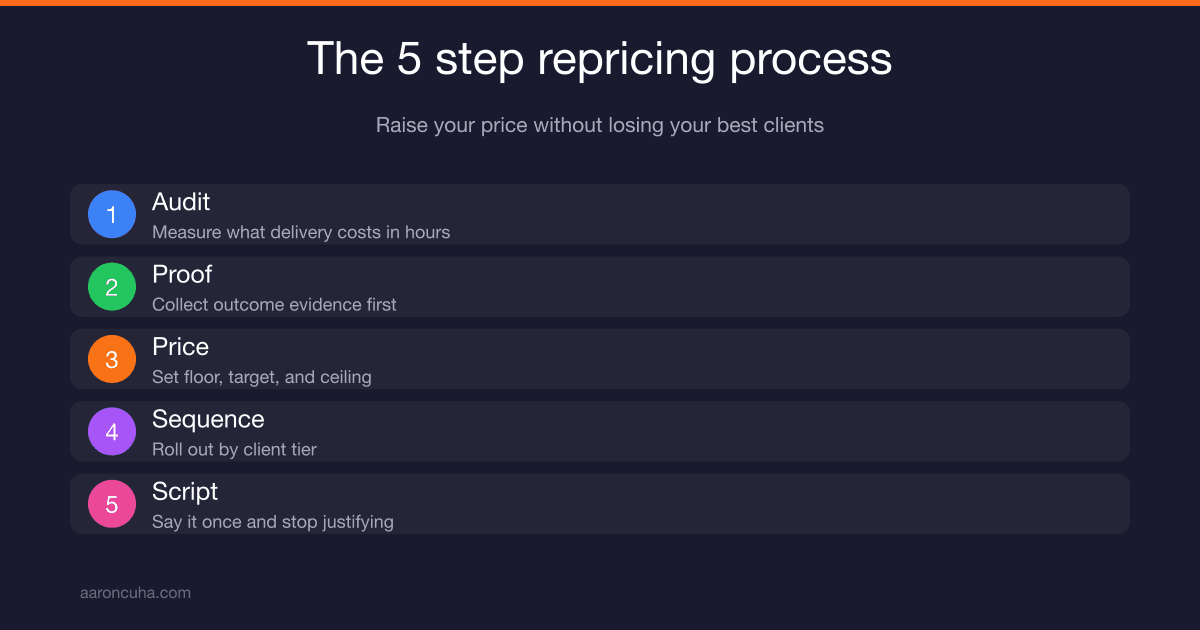
Pricing is where most new coaches sabotage themselves. They look at what other coaches charge and price at the bottom of the range. This is backwards. Low prices attract low-commitment clients who get poor results, which gives you bad case studies and weak testimonials. It is a death spiral.
Here is how to price your coaching:
- Calculate the value of the outcome: If your coaching helps someone earn $100,000 more per year, a $5,000 to $15,000 investment is a no-brainer.
- Start at a minimum of $1,500 per month for one-on-one coaching. Below that, you cannot sustain a business without burning out on volume.
- Raise prices every 3 to 5 clients. Your experience is increasing, your results are compounding, and your demand should be growing.
For a deeper look at coaching ROI calculations, read my business coaching ROI analysis.
Step 4: Build Your Coaching Systems
Systems are what separate a coaching hobby from a coaching business. You need documented processes for:
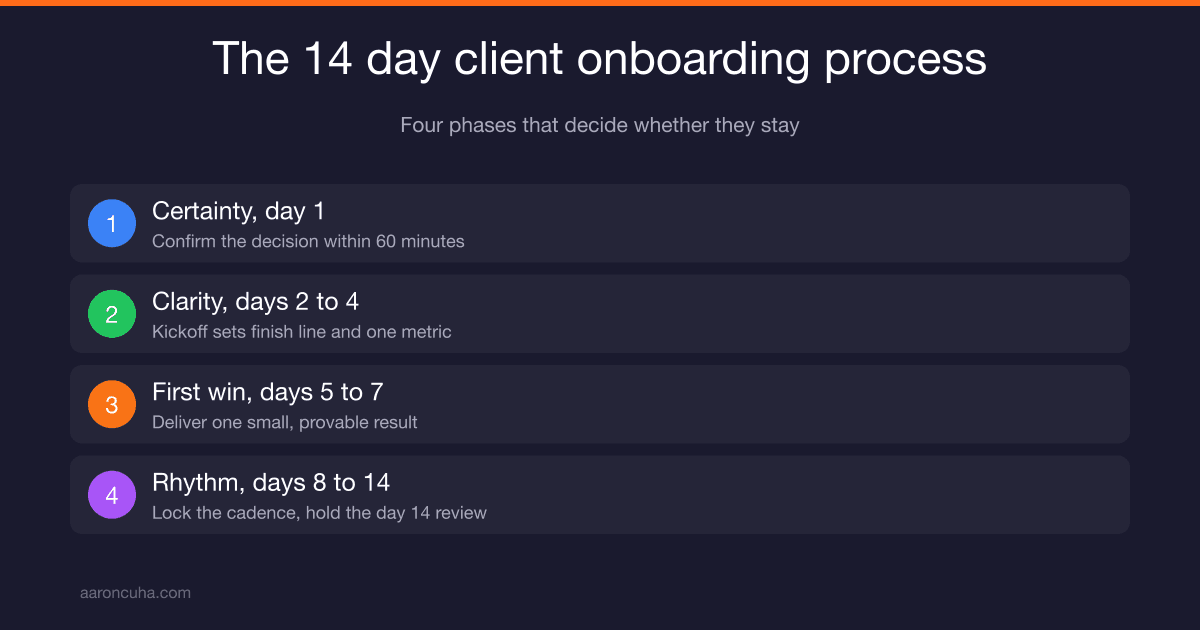
- Client onboarding: Welcome email sequence, intake questionnaire, goal-setting framework, calendar scheduling
- Session delivery: Pre-session prep template, session structure, post-session action items
- Progress tracking: Weekly check-ins, milestone tracking, accountability metrics
- Client offboarding: Exit interview, testimonial request, referral system, alumni community
Each of these systems should be documented in a standard operating procedure that you could hand to an assistant and they could execute without you. That is the test of a real system. I teach these exact operational frameworks inside our AI Systems service where we automate the repetitive parts of coaching operations.
Step 5: Get Your First 10 Clients
You do not need a massive audience to get your first clients. You need a combination of direct outreach, content, and referrals.
Direct Outreach (Clients 1 to 3)
Make a list of 50 people in your network who fit your ideal client profile or know someone who does. Send a personal message — not a sales pitch — sharing what you are building and asking if they know anyone who might benefit. Two to three clients from your network will come from genuine conversations, not cold pitches.
Content Authority (Clients 4 to 7)
Start publishing content that demonstrates your expertise. YouTube is the highest-leverage platform for coaches because video builds trust faster than text. I cover this in depth in my YouTube for coaches guide. One video per week, focused on your niche's biggest pain points, will generate inbound leads within 60 to 90 days.
Referral Engine (Clients 8 to 10 and Beyond)
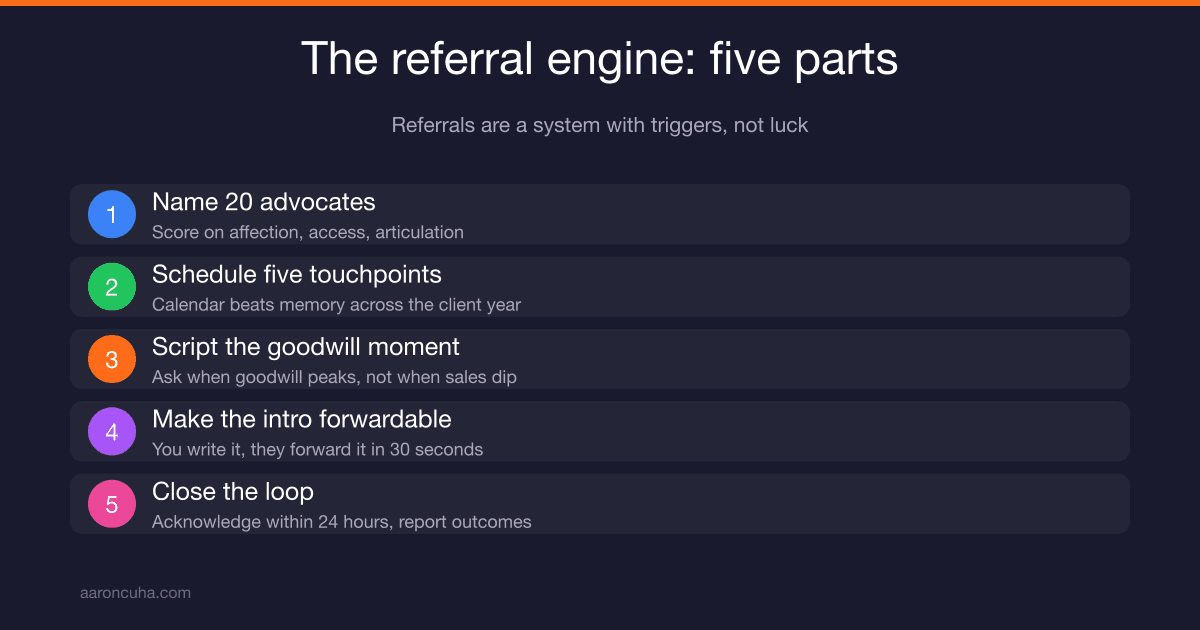
Your best clients will refer more clients — if you make it easy. Build a formal referral system: ask for referrals at the peak of client satisfaction (usually after a breakthrough result), offer a referral incentive, and follow up consistently.
Step 6: Scale Beyond One-on-One
One-on-one coaching has a ceiling. At $3,000 per month per client and a maximum of 15 to 20 clients, you cap out at $45,000 to $60,000 per month. That is excellent income, but it requires all of your time and energy.
To scale beyond that ceiling, layer in:
- Group coaching: Serve 20 to 50 clients at a lower price point ($500 to $1,500 per month) with weekly group calls. Learn more about the differences in my executive vs group coaching breakdown.
- Digital courses: Package your methodology into a self-paced course at $497 to $2,997.
- Community: Build a paid community where members get ongoing access to you, each other, and your content library. Our community is an example of this model.
The goal is to serve more people at different price points while protecting your time. Systems make this possible.
Frequently Asked Questions
How much money do I need to start an online coaching business?
Under $500. You need a Zoom account, a scheduling tool like Calendly, a simple website, and a way to accept payments. Do not invest in expensive platforms or tools until you have paying clients.
Do I need a certification to be a coach?
Not legally, in most cases. Certifications can add credibility, but clients care more about your results and experience than your credentials. Focus on building case studies and testimonials from real clients rather than collecting certifications.
How long does it take to build a profitable coaching business?
With focused effort and the right systems, most coaches can reach $5,000 to $10,000 per month within 6 to 12 months. The variable is how quickly you niche down, build content, and start conversations with potential clients.
What is the best platform for online coaching?
Zoom for calls, Calendly for scheduling, Stripe for payments, and YouTube for client acquisition. Keep your tech stack simple. You can add complexity later as your business grows.

Written by
Aaron CuhaAuthor of Crazy Simple YouTube, keynote speaker, and executive coach with 20,000+ hours logged. ICF PCC, NLP Master Practitioner, and DISC Certified. Aaron helps entrepreneurs replace hustle with AI-powered systems that generate leads, content, and revenue on autopilot.