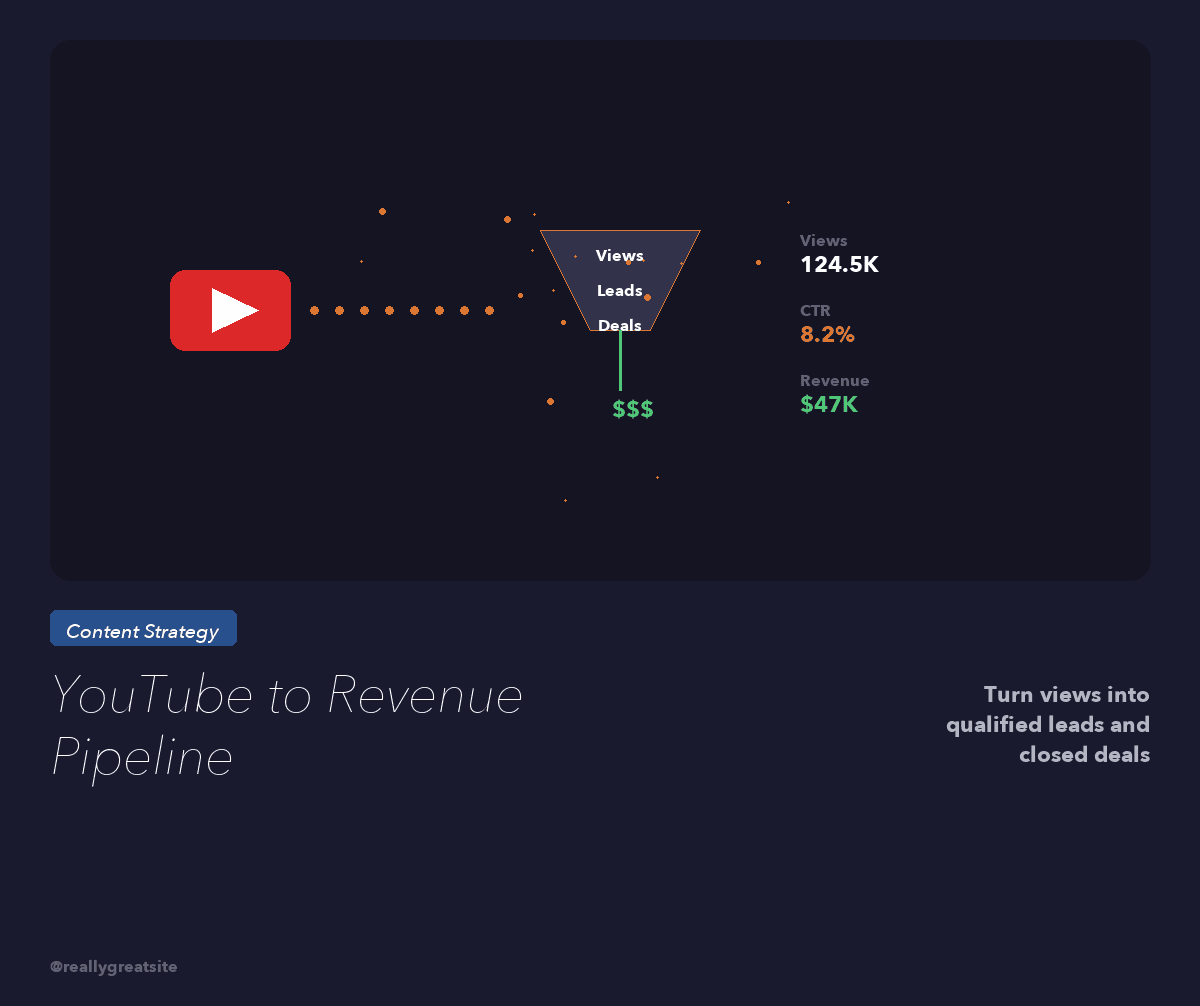
One YouTube video should not just get views — it should generate leads, book calls, and close deals. Here is the system that turns a single video into 30.
The YouTube-to-revenue pipeline is the single most underused growth system in business today. Most creators treat YouTube like a content platform. It is not. It is a lead generation engine that runs 24 hours a day, 7 days a week, without you lifting a finger — if you build the pipeline correctly. I have helped more than 200 business owners install this exact system, and the results are consistent: one well-structured video generates 20 to 40 qualified leads per month. Not subscribers. Not views. Leads that turn into revenue. According to HubSpot's 2025 State of Marketing Report, video generates 66 percent more qualified leads than any other content format.
Key Takeaways
- A single YouTube video can generate 30+ qualified leads per month when paired with the right funnel infrastructure
- The pipeline has four stages: Attract, Capture, Nurture, Convert — skip any stage and the whole system breaks
- Lead magnets placed at the 40 percent mark of your video convert 3 to 5 times better than end-of-video CTAs
- Repurposing one video into 15+ content pieces creates multiple entry points into the same funnel
- Automated email sequences do 80 percent of the selling — your video starts the conversation, email closes it
Want to see how this pipeline works for your specific business? I will map it out for you on a strategy session.
Book a Strategy SessionThe Four-Stage Pipeline That Turns Views Into Revenue
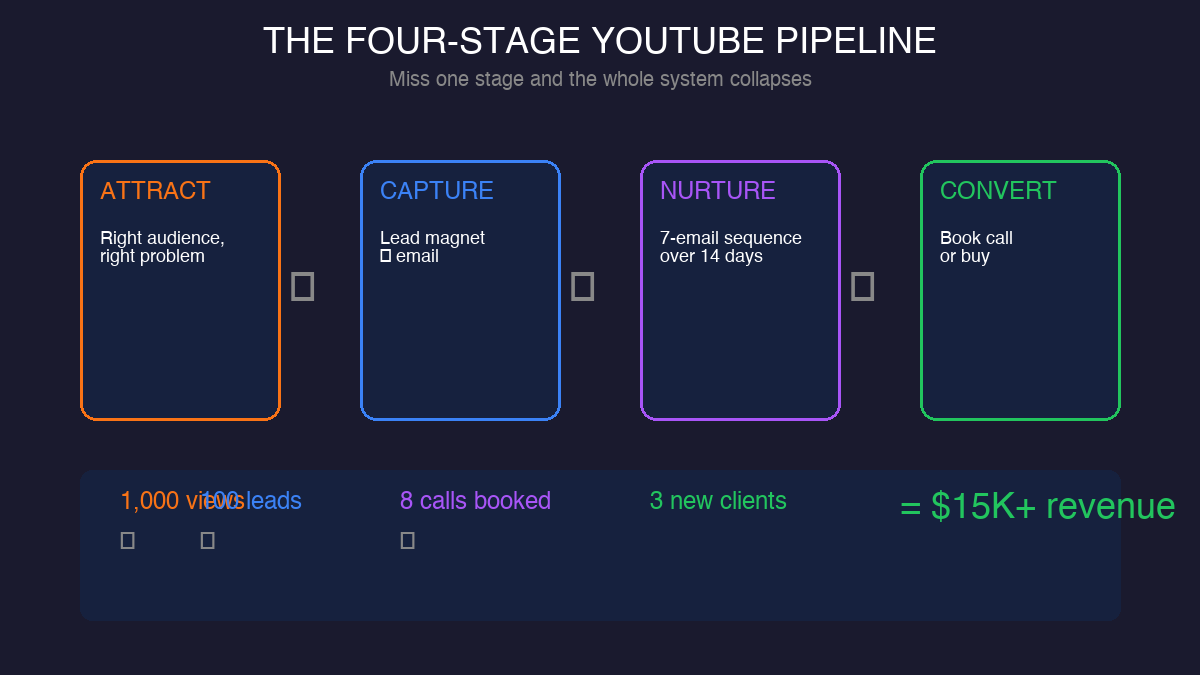
Every YouTube-to-revenue pipeline has four stages. Miss one and the whole system collapses. Most creators only build stage one and wonder why views never turn into dollars.
Stage 1: Attract. Your YouTube video pulls in the right audience with the right problem at the right time. This is not about going viral. It is about ranking for search terms your ideal client is already typing. A video targeting "how to scale a coaching business" attracts coaches who want to scale. That is a buyer, not a browser.
Stage 2: Capture. Mid-video, you offer a lead magnet that solves the next logical problem. The viewer gives you their email address in exchange for a resource that extends the value of the video. Now you have a lead, not just a viewer.
Stage 3: Nurture. An automated email sequence delivers additional value over 7 to 14 days. Each email builds trust, demonstrates expertise, and moves the lead closer to a buying decision. No manual follow-up. No chasing. The system does the work.
Stage 4: Convert. The final emails in the sequence present your offer and invite the lead to book a call, purchase a product, or join a program. By this point, they have consumed your video, downloaded your resource, and read five to seven emails. They are warm. The conversion rate on these calls averages 35 to 45 percent in my experience.
Creating the Anchor Video That Attracts Buyers
Not every video is a pipeline video. Some videos build brand awareness. Some build authority. Pipeline videos are specifically designed to attract people who are ready to take action. The difference is intent.
Pipeline videos target search terms with commercial intent. Here is how to identify them:
- "How to" + problem + industry: "How to get more clients as a financial advisor"
- "Best" + solution + category: "Best CRM for coaching businesses"
- Comparison queries: "Group coaching vs one-on-one coaching"
- Cost and ROI queries: "Is business coaching worth it"
These search terms signal that the viewer is actively trying to solve a problem — and willing to invest in the solution. That is your ideal viewer. I cover the full keyword research process in Crazy Simple YouTube, but the core principle is this: target the question your ideal client types into YouTube the night before they decide to hire someone like you.
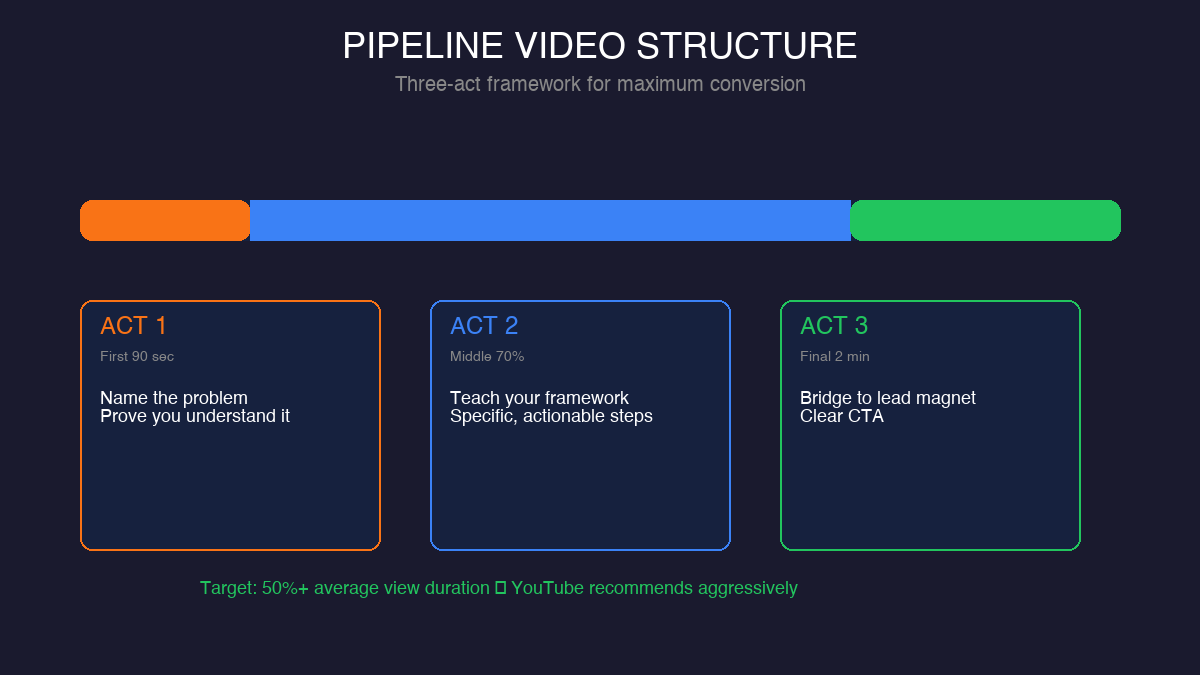
Structure the video in three acts. Act one (first 90 seconds): name the problem and prove you understand it. Act two (the middle 70 percent): teach your framework with specific, actionable steps. Act three (final 2 minutes): bridge to the lead magnet and CTA. This structure keeps average view duration above 50 percent — the threshold where YouTube starts recommending your content aggressively. For more on video structure, check out my guide on how to get clients from YouTube.
The Lead Magnet That Converts Viewers to Leads
Your lead magnet is the bridge between free content and paid relationship. Get this wrong and your pipeline dies at stage two. Get it right and you will capture 8 to 15 percent of your viewers as leads — compared to the industry average of 1 to 3 percent.
The best-performing lead magnets I have tested follow one rule: they solve the next logical problem after the video. If your video teaches "how to build a content calendar," your lead magnet should be a done-for-you content calendar template. Not a generic PDF. Not a 47-page ebook. A specific, immediately useful resource that saves time and proves your expertise.
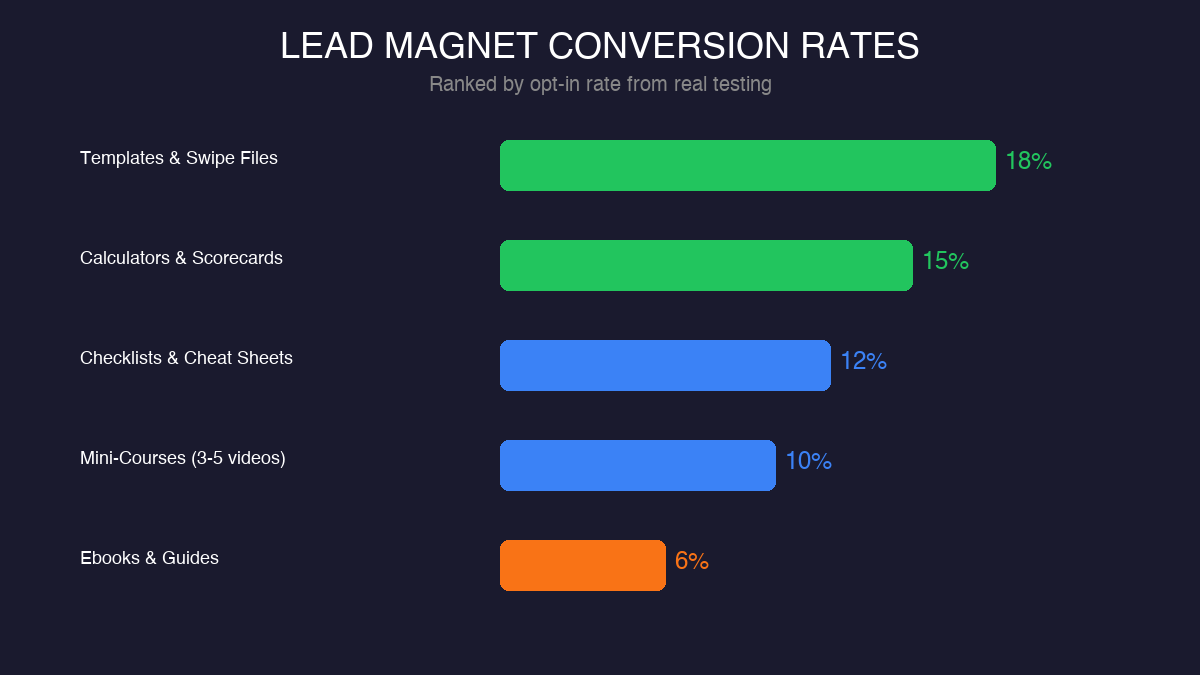
Top-performing lead magnet formats ranked by conversion rate in my testing:
- Templates and swipe files — 12 to 18 percent opt-in rate
- Calculators and scorecards — 10 to 15 percent opt-in rate
- Checklists and cheat sheets — 8 to 12 percent opt-in rate
- Mini-courses (3 to 5 videos) — 6 to 10 percent opt-in rate
- Ebooks and guides — 3 to 6 percent opt-in rate
Notice the pattern: the more immediately actionable the resource, the higher the conversion rate. People do not want more information. They want a shortcut. Give them the shortcut and they will happily give you their email.
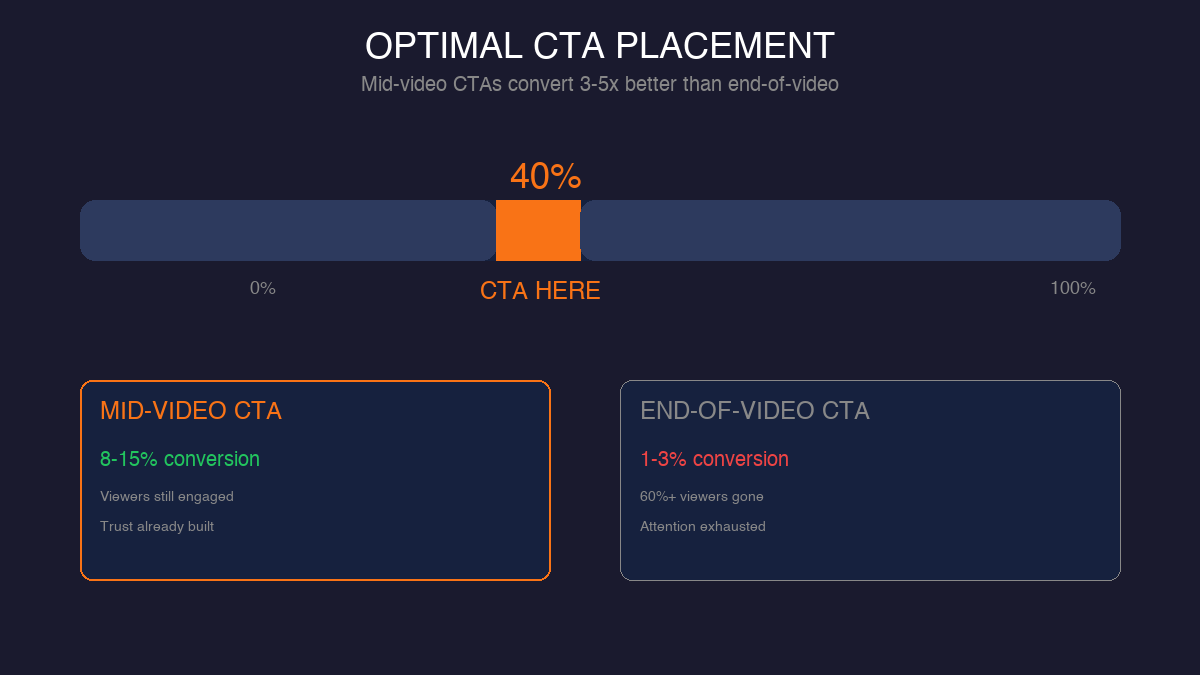
Placement matters too. I mention the lead magnet at the 40 percent mark of the video — not at the end. By the 40 percent mark, viewers have received enough value to trust you but still have enough video left to stay engaged. According to Wistia's video analytics research, mid-video CTAs convert 3 to 5 times better than end-of-video CTAs because viewer drop-off accelerates after the 60 percent mark.
The Repurposing Multiplier: One Video, Fifteen Entry Points
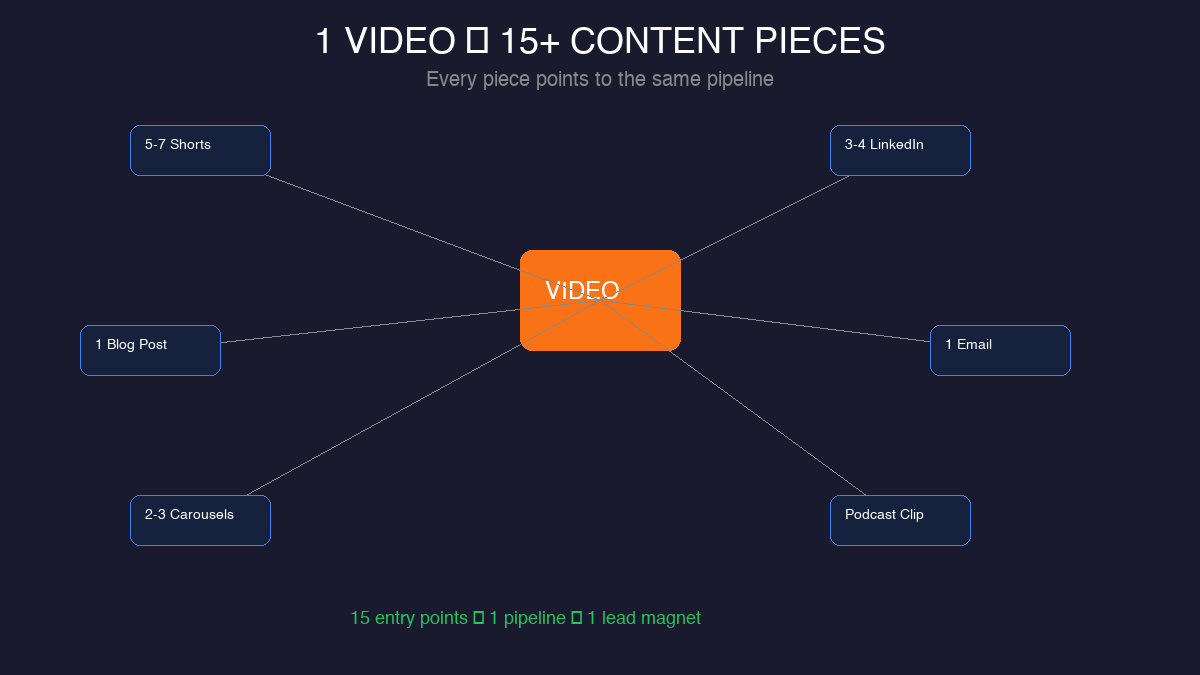
Here is where the pipeline gets powerful. One video should not create one entry point into your funnel. It should create fifteen. Every piece of repurposed content is another door that leads to the same pipeline.
From a single 15-minute YouTube video, I extract:
- 5 to 7 YouTube Shorts — each one links to the full video in the description
- 3 to 4 LinkedIn posts — each one teaches one concept from the video and links to the lead magnet
- 1 blog post — SEO-optimized, targeting the same keyword, with the lead magnet embedded
- 1 email to existing list — driving subscribers to the video
- 2 to 3 social media carousels — visual breakdowns of the framework taught in the video
Every piece of repurposed content points to the same lead magnet and the same email sequence. Fifteen entry points, one pipeline. This is the content multiplication system I teach in detail in my post on The Authority Flywheel and in our YouTube strategy services.
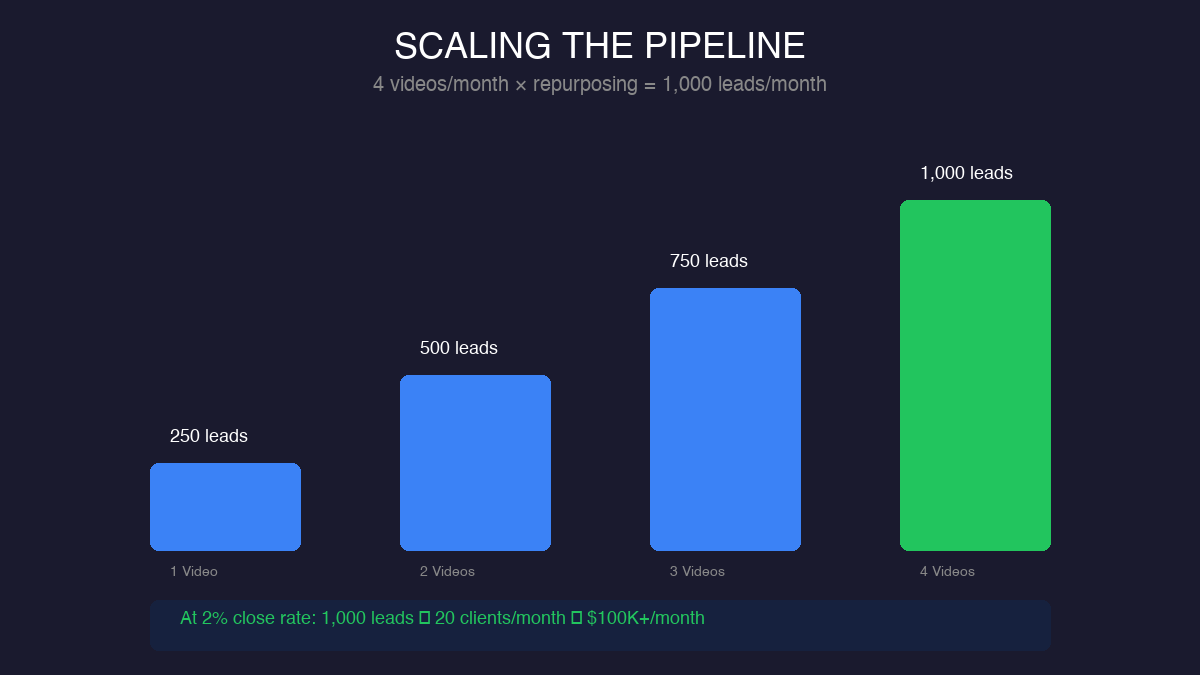
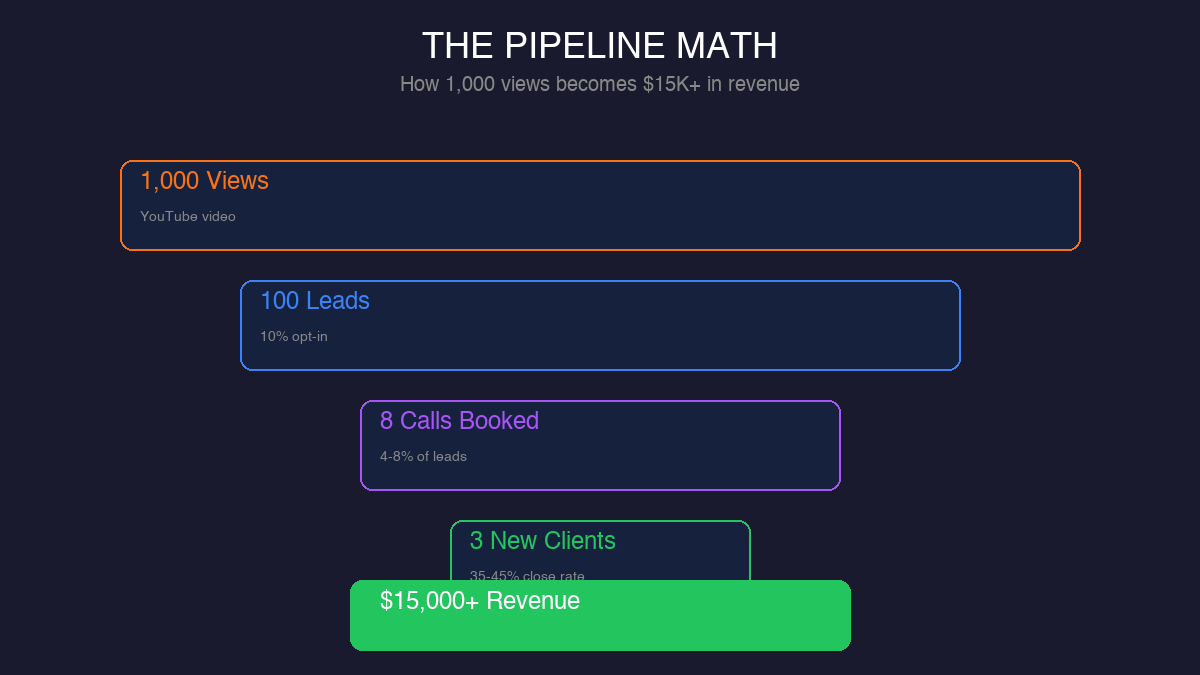
The math on this is compelling. If your YouTube video gets 1,000 views and converts 10 percent to leads, that is 100 leads. But if your repurposed content reaches an additional 5,000 people across platforms and converts 3 percent, that is another 150 leads. Your total: 250 leads from one video's worth of effort. Scale that to four videos per month and you are generating 1,000 leads monthly. Even at a conservative 2 percent close rate, that is 20 new clients per month.
Want to see how real businesses have built this exact pipeline? Check out the numbers behind our client results.
Book a Strategy SessionThe Email Sequence That Does 80 Percent of the Selling
Your video starts the relationship. Your email sequence closes the deal. Most creators massively underinvest in this stage because they are obsessed with content creation and allergic to email marketing. That is a $100,000-per-year mistake.
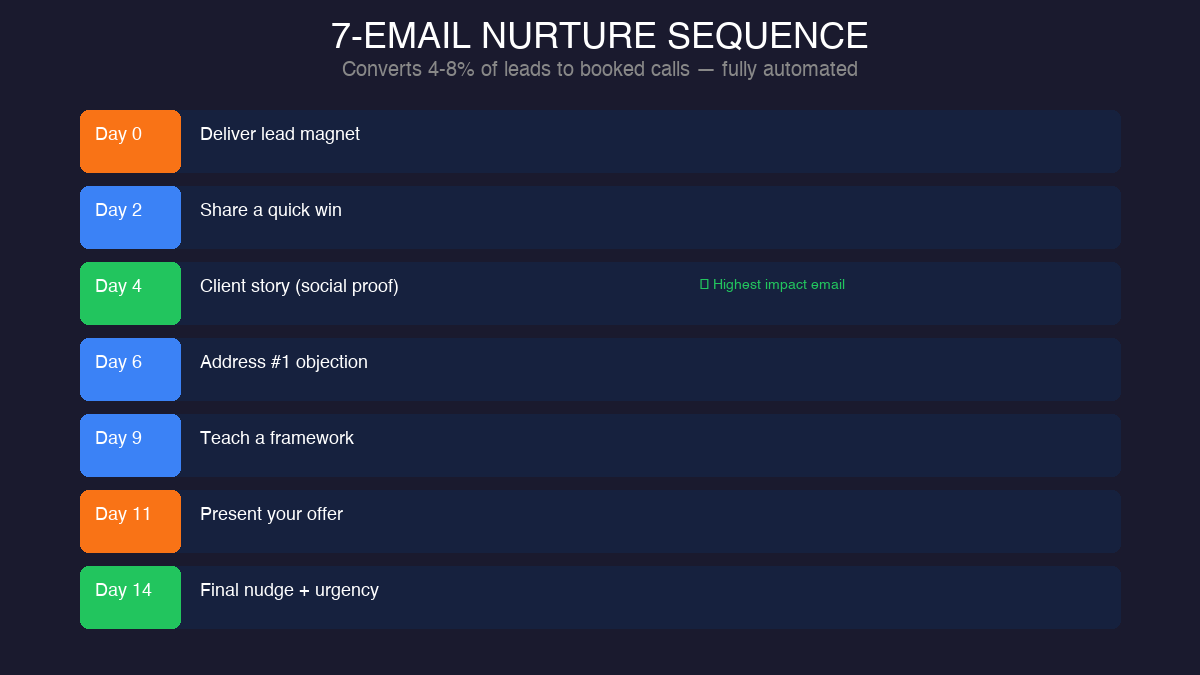
The email sequence I use for every pipeline follows a seven-email structure over 14 days:
- Email 1 (Day 0): Deliver the lead magnet. One sentence of context. No selling.
- Email 2 (Day 2): Share a quick win related to the lead magnet. Build momentum.
- Email 3 (Day 4): Tell a client story that mirrors the reader's situation. Social proof.
- Email 4 (Day 6): Address the number one objection your audience has. Overcome resistance.
- Email 5 (Day 9): Teach a framework that previews what working with you looks like. Value demonstration.
- Email 6 (Day 11): Present your offer clearly. Link to book a call or buy.
- Email 7 (Day 14): Final nudge with urgency or a bonus. Last chance positioning.
This sequence converts at 4 to 8 percent from lead to booked call in my experience. That means for every 100 leads that enter the pipeline, four to eight book a call without you sending a single manual email. If your close rate on calls is 35 percent, that is one to three new clients per 100 leads — fully automated.
The secret is email three — the client story. According to Nielsen's Trust in Advertising Report, 88 percent of consumers trust recommendations from people they know above all other forms of advertising. A detailed client story in an email functions like a personal recommendation. It builds trust faster than any amount of teaching or pitching.
Measuring Pipeline Performance: The Numbers That Matter
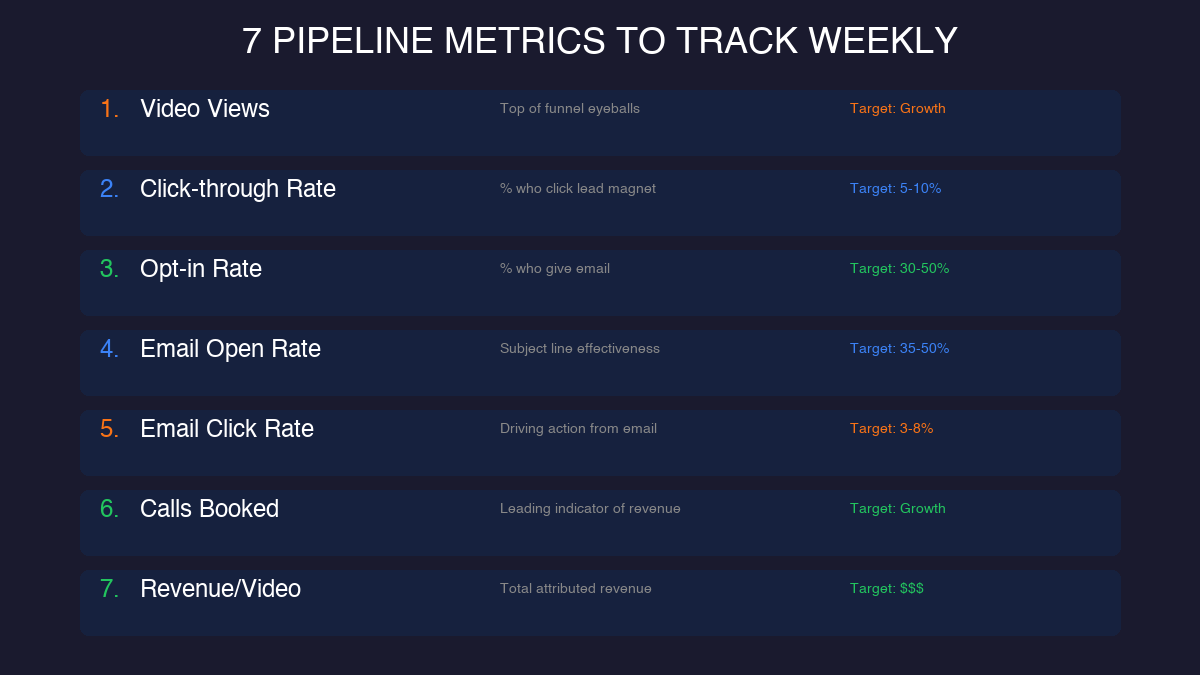
A pipeline without measurement is just a hope. Here are the seven metrics I track weekly for every YouTube-to-revenue pipeline:
- Video views — total eyeballs entering the top of the funnel
- Click-through to lead magnet — what percentage of viewers click the link (target: 5 to 10 percent)
- Opt-in rate — what percentage of clickers give their email (target: 30 to 50 percent)
- Email open rate — are your subject lines working (target: 35 to 50 percent)
- Email click rate — are your emails driving action (target: 3 to 8 percent)
- Calls booked — the ultimate leading indicator of revenue
- Revenue per video — total revenue attributed to leads from each video
Track these in a simple spreadsheet or dashboard. When you see a drop-off at any stage, you know exactly where to focus. Low click-through to lead magnet? Your CTA in the video is weak. High opt-ins but low email opens? Your subject lines need work. High opens but no calls booked? Your offer positioning needs refinement.
This measurement system is the same one I use inside our YouTube strategy services. We build the dashboard, set the benchmarks, and optimize each stage until the pipeline runs like a machine. If you want to understand the analytics side more deeply, read my YouTube analytics guide.
Frequently Asked Questions
How many YouTube subscribers do I need for this pipeline to work?
You do not need a large subscriber count. I have seen this pipeline generate consistent revenue for channels with fewer than 1,000 subscribers. What matters is targeting the right keywords so you attract viewers with buyer intent. Five hundred subscribers of ideal clients is worth more than 50,000 random followers.
What is the best lead magnet for YouTube viewers?
Templates and swipe files consistently outperform other formats with 12 to 18 percent opt-in rates. The key is solving the next logical problem after your video. If the video teaches strategy, the lead magnet should provide the implementation tool.
How long should my YouTube pipeline videos be?
Ten to twenty minutes is the sweet spot for pipeline videos. Long enough to demonstrate deep expertise and build trust, short enough to maintain above-50-percent average view duration. Shorter videos work for awareness but lack the depth needed to drive lead magnet downloads.
How many leads can one YouTube video realistically generate?
A well-optimized pipeline video targeting a commercial-intent keyword generates 20 to 40 leads per month in my experience. With content repurposing across platforms, that number can reach 50 to 100 leads from a single video's worth of content creation effort.
Do I need expensive software to build this pipeline?
No. You can start with free tools: YouTube for video, Mailchimp or ConvertKit free tier for email, Google Docs for lead magnets, and Calendly free tier for booking calls. As you scale, investing in better tools makes sense, but the pipeline works at any budget level.
How often should I create pipeline videos?
One pipeline video per week is the ideal cadence. That gives you four entry points per month, each feeding the same or complementary funnels. Consistency matters more than volume — one video per week for 52 weeks beats daily uploads for three months followed by burnout.
What is the difference between a regular YouTube video and a pipeline video?
A regular video is designed to get views and subscribers. A pipeline video is designed to attract a specific type of viewer, offer them a lead magnet, capture their email, and move them through a nurture sequence toward a purchase. The structure, keyword targeting, and CTAs are all intentionally designed for conversion, not just consumption.
How long does it take to see results from a YouTube pipeline?
Expect 60 to 90 days for the first pipeline videos to gain traction in search results and start generating consistent leads. The pipeline compounds over time — videos from six months ago continue generating leads today. By month six, most clients have a library of pipeline videos working simultaneously, generating leads around the clock.
Ready to build your YouTube-to-revenue pipeline? I will audit your current setup and map out your complete system on a strategy session.
Book a Strategy Session
Written by
Aaron CuhaAuthor of Crazy Simple YouTube, keynote speaker, and executive coach with 20,000+ hours logged. ICF PCC, NLP Master Practitioner, and DISC Certified. Aaron helps entrepreneurs replace hustle with AI-powered systems that generate leads, content, and revenue on autopilot.