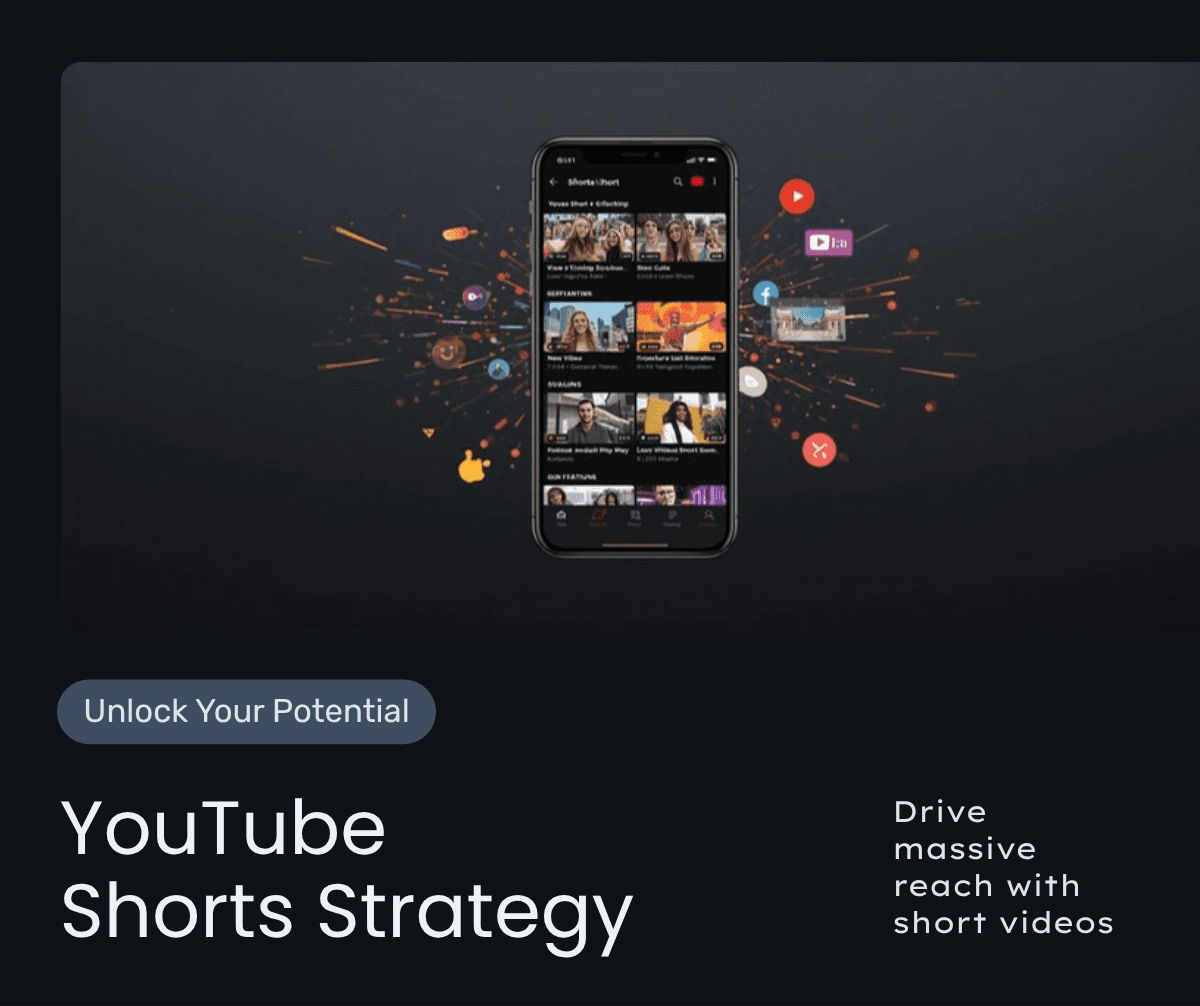
YouTube Shorts get billions of daily views, but most creators use them wrong. Here is how to make Shorts work as part of a strategic channel growth plan.
YouTube Shorts now receive over 70 billion daily views globally. That is not a typo. The short-form video format has exploded, and creators across every niche are asking the same question: should I be making Shorts? After working with more than 500 channels and testing Shorts strategies across industries, my answer is nuanced. Yes, you should use Shorts. But not the way most creators are using them.
Most creators treat Shorts as a separate content strategy — random clips, trending challenges, or reposted TikToks. That approach generates views but not results. The business owners and coaches I work with through our YouTube strategy services use Shorts as a strategic funnel, not a standalone platform. Let me show you how.
Shorts vs Long-Form: Understanding the Difference
Long-form YouTube videos and Shorts serve fundamentally different purposes in your channel strategy. Understanding this distinction is critical.
Long-Form Videos Are for Depth and Conversion
Your long-form content (8 to 20 minutes) is where you demonstrate expertise, build trust, and convert viewers into leads. These videos rank in search, build watch time, and drive people to your offers. Long-form is your revenue engine.
Shorts Are for Discovery and Top-of-Funnel
Shorts excel at reaching new audiences who have never heard of you. The Shorts algorithm surfaces content to viewers based on interest, not subscriber relationships. A single Short can reach 100,000+ people who would never find your long-form content through search alone.
The strategic framework: use Shorts to attract attention, then use long-form to build trust and convert. According to YouTube's creator data, channels that publish both Shorts and long-form content grow subscribers 30 to 40 percent faster than channels using only one format.
The 4 Types of Shorts That Work for Business Channels
Type 1: Clip Shorts (Easiest to Create)
Take the most impactful 30 to 60 seconds from your long-form video and reformat it as a vertical Short. Focus on a single insight, a surprising statistic, or a contrarian opinion. This is the simplest repurposing strategy and connects directly to your full video. I cover the complete repurposing workflow in my content repurposing guide.
Type 2: Quick-Tip Shorts
Deliver one actionable tip in under 45 seconds. Format: state the problem in the first 3 seconds, deliver the solution, end with a hook to your long-form content. "Most entrepreneurs waste 2 hours a day on email. Here is the 15-minute email system I use..." then direct them to the full video or your community for the complete framework.
Type 3: Myth-Busting Shorts
Start with a common misconception in your industry and dismantle it in 30 to 60 seconds. "Everyone says you need 10,000 subscribers to make money on YouTube. That is completely wrong. Here is why..." These Shorts generate high engagement because they challenge assumptions and provoke comments.
Type 4: Behind-the-Scenes Shorts
Show your process, your workspace, your team, or your daily routine in a casual, authentic format. These humanize your brand and build connection. They do not directly sell anything, but they make viewers more likely to watch your long-form content because they feel a personal connection to you.
How to Create High-Performing Shorts
The production requirements for Shorts are much lower than long-form video, but the creative requirements are higher. You have 60 seconds or less to capture and hold attention. Here are the principles that consistently produce results:
Hook in the First 2 Seconds
The viewer's thumb is hovering over the screen ready to scroll. You have 2 seconds to give them a reason to stop. Open with a bold statement, a surprising number, or a direct question. Never start with an introduction or greeting.
One Idea Per Short
Do not try to cover multiple points. One clear idea, delivered with conviction, sticks better than three rushed points. If your script has more than one main takeaway, split it into multiple Shorts.
Visual Engagement
Use text overlays for key points. Change camera angles or add b-roll every 3 to 5 seconds. Use motion and visual variety to maintain attention. Static talking-head Shorts with no visual changes underperform consistently.
End with a Hook, Not a Goodbye
The best-performing Shorts end with a statement that makes the viewer want to watch again or click through to your profile. "And that is just one of the five strategies I teach — check my channel for the full breakdown." Never end with "Like and subscribe" — it is the weakest possible call to action in short-form content.
How the YouTube Shorts Algorithm Works
The Shorts algorithm operates differently from the long-form algorithm. Understanding the differences helps you create content that the algorithm promotes:
- Swipe-away rate: The percentage of viewers who swipe to the next Short. This is the Shorts equivalent of CTR — lower is better. A strong hook reduces swipe-away rate.
- Watch-through rate: The percentage of the Short that the average viewer watches. Shorts with high watch-through rates get pushed to more viewers. Keep your Shorts tight — 30 to 45 seconds often outperforms 60 seconds because completion rates are higher.
- Engagement rate: Likes, comments, and shares relative to views. Shorts that provoke reactions get more distribution.
- Loop rate: How often viewers watch the Short multiple times. If your Short loops seamlessly, it signals high quality to the algorithm.
Converting Shorts Viewers to Long-Form Subscribers
This is where most creators fail with Shorts. They generate millions of Short views but zero business results because there is no bridge from short-form to long-form. Here is how to build that bridge:
- Pin a comment on every Short linking to the related long-form video: "Want the full strategy? Watch the complete breakdown here: [link]"
- Mention your long-form content in the Short itself: "I go deeper on this in my full YouTube video — link in the comments."
- Maintain visual branding consistency between your Shorts and long-form content so viewers who discover you through Shorts recognize your long-form videos in their feed.
- Create Shorts series that tease multi-part content available in long-form: "This is Part 1 of 3 — or get the complete system in the full video on my channel."
The goal is not to maximize Short views. The goal is to use Shorts as a top-of-funnel discovery tool that feeds your long-form content and, ultimately, your business. If you need help building this system, book a strategy call and we will map out a Shorts-to-sales funnel for your channel.
Recommended Shorts Publishing Schedule
For business channels, I recommend:
- Minimum: 3 Shorts per week alongside 1 long-form video per week
- Optimal: 5 to 7 Shorts per week alongside 1 to 2 long-form videos per week
- Source: 60 to 70 percent of your Shorts should be clips from long-form content, 30 to 40 percent should be original short-form content
This schedule is sustainable because most of your Shorts come from content you have already created. The incremental time investment is 2 to 3 hours per week for editing and posting. For help systematizing your content workflow, read my post on content systems for entrepreneurs.
Frequently Asked Questions
Do YouTube Shorts help your channel grow?
Yes, when used strategically. Shorts expose your channel to new audiences and can accelerate subscriber growth by 30 to 40 percent. However, Shorts views alone do not convert to business results — you need a bridge strategy connecting Shorts viewers to your long-form content and offers.
Should I post Shorts on a separate channel?
No. YouTube has confirmed that Shorts and long-form content coexist well on the same channel. The algorithm treats them as separate content types and shows each to the appropriate audience. Splitting channels divides your authority and makes growth harder.
How long should YouTube Shorts be?
30 to 45 seconds is the sweet spot for business content. Shorter Shorts have higher completion rates, which the algorithm rewards. Go up to 60 seconds only if the content truly requires it. Never pad a Short to fill time.
Can I monetize YouTube Shorts?
Yes. YouTube's Shorts Fund and the Shorts ad revenue sharing program pay creators based on performance. However, for business channels, Shorts monetization through ads is minimal. The real value is in using Shorts to drive leads and clients, not ad revenue.

Written by
Aaron CuhaAuthor of Crazy Simple YouTube, keynote speaker, and executive coach with 20,000+ hours logged. ICF PCC, NLP Master Practitioner, and DISC Certified. Aaron helps entrepreneurs replace hustle with AI-powered systems that generate leads, content, and revenue on autopilot.